
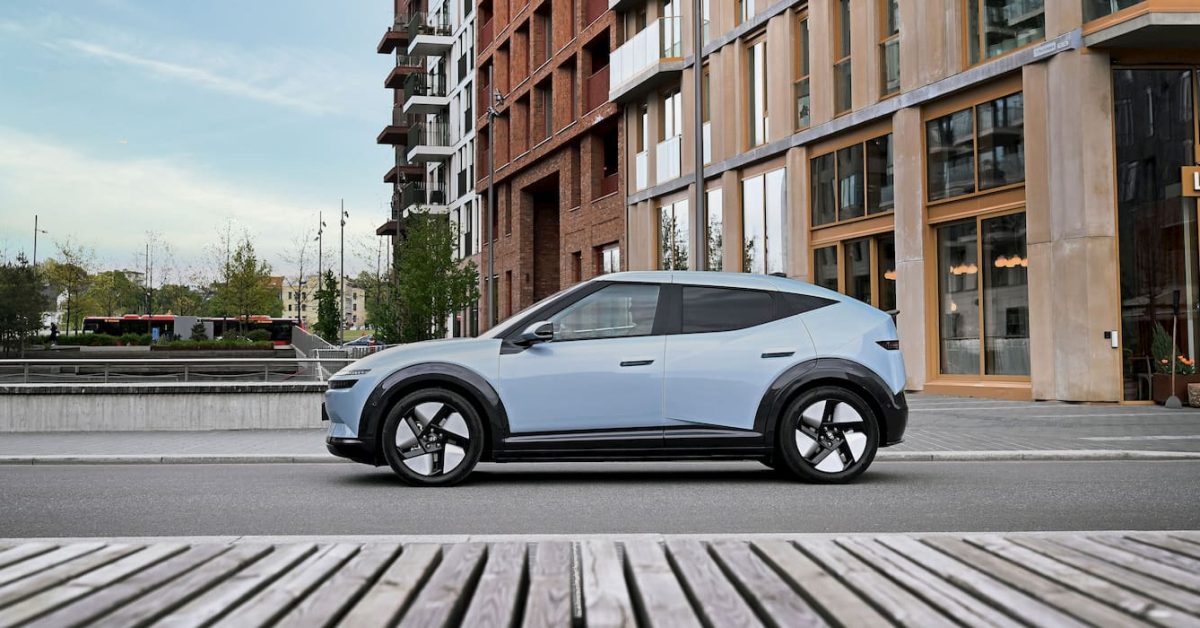
The Compact EV Tide Is Coming for Your Business
You run a business. You’ve got invoices to chase, staff to manage, and a vehicle or two that adds stress to your monthly operations. When you see headlines about electric cars, you probably scroll past. That’s a mistake.
Even if you’re not in the automotive industry, global moves like Hyundai’s launch of the IONIQ 3 will eventually land on your driveway, at your loading bay, and in your daily routines. So let’s look at what just happened and why it should matter to you.
TL;DR: Hyundai is starting mass production of a compact electric SUV called the IONIQ 3. They plan to sell over 40,000 units in Europe in 2027. This signals that smaller, practical EVs are going to be produced at scale. For Malaysian SMEs, this means more approachable electric vehicles will enter your market, and the businesses that prepare early will have a smoother ride.
What This Means
The IONIQ 3 is Hyundai’s first “B-segment” EV — a smaller car class that makes up about 15% of all European car sales, according to Electrek. In that segment, electric vehicles currently hold a 14% market share. But Hyundai and other analysts expect that to jump to 33% by 2030 and 65% by 2035 (source).
This is not a niche product. Hyundai’s CEO personally inspected the Turkey plant before mass production started in mid-August, and pre-production models were built as early as May (source). The company reports “the highest-ever level of customer interest recorded for a new Hyundai model” ahead of launch (source).
“We must prioritize quality from the early stages of mass production… regarding safety, we must ensure that it is recognized as the best vehicle in Europe.” — Hyundai Motor Group Executive Chair Euisun Chung (source)
Why should a Malaysian SME owner care about a European car launch? Because scale drives down barriers, and those barriers are the main reason you haven’t switched to an EV yet. The IONIQ 3 offers two battery options: 42.2 kWh and 61 kWh. The standard range delivers up to 344 km (WLTP) and the extended range up to 496 km, (source). It charges from 10% to 80% in about 30 minutes (source). Those figures are not exotic. They’re becoming the new baseline.
How This Applies to Malaysian SMEs
Let’s bring this closer to home. You might be running a food delivery operation with ten riders. Or you’re a consultant who drives 80 kilometres a day to visit clients. Or you own a small logistics company moving goods across the Klang Valley. Every one of these businesses depends on vehicles that burn fuel, require maintenance, and are subject to unpredictable swings. EVs change that equation.
Here’s what Hyundai’s 40,000-unit target tells you: major automakers are betting big on small, efficient cars. When a company commits that level of production volume, they don’t keep it locked to one region. The same platform eventually lands in Asia. That’s how the Kona Electric and the original IONIQ 5 made it to Malaysia. So watch for the IONIQ 3 or something like it to appear locally — and that’s good news for you because it means more options, a more robust supply chain, and more competitive dealers.
For your daily operations, an EV with 300-500 km of range covers a surprising amount. Consider that the average Malaysian car commutes less than 50 km a day. Even the short-range version would last you a week of city driving. Multiply that across a small fleet and the operational headache shifts from “where do I fill up” to “where do I plug in” — a problem that’s being solved by charging networks expanding across Malaysia. When you do plug in, you also deal with fewer moving parts and less scheduled servicing compared to a combustion vehicle.
But there’s a deeper angle. This is where your automation strategy comes in. An EV isn’t just a vehicle; it’s a data-generating device. It tracks routes, energy consumption, driver behaviour, and maintenance needs. That data can plug directly into your business management software — dispatching, delivery scheduling, and driver performance. When a vehicle is electric and connected, you get real-time insights that you simply can’t get from a conventional car. If you’re already using automation tools to manage your operations, adding EVs to that stack amplifies the benefit.
Finally, consider your brand. Large corporate clients and government contracts increasingly ask about sustainability. They want vendors with lower carbon footprints. If your SME operates a small EV fleet, you have a story to tell that differentiates you from larger, slower competitors. Hyundai’s aggressive move is a signal that the transition is not a distant “someday”. It’s happening in 2026 and 2027. The businesses that test an EV now will have the data, the charging habits, and the service relationships in place when the market truly shifts.
Practical Takeaways
- Calculate your per-kilometre efficiency. Look at fuel consumption, maintenance intervals, and downtime. The comparison often surprises owners.
- Test drive a compact EV when it launches locally. You’re not committing to anything by driving one. Experience is the best teacher.
- Review your route patterns. If your daily routes are under 200 km, an EV with 300+ km of range needs zero route changes.
- Check if your business can install a charger. Even a standard wall socket gives you overnight charging for a small van.
- Talk to your automation provider (like AutoRunBiz). Ask how the software you use can integrate with connected vehicle data today.
The Bigger Picture
Let’s put this in perspective. When an automaker like Hyundai says it will sell 40,000 units of one model, that’s not a niche experiment. That’s a company building a factory line around an electric product. When they plan that in Turkey and open orders across Europe, they’re learning to build cars quicker, safer, and more efficiently.
Those learnings will cascade to other markets, including Malaysia. The production of EV technology is expanding globally. Charging infrastructure is growing in Malaysia too, as government bodies push toward sustainability targets. Over the next five years, the gap in day-to-day usability between an EV and a combustion vehicle will shrink dramatically.
What does that mean for you? It means that if you’re a business owner, you should not be planning your fleet based on the assumptions of 2020. You should be planning for 2030, where EVs are likely the majority choice for small commercial vehicles, and where automation, data, and sustainability are not optional — they’re the default.
Here’s a table that summarises where the compact EV market is heading:
| B-Segment EV Market Share | Year | Expected Share |
|---|---|---|
| Current | 2025 | 14% (source) |
| Mid-term | 2030 | 33% (source) |
| Long-term | 2035 | 65% (source) |
That’s a structured shift, backed by production commitments. Hyundai’s 40,000 unit target is just one data point in that trend. For your SME, the message is clear: don’t wait until the market forces you to move. Start planning now — not because you love cars, but because you love having a healthy, thriving business.
The next time you see a headline about electric vehicles, don’t scroll past. It’s your business talking to you.
Ready to Streamline Your Operations?
Your business should run itself. AutoRunBiz deploys AI agents to automate your daily operations — WhatsApp orders, invoicing, customer follow-ups, and accounting. Book a free 15-min ops audit to see where automation fits your business →