
One Day. That’s All Google’s New AI Feature Lasted. Here’s Why You Should Care.
You’re running a business in Malaysia. You’re juggling inventory, payroll, customer messages, and probably a hundred other things you didn’t expect to handle this week. The last thing you need is another tech story that has nothing to do with your daily grind. But this one does — and it happened in under 48 hours.
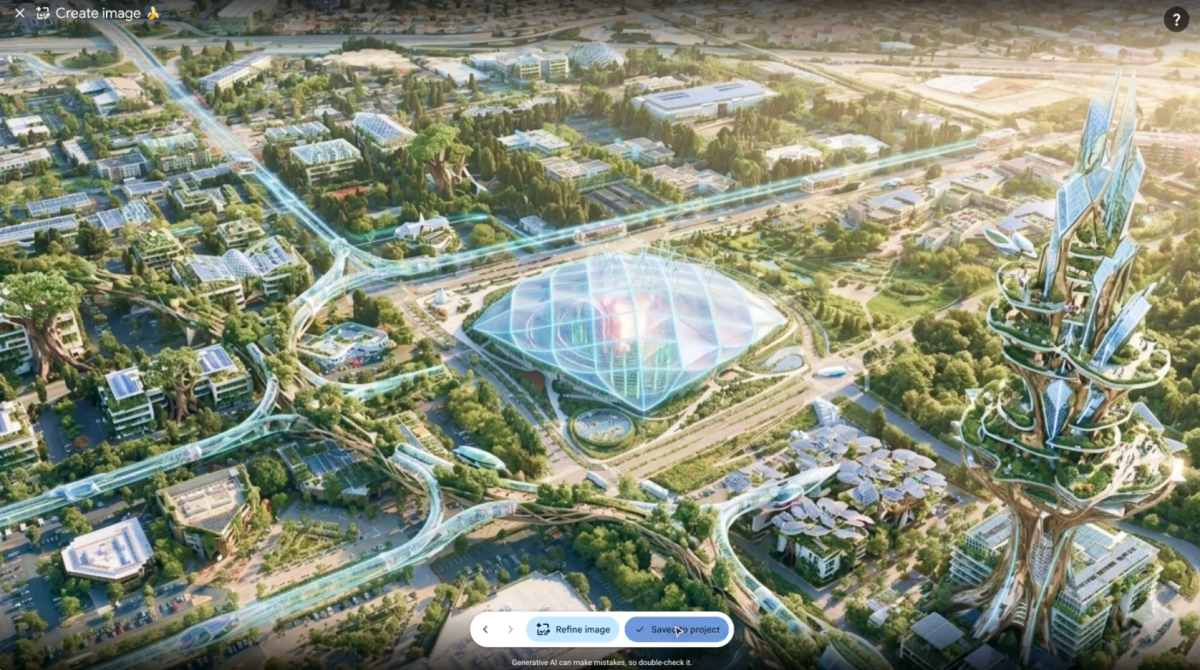
On Thursday, Google launched a feature inside Google Earth that let anyone use its AI image generator, Nano Banana 2, to fabricate images on top of real satellite imagery. By Friday, it was pulled. TechCrunch documented the entire rise and fall. The reason? A wave of criticism that the tool was a misinformation machine waiting to happen.
What Happened
Google’s pitch was innocent enough. The feature was prompt-based, allowing users to get “creative with geography” by superimposing AI-generated images over real maps. In theory, teachers could show students what a reforested landscape might look like. In practice, anyone could make a fake disaster zone appear on live satellite view — a “flood” in a dry neighbourhood, a “fire” where there’s none, a “new building” that was never constructed. Critics were fast to point out the implications.
The reaction from professionals was brutal. A BBC journalist posted sarcastically that there was “no way” a tool inside one of the most trusted sources of visual evidence for journalists and researchers could possibly be abused to spread misinformation online. The sarcasm landed exactly as intended. Google Earth has long been used to verify land disputes, track deforestation, and document conflict zones. Adding an unrestricted image generator to that platform was, as many put it, a recipe for geospatial slop.
Google’s response was remarkably fast. In a statement, the company acknowledged it had seen geospatial professionals using the feature for useful purposes, but also admitted people were sharing generated imagery that appeared to violate its policies. “We’re rolling back this feature in Google Earth while we work on implementing stronger guardrails,” Google said.
One day. That’s the entire shelf life of a feature built and shipped by one of the most sophisticated AI teams on the planet.
Why This Matters for Malaysian SMEs
You might be thinking: “I don’t use Google Earth in my business.” And you’d be right. But you almost certainly use AI tools. You use them to write product descriptions, generate social media posts, answer customer queries, or touch up photos for your Shopify store. And here’s the uncomfortable truth this story exposes: AI features can vanish overnight, and the reputational damage from using them recklessly lasts much longer.
Consider a Malaysian property agent in Bangsar using an AI image generator to stage an empty unit in the photos she posts on Facebook. The tool adds furniture that doesn’t match the actual unit’s dimensions. A buyer shows up, sees the space is smaller than the photos, and walks away feeling cheated. That’s not a Google-scale misinformation scandal — but to her business, it’s a lost sale and a damaged reputation. As the TechCrunch piece points out, in the age of AI, you don’t need Photoshop skills to create semi-credible deception anymore. A single misleading image on your company’s website can undo months of trust-building with Malaysian customers who are already increasingly sceptical of what they see online.
There’s a second, quieter lesson for you here: never build your entire business process on a single AI vendor. Google killed this feature in a day. What happens if the AI chatbot platform you rely on for customer service decides to deprecate its most useful function next month? What if the image tool producing your product catalogue changes its pricing model or its output style? Malaysian SMEs operating with small teams — often just one or two people handling marketing, operations, and sales — are especially vulnerable to sudden changes in third-party tools. You need alternatives ready, and you need your processes documented so you can switch without shutting down.
“Trust is the slowest thing to build and the fastest thing to destroy. AI doesn’t change that — it just makes the destruction faster.”
The Bigger Picture
What Google did — launch fast, get burned publicly, roll back — is not a cautionary tale about avoiding AI. It’s a preview of the environment every Malaysian SME will operate in from now on. AI tools are going to ship with flaws. They’re going to embarrass their creators. And they’re going to require constant supervision. The businesses that thrive will not be the ones that adopt every new AI gadget the moment it launches. They’ll be the ones that build verification into their workflows.
This is where thoughtful automation comes in — and it’s important to distinguish that from blind AI adoption. Smart automation for an SME means setting up approval checkpoints before anything goes live. It means a human reviews AI-generated content. It means your Instagram scheduler pauses a post if the image doesn’t pass a basic quality check. It means asking: “If this AI output is wrong, who catches it? What’s our backup?”
Google could afford to roll back its feature and absorb the embarrassment. Your business, with its smaller team and tighter margins, can’t afford a public failure that erodes customer confidence. The good news is, your smaller size is also an advantage: you can implement guardrails faster than a giant corporation. You can decide today that all AI-generated images get a “verified by staff” review before publishing. You can choose to label AI content honestly. You can build simple checklists that make sure no customer-facing material goes out unexamined.
Key Takeaways for Malaysian SME Owners
| Takeaway | Action You Can Take This Week |
|---|---|
| AI output needs human review | Add a simple approval step before publishing any AI-generated content |
| Don’t over-rely on one AI tool | Identify a backup option for your most critical business function |
| Visual credibility is fragile | Label AI-generated images and verify facts before sharing them |
| AI tools change overnight | Keep your data and processes documented so you can switch quickly |
The Google Earth AI story isn’t really about satellite imagery or generative models. It’s about what happens when technology moves faster than judgment. For Malaysian SMEs, the path forward is clear: adopt AI, but automate responsibly. Verify everything. Build trust deliberately. And remember — even Google’s best engineers can’t undo the damage of a day’s worth of bad AI choices. You have the power to make sure your business never has to.
Ready to Streamline Your Operations?
Technology moves fast. Your operations should keep up. AutoRunBiz builds AI systems that run your daily workflows — from WhatsApp order capture to accounting. Book a free 15-min ops audit →