
From Prompts to Graphs: What Malaysian SMEs Need to Know About AI Engineering Layers
As a Malaysian SME owner, you’re always looking for ways to save time and boost productivity. AI tools seem promising, but they come with a steep learning curve. Terms like prompt engineering, loop engineering, and graph engineering sound like they belong in a tech lab, not your business. Yet, understanding these layers is the key to getting AI to work for you, not against you. The good news is that these concepts aren’t as complex as they sound, and they can be applied to real business tasks without a technical degree.
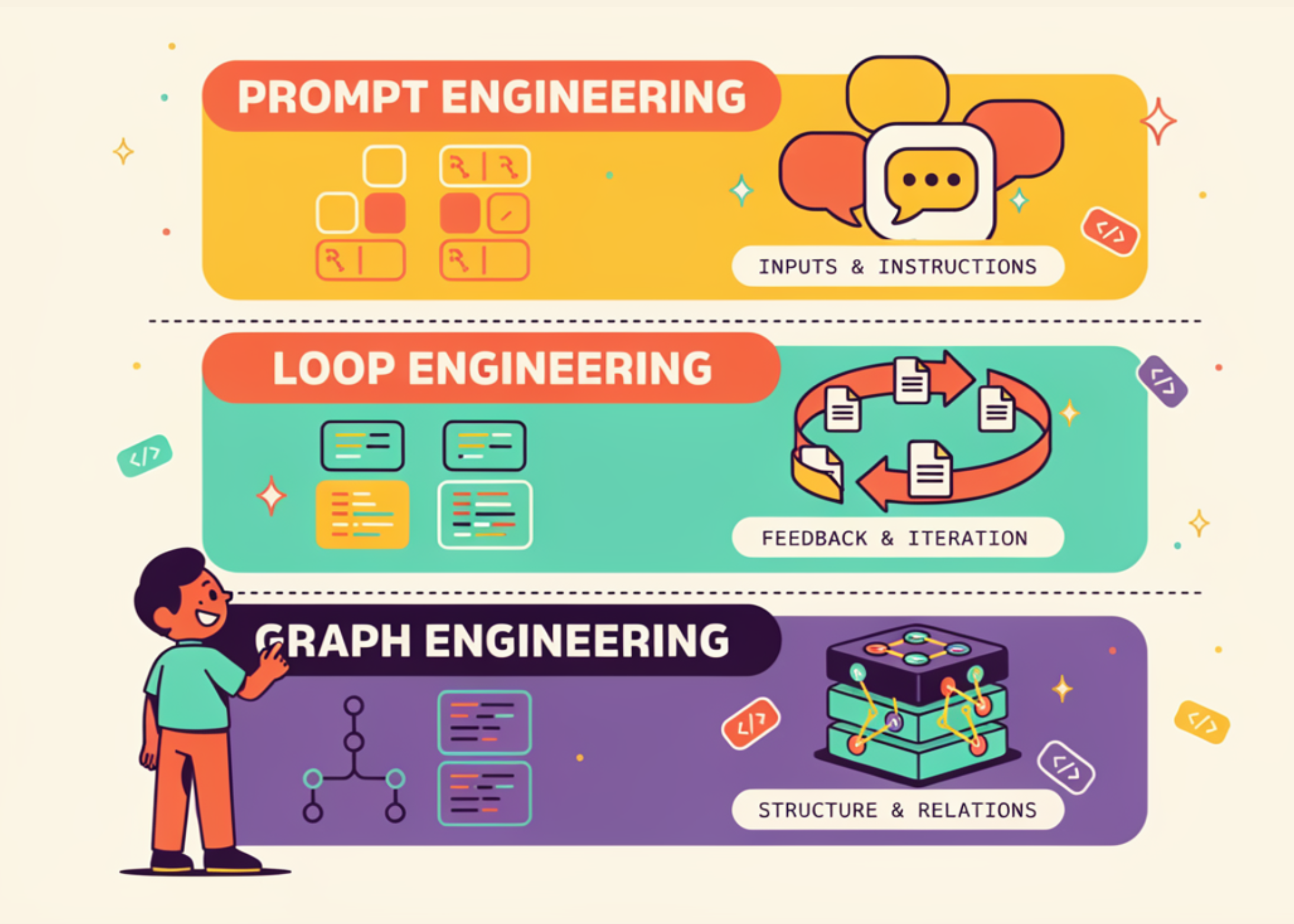
These layers represent different levels of control over AI. According to a recent breakdown on Marktechpost 【Source】, they are “three different units of control, stacked.” This means each layer builds on the previous one. Prompt engineering controls a single response. Loop engineering controls an automated cycle. Graph engineering coordinates multiple AI systems. You can start at one layer and move up as your needs grow.
TL;DR: Prompt engineering is for single instructions. Loop engineering automates repeated tasks with checks. Graph engineering manages multiple AI agents together. For your SME, prompt engineering is your starting point. Add loops for recurring tasks. Only use graphs if you have complex workflows with multiple agents.
What This Means for Your Business
Prompt Engineering: This is the most basic layer. It involves writing instructions for a single AI call. For example, asking a chatbot to answer a customer question. The article cites Anthropic’s guidance to separate system prompts into labeled sections for clarity 【Source】. For you, this means being clear and specific when you use AI tools.
Loop Engineering: This layer adds a cycle to the prompt. The AI performs a task, checks the result, and repeats if necessary. The source mentions that loop engineering defines how a system “repeatedly observes, acts, verifies and recovers” 【Source】. Think of it as an automated process that runs without manual input.
Graph Engineering: This is the most advanced layer. It organizes multiple AI agents into a network. The article explains that production systems use two types of graphs: the org graph for stable roles and the work graph for temporary tasks 【Source】. For SMEs, this might be coordinating AI agents for different departments like sales, support, and inventory.
“A loop is a prompt repeated with scaffolding around it, and loop engineering is complementary to prompt engineering rather than its replacement.” 【Source】
How This Applies to Malaysian SMEs
For Malaysian SME owners, AI can automate routine tasks and free up time for strategic decisions. Here are three scenarios based on common business functions in Malaysia.
1. Customer Service Automation – Many SMEs use WhatsApp for customer service. With prompt engineering, you can create clear responses for common queries. With loop engineering, you can set up automated follow-ups for complaints or feedback. For example, if a customer reports a late delivery, the AI can check the status and update the customer, while loop management ensures escalation if not resolved. 【Source】 This builds loyalty without needing extra staff.
2. Content Marketing – If you manage social media, prompt engineering helps draft posts quickly. Loop engineering can automate content planning and scheduling. You can set feedback loops to adjust based on performance metrics like engagement or shares. As you expand to multiple platforms, graph engineering can coordinate separate agents for each platform, ensuring consistency. 【Source】
3. Operational Efficiency – For retail or logistics SMEs, prompt engineering helps query inventory or shipment data. Loop engineering automates reordering when stock is low, with checks against demand. Graph engineering integrates these processes across sales, procurement, and distribution, reducing delays. 【Source】
The article emphasizes that “the first ‘no’ is usually the answer” when deciding which layer to use 【Source】. For example, if a person reads every output, prompts are sufficient. If not, you need loops.
Practical Takeaways for You
- Question 1: Does a person review every AI output before action? If yes, stay with prompt engineering. If no, consider loops.
- Question 2: Can “done” be checked by a test or rubric? If no, you don’t have a stop condition, which is risky for loops 【Source】.
- Question 3: Does the task fit in one AI agent’s context? If yes, build a loop. If no, you might need a graph.
- Question 4: Do independent tasks need to run simultaneously? If yes, graph engineering is needed 【Source】.
The Bigger Picture
As AI evolves, the distinction between these layers will become more relevant. For Malaysian SMEs, this means you can implement AI without needing to become an expert. The trend is toward modular AI systems where you can choose the layer that fits your current need and expand later.
The article notes that “graph engineering is the newest label and the least settled” 【Source】. But it warns that two engineers with the same system can get different results based on their understanding. For you, your business knowledge is your advantage.
Quick Reference Table
| Layer | Core Idea | Best For |
|---|---|---|
| Prompt Engineering | Writing clear instructions for a single AI call | One-time tasks or when quality control is manual |
| Loop Engineering | Designing automated cycles of action and verification | Recurring tasks with defined stop conditions |
| Graph Engineering | Creating networks of AI agents for complex workflows | Multi-step processes with parallel tasks |
Use this table to match your business needs with the appropriate layer. Start simple, and grow as your comfort and requirements increase.
Ready to Streamline Your Operations?
Your business should run itself. AutoRunBiz deploys AI agents to automate your daily operations — WhatsApp orders, invoicing, customer follow-ups, and accounting. Book a free 15-min ops audit to see where automation fits your business →