
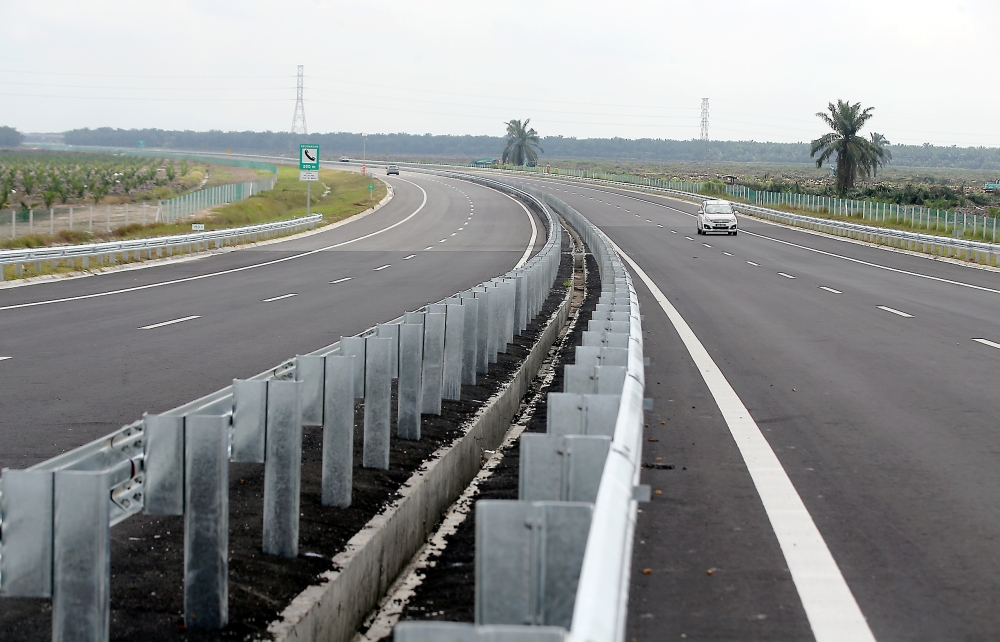
Is Your Business Still Fighting Dead Zones?
Think about the last time one of your team members hit the road. Heading to a client in Penang, a supplier in Johor, or a delivery point in Kuantan. Did their GPS freeze right before a critical turn? Did their call drop when they were confirming a delivery time? Did that important WhatsApp message to the office fail to send until they stopped for a break?
For Malaysian SME owners who rely on a mobile workforce—whether it’s a single delivery lorry or a team of ten sales reps—these “blind spots” aren’t just an inconvenience. They are a direct drag on your productivity, your customer response time, and your ability to fully automate your operations.
That is why the recent Memorandum of Understanding (MoU) between the Malaysian Communications and Multimedia Commission (MCMC) and the Malaysian Highway Authority (LLM) matters to you. It is not just a headline about telecom towers. It is a concrete step towards fixing one of the biggest operational bottlenecks for SMEs that move: bad connectivity along our highways.
TL;DR (Too Long; Didn’t Read)
- What happened: MCMC and LLM signed an MoU to strategically build more communications infrastructure along our national highways (Source).
- Why it matters to you: This targets the exact spots where your drivers lose signal (e.g., Menora Tunnel, Gua Tempurung, LPT2, and the WCE).
- The result for your business: More reliable real-time tracking for your fleet, fewer dropped calls for your sales team, and a solid foundation to finally commit to full digital workflows.
What This Actually Means (In Plain English)
This deal creates a “Joint Task Force” to speed up the process of getting new towers built (Malay Mail). In the past, if a telco wanted to put a tower on a highway, getting access to the land and approvals from the highway authority was a slow, separate process. Now, MCMC and LLM are coordinating closely on this. They have specifically identified problematic areas on the East Coast Expressway 2 (LPT2), the West Coast Expressway (WCE), and around the Menora Tunnel and Gua Tempurung on the North-South Expressway (PLUS). The idea is simple: wherever there is a road, there should be internet.
Think of it this way: your business can only be as efficient as the infrastructure allows it to be. If your Electronic Proof of Delivery (e-POD) system fails because the driver is in a dead zone, you must fall back on manual paperwork. If your sales CRM can’t sync, your team is working blind and double-handling data. When the physical road and the digital road are treated as one project, your operations stay connected from end to end.
“Your business can only be as efficient as the infrastructure allows it to be. When the road and the internet are treated together, your operations stay connected from end to end.”
How This Applies to Your Malaysian SME
Let’s break this down into the specific areas where this will impact your daily workflow and bottom line.
1. Your Fleet & Logistics Operations
If you own a logistics or delivery business, tracking is your lifeblood. But a fleet management system is only as good as its data connection. When a lorry enters a blind spot on the LPT2, the data stops flowing. You lose visibility. The customer gets a vague ETA, and your dispatchers go blind. This MoU aims to eliminate those signal gaps (Malay Mail). It means your automated dispatch system, your fuel monitoring, and your routine check-ins will finally have a continuous stream of data. This is the difference between a “nice to have” tracking system and a truly reliable operational backbone you can trust.
2. Your Sales & Service Teams on the Road
Your sales representative’s car is a mobile office. When they are stuck in traffic on the PLUS highway, or driving back from a site visit on the West Coast, can they be productive? Right now, often no. Video calls drop, photos from a job site refuse to upload, and the CRM can’t sync. With the targeted improvements from this MoU, your team can actually use that travel time to attend team briefings, update client records, or process orders. The time spent on the road becomes productive time, not just windshield time. The government specifically noted this supports economic productivity and the logistics sector (Malay Mail).
3. Safety and Employee Wellbeing
As a business owner, you carry a duty of care for your team. Communications Minister Fahmi Fadzil highlighted that this is a strategic investment for “public safety” and “emergency communications” (Malay Mail). When your driver can reliably access navigation, call for roadside assistance, or simply check in with the office after a long haul, it builds trust and security. A stable connection isn’t just about operations—it’s a practical safety net for your mobile staff.
Practical Takeaways for Your Business
- Map your current dead zones: Ask your drivers exactly where they lose signal. Is it on the specific routes mentioned in the MoU (LPT2, WCE, Menora Tunnel, Gua Tempurung)? If so, meaningful relief is officially on the way.
- Go all-in on your digital tools: If you have been hesitant to fully implement an electronic Proof of Delivery (e-POD) or a cloud-based fleet management system because of connectivity issues, that barrier is being removed. Now is the time to audit your current manual processes and prepare for full digital adoption.
- Consider cloud-based communications: With more robust highway data, tools like Voice over IP (VoIP) for your drivers become a realistic option. This allows your team to maintain a single business number regardless of where they are, improving professionalism and responsiveness.
- Stay updated on implementation: The Joint Task Force mentioned in the MoU will be identifying priority areas (Malay Mail). Watch for announcements on which stretches are being upgraded first, as this will directly impact your delivery routes and service areas.
How Connectivity Improvements Map to Your Daily Challenges
| Your Pain Point | How Infrastructure Fixes It | Impact on Your SME |
|---|---|---|
| GPS tracking drops on the LPT2 | New towers built specifically for these “blind spots” | Accurate real-time tracking for client updates and dispatches. |
| Sales team can’t file reports while driving | Stable coverage along the corridor | Instant data sync means less “backlog” work, more time for clients. |
| e-POD fails at the destination near a tunnel | Targeted coverage in challenging locations | Fully automated, reliable paperwork. No manual signatures or scanning. |
| Staff safety concerns on long hauls | Reliable access to emergency & navigation services | Peace of mind and a stronger duty of care for your team. |
The Bigger Picture for Your Growing Business
This isn’t just about fixing today’s dropped calls. This infrastructure is laying the foundation for the future of Malaysian business mobility. The MoU specifically mentions supporting “intelligent transport systems” and the future “Multi-Lane Fast Flow (MLFF)” toll system (Malay Mail).
For your SME, this means the road is being paved—literally and digitally—for a future where your assets, your data, and your people are seamlessly connected. The shift towards a fully digital economy for SMEs in Malaysia depends on this bedrock principle: reliable connectivity outside the city center. When the government treats the highway and the internet as one single infrastructure project, it changes the rules for any business that operates beyond central KL.
The “Di Mana Ada Jalan, Di Situ Ada Internet” principle is a clear signal. It signals that you can confidently hire a sales rep based in Kuantan and manage them from KL. It signals you can expand your delivery zone to the West Coast without losing control of your operational data. For the practical, busy SME owner, this MoU is one of the most directly useful government initiatives in recent years. It is a tangible fix for a very tangible problem: staying connected while driving Malaysian roads.
So, ask yourself. Are your operations ready for a highway without dead zones?
Ready to Streamline Your Operations?
Your business should run itself. AutoRunBiz deploys AI agents to automate your daily operations — WhatsApp orders, invoicing, customer follow-ups, and accounting. Book a free 15-min ops audit to see where automation fits your business →