
Your Digital and Physical Fleet Just Got Better
As a Malaysian SME owner, you are juggling a hundred things. Staff. Stock. Customers. Cash flow. The last thing you have time for is a slow card machine during the lunch rush, or a delivery driver stuck waiting to fill up. Two entirely separate pieces of tech news this week signal that these specific frustrations are about to disappear.
Dedicated indoor ULTRA5G is rolling out inside Klang Valley’s busiest malls, promising lag-free connectivity for your point-of-sale and customer apps. Separately, the specifications of the 2026 BYD Sealion 7 show that electric vehicles have finally matured to the point where they can replace petrol cars for serious business use. This is not science fiction. This is the new infrastructure your business needs to understand.
TL;DR: 1) ULTRA5G in malls means your staff can rely on cloud-based POS and payment systems without lag. 2) The latest EVs offer enough range and charging speed to be a serious option for local logistics and sales fleets. 3) These are not future trends; they are available now, and your competitors are already paying attention.
What This Actually Means for Your Daily Operations
Let’s translate the tech specs into everyday business language.
ULTRA5G Inside Malls
If you run a retail or F&B outlet inside a major mall like 1 Utama, Mid Valley, or Sunway Pyramid, you know the pain of a slow network during lunch or peak hours. Your card terminal takes 30 seconds to process. Your WiFi drops. Your cloud POS slows to a crawl. Dedicated indoor ULTRA5G infrastructure solves this by providing consistent, high-bandwidth connectivity designed specifically for high-density environments. This means your customers pay faster, your staff serves more people, and your entire operation runs on a reliable digital backbone.
Faster Charging, Bigger Battery EVs
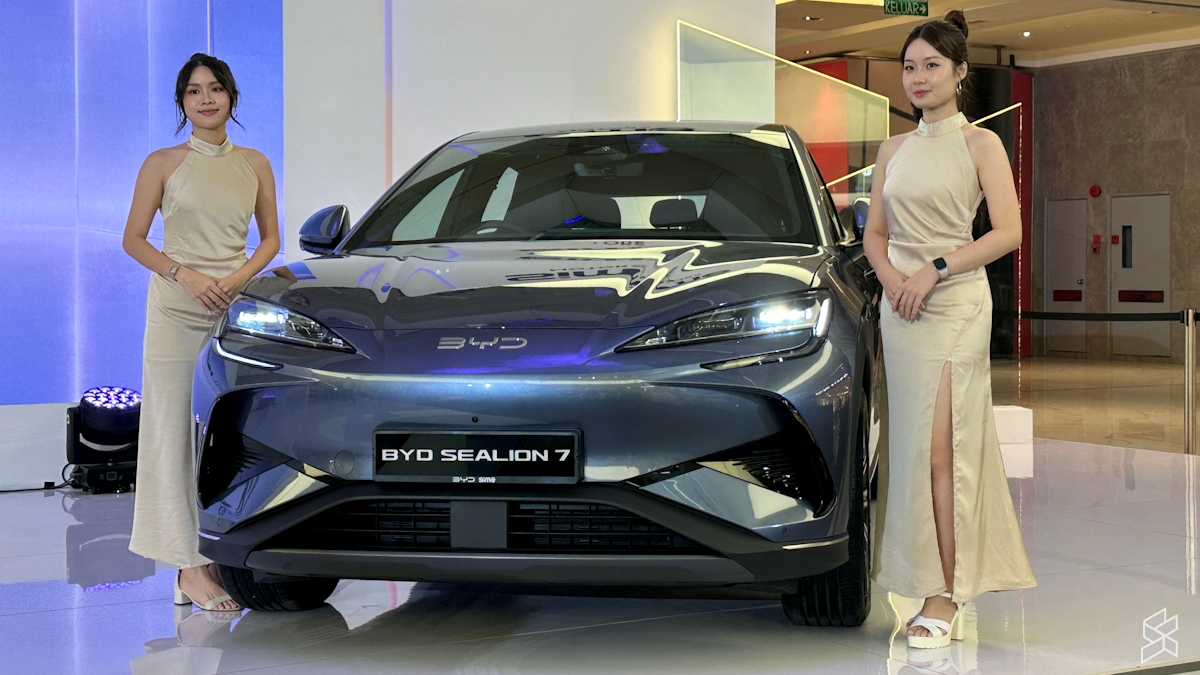
The 2026 BYD Sealion 7 introduces a larger battery pack and faster charging capabilities. For an SME owner, this kills the two biggest objections to going electric: “the range is too short” and “it takes too long to charge”. A car that can add hundreds of kilometers of range in the time it takes to have a coffee changes how you plan your delivery routes or your sales team’s day.
How This Applies Directly to Your Malaysian SME
This isn’t abstract theory. Let’s look at your specific business scenarios.
Scenario 1: You Run a Retail Store or Cafe in a Mall
Your entire customer experience depends on speed. A slow terminal means lost sales during peak hours. With the new ULTRA5G infrastructure in place, you can confidently run a fully cloud-based POS system. Your staff no longer has to explain to every customer that “the machine is a bit slow today.” With ULTRA5G, that explanation disappears. Your service time per customer drops. Your queue moves faster. You can deploy QR ordering at tables that actually loads instantly, and you can run video-heavy marketing displays without buffering. This stability also allows you to track visitor data in real-time, manage inventory across multiple mall outlets, and integrate your loyalty programs without network hiccups corrupting the data. This isn’t just a nice-to-have; it is becoming the standard for a professional customer experience.
Scenario 2: You Manage a Delivery or Service Fleet
Your drivers are staring at a pump meter, watching Ringgit add up. Or they are parked at a charging station for an hour, clocking idle time. The 2026 Sealion 7 isn’t just a car review; it is a productivity roadmap. A battery that can comfortably cover 500km means your driver can do the morning peak, come back for a quick fast-charge over lunch, and go out for the evening peak with zero range anxiety. The faster charging speed announced for the new model dramatically reduces downtime. For a business running multiple deliveries a day in the Klang Valley, switching to this class of EV can mean more stops per driver per day. It also drastically reduces the noise and vibration of your vehicles, which is a huge advantage if your drivers are in residential areas early in the morning or late at night.
Scenario 3: The “New Normal” Expectation
Customers and employees now expect a certain level of tech infrastructure. If you walk into a competing cafe and they have seamless digital ordering and instant payments, your shop with a laggy system loses the comparison. Similarly, if you are hiring young drivers or tech-savvy staff, a modern fleet and a connected store are major selling points. These infrastructure upgrades help you attract better talent and retain more customers without having to compete purely on price.
Practical Takeaways for SME Owners
Here is what you can do this month to capitalize on these shifts:
- Speed Test at Your Venue: Go to your shop during peak hours and run a speed test on your line. If it is congested, ask your landlord about the indoor 5G rollout timeline.
- Evaluate Your POS Setup: Make sure your payment and inventory systems are cloud-native. Old local servers won’t benefit from new network speeds, which defeats the purpose of having the infrastructure.
- Calculate Fleet Savings on Paper: Take one of your most driven routes. Compare the running costs of your current vehicle against the operational cost of a new EV. Look beyond the upfront number and focus on the per-kilometer cost and downtime savings.
- Talk to Your Mall Management: Ask about their connectivity roadmap. If they are investing in dedicated ULTRA5G, you need to plan your digital tools around it. If they are not, you have a valid data point for future location planning.
- Test Drive the Tech: You would not buy a car without driving it. Do not commit to a new POS system or a fleet vehicle without testing it on the network and routes it will actually run on.
The Numbers You Need to Know
| Business Area | Limitation with Old Tech | Capability with New Tech | Impact on Your Business |
|---|---|---|---|