
Why Your Team’s Readiness Matters More Than You Think
As a Malaysian SME owner, you probably notice the business effects of tired employees before anyone says anything. A staff member takes longer to respond, a technician misses a detail, a sales executive loses patience with a customer, or a manager struggles to make a clear decision. These issues may look like performance problems, but the underlying cause can be poor sleep, stress, illness, or insufficient recovery.
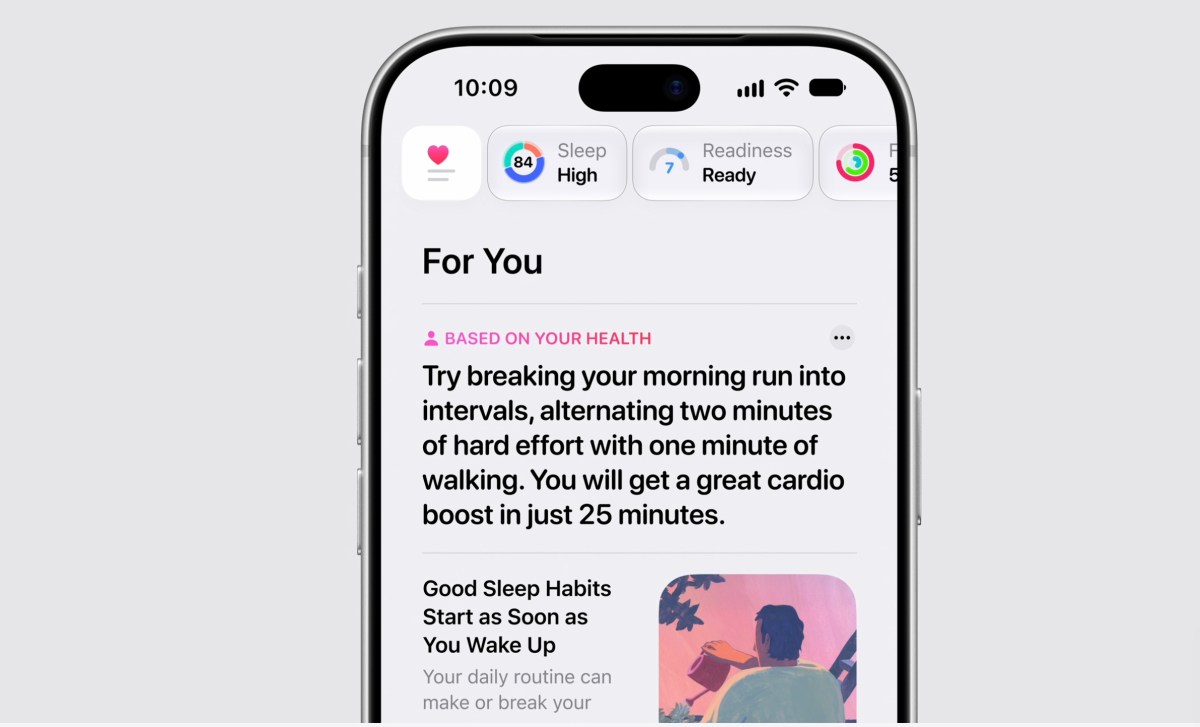
Most SMEs already track sales, attendance, customer enquiries, and work completion. However, you may not have a useful way to understand whether your people are physically and mentally ready to perform at their best. Apple’s redesigned Health app points towards a broader shift: personal data is increasingly being turned into simple scores, assessments, and recommendations that help people make daily decisions.
TL;DR: Apple’s updated Health app is designed to summarise health information through features such as a readiness score and “Health Age”. For your SME, the lesson is not to monitor employees’ private health data, but to build healthier work practices using voluntary, responsible, and privacy-conscious systems.
What This Means
Apple’s revamped Health app combines information from devices, sleep records, movement, heart health, fitness indicators, and laboratory results. According to TechCrunch, its new Insights tab will provide summaries and personalised guidance, while a readiness score will help users understand how prepared they may be for activity on a particular day. Source: TechCrunch
The app will also calculate a “Health Age”, comparing selected health indicators with a person’s actual age. The reported indicators include VO2 max, sleep, and blood biomarkers. Source: TechCrunch This is not the same as a medical diagnosis. It is a way of presenting complicated information in a format that ordinary users can understand.
The important business idea is turning raw data into a practical next step. Instead of asking someone to study many separate measurements, a system may say that they need more recovery, improve their movement, or adjust their exercise. The same principle can apply to your business operations: collect only useful information, interpret it clearly, and connect it to a sensible action.
| Reported feature | What it does | Business lesson for you |
|---|---|---|
| Insights tab | Summarises timely health information | Give managers clear operational summaries instead of scattered reports |
| Readiness score | Indicates how prepared a user may be for activity | Plan demanding work around capacity, schedules, and workload signals |
| Health Age | Compares selected health metrics with actual age | Use simple indicators to encourage long-term wellbeing, without judging staff |
| Movement assessments | Guides users through physical movement checks | Review workplace safety and reduce avoidable strain |
The app is expected to roll out later, beginning with U.S. English. Source: TechCrunch For Malaysian businesses, the immediate relevance is not whether every employee uses Apple devices. It is how health-oriented technology may influence employee expectations, workplace policies, and business software design.
How This Applies to Malaysian SMEs
1. Improve scheduling without asking for private medical information. If you run a café, retail outlet, clinic, workshop, logistics operation, or service team, certain periods are more demanding than others. A roster that repeatedly gives the same employee closing shifts followed by early openings can create fatigue. You do not need access to someone’s sleep records to address this. Use attendance data, shift history, leave patterns, and voluntary check-ins to identify scheduling pressure.
For example, your team could indicate whether they are ready for normal duties, need a lighter task, or require a short discussion with a supervisor. Keep the system focused on work planning rather than medical details. A simple weekly pulse survey can help you identify whether workload, shift timing, or customer pressure is affecting performance.
2. Use wellness technology as an optional support tool. Some employees may already use a smartwatch or health app. You can encourage healthy habits such as walking breaks, hydration, stretching, and reasonable working hours, but you should not require staff to share personal health scores. A readiness score belongs to the individual. It should not become a hidden attendance test or a reason to penalise someone.
Instead, create policies that make healthy behaviour easier. A field service company could schedule brief rest periods between physically demanding jobs. A small office could introduce meeting-free focus blocks and short movement breaks. A restaurant could rotate tasks so one person is not standing in the same position for an entire shift. These steps respond to the underlying problem without collecting sensitive data.
3. Build better manager conversations. Malaysian SME owners often depend on direct relationships. That is a strength, but managers may still jump to conclusions when work quality falls. A health-data trend reminds you to ask better questions: “Is the workload manageable?”, “Are the current shifts causing problems?”, or “Which task is creating the most pressure?”
You can add these questions to monthly one-to-one meetings. Track agreed actions in your HR or workflow system, such as adjusting a roster, pairing a new employee with a more experienced colleague, or clarifying unclear responsibilities. This gives you a practical process while respecting personal boundaries.
4. Reduce physical risk in operational roles. The updated Health app reportedly includes movement assessments, with guidance that may help people who are older or recovering from injury. Source: TechCrunch You do not need that exact feature to improve safety in your business.
Review how staff lift boxes, arrange stock, use tools, sit at counters, or travel between customer locations. Ask employees where discomfort or unnecessary effort occurs. Then improve instructions, equipment placement, task rotation, and training. Record these improvements in a simple digital checklist so supervisors can follow up consistently.
5. Prepare for more data-aware customers and employees. As health apps become better at explaining personal information, employees may expect other business systems to be equally clear. If your attendance, scheduling, or productivity software produces a score, explain what it means and how it is used. Avoid mysterious rankings that make people anxious or encourage unhealthy competition.
The useful lesson is not “score your employees”. It is “give people clear information and a safe way to act on it”.
Practical Takeaways
- Review your roster for repeated late-to-early shifts, excessive consecutive workdays, and uneven workload.
- Introduce a short voluntary weekly check-in covering workload, energy, and support needed.
- Never require employees to submit personal health-app data or wearable-device scores.
- Separate health support from performance punishment, disciplinary action, and promotion decisions.
- Use aggregated feedback to identify team-level issues, not to investigate individual medical conditions.
- Add movement, lifting, workstation, and break reviews to your workplace safety routine.
- Train supervisors to ask supportive questions before assuming poor attitude or low commitment.
- Document consent, access permissions, retention periods, and the purpose of any employee data you collect.
- Choose business software that shows useful summaries, clear explanations, and recommended actions.
- Review your approach with a qualified HR or legal adviser when handling sensitive personal information.
The Bigger Picture
Health technology is moving from simple record-keeping towards interpretation. People increasingly expect software to tell them what information means and what they can do next. Apple’s announced Health features illustrate this direction through readiness guidance, health comparisons, personalised insights, and laboratory data integration. The reported Quest partnership involves a panel covering 50 biomarkers and is listed at $119 in the source article. Source: TechCrunch
For your SME, this trend has two long-term implications. First, employee wellbeing will become more connected to everyday operations. Scheduling, workload, safety, leave planning, and communication will need to work together rather than sit in separate files. Second, trust will become a practical business requirement. Employees will support wellbeing initiatives when they understand the purpose, give informed consent, and know their personal information will not be used against them.
You do not need an expensive health platform or a complicated analytics project to begin. Start with better questions, fairer schedules, safer work practices, and clear boundaries around data. Then automate the repetitive parts: reminders, check-ins, shift reviews, follow-ups, and management summaries. The goal is not to measure every aspect of a person’s life. It is to help you run a more reliable business while giving your team the support they need to do good work.
Ready to Streamline Your Operations?
Your business should run itself. AutoRunBiz deploys AI agents to automate your daily operations — WhatsApp orders, invoicing, customer follow-ups, and accounting. Book a free 15-min ops audit to see where automation fits your business →