
Why a Floating Nuclear Startup Matters to Your Business
A nuclear startup raising US$50 million only two months after launching may sound far removed from your daily business concerns. You may run a workshop in Shah Alam, a food-processing operation in Penang, a logistics company in Johor, or a small technology firm in Kuala Lumpur. Nuclear reactors are probably not on your immediate roadmap.
However, Bluecore Energy’s story highlights several business shifts that matter to you: infrastructure is becoming more portable, energy demand is rising around digital services, regulators are becoming part of product development, and investors are rewarding companies that solve difficult operational problems. These trends can affect your electricity planning, data strategy, equipment choices, and growth decisions.
The important lesson is not that your company should enter the nuclear industry. It is that businesses of every size need to prepare for a world where power, water, computing capacity, and logistics are treated as strategic operating assets rather than background utilities.
What Happened
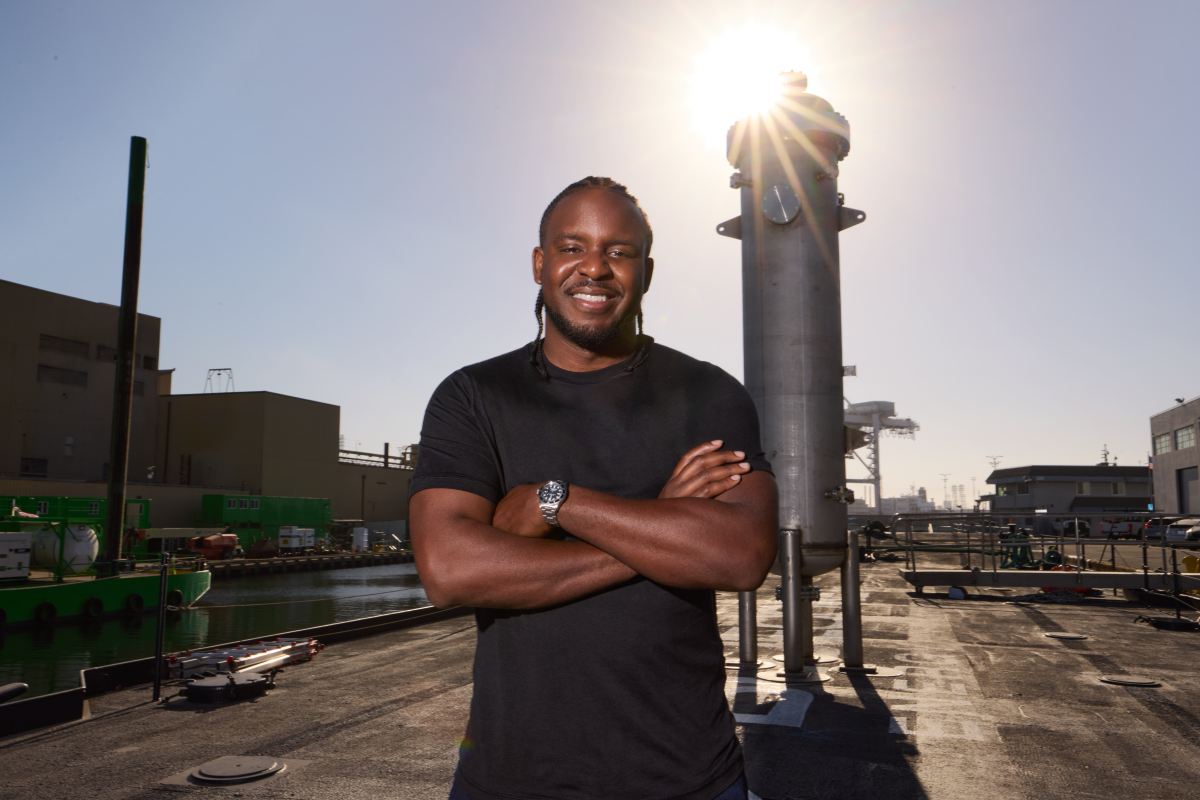
Bluecore Energy announced an oversubscribed US$50 million seed round on 8 September 2026, only months after raising US$10 million in pre-seed funding and emerging from stealth. The company was founded earlier in 2026 by Kofi Asante and develops small modular reactors designed to operate on floating barges. Source: TechCrunch
The company’s concept is to place small nuclear power systems on mobile platforms that can serve ports and nearby infrastructure. Instead of waiting years for a fixed power station and supporting infrastructure, the company says its floating approach could allow power capacity to be moved to where it is needed. Bluecore Energy has launched two floating barges and is working with the U.S. Department of Transportation Maritime Division, the U.S. Nuclear Regulatory Commission, and the U.S. Coast Guard. Source: TechCrunch
The company’s product design is undergoing review by the U.S. Nuclear Regulatory Commission and the U.S. Coast Guard. Successful completion of that process would support certification of its floating nuclear power plant. Bluecore Energy said it expects the new funding to support product development, regulatory work, nuclear fuel purchases, and recruitment. Source: TechCrunch
Bluecore also reported inbound interest from ports, artificial-intelligence data centres, and communities needing clean energy and water. Its founder identified the supply chain as a major challenge, particularly the need to secure specialised hardware quickly enough to match demand. The team includes people with backgrounds at SpaceX, Rivian, and Toyota, and the company says it is applying supply-chain methods associated with those industries. Source: TechCrunch
Why This Matters for Malaysian SMEs
Malaysia’s small businesses depend heavily on stable electricity, connectivity, transport, and water. A disruption to any one of these can interrupt production, delay deliveries, spoil inventory, or stop customer service. You do not need to own a factory to feel the effect. A cloud software company needs reliable internet and server availability. A café needs refrigeration and payment systems. A printing business needs machines, ventilation, and data access. A logistics operator needs fuel, route systems, and warehouse equipment.
Bluecore’s approach illustrates a wider principle: infrastructure may become more distributed and flexible. For your business, this could mean reviewing whether critical operations rely on a single site, one internet provider, one equipment supplier, or one cloud platform. The immediate action is not to wait for futuristic energy technology. It is to identify which services must continue during an outage and create practical alternatives.
Consider a Malaysian SME operating from a shoplot or light-industrial unit. You could document the equipment that must remain active, install appropriate backup power for essential systems, maintain offline access to customer and supplier information, and set up a second communications channel. If your company depends on cold storage, machinery, access control, or online ordering, rank those systems by operational importance rather than treating every device equally.
The story also matters because AI-related demand is increasing pressure on electricity and computing infrastructure. Bluecore specifically identified AI data centres as a potential source of interest. Source: TechCrunch Even if you are not building an AI data centre, you may increasingly use AI tools for customer support, document processing, sales, forecasting, and design. That makes your technology stack part of business continuity planning.
| Bluecore Energy lesson | Practical SME response |
|---|---|
| Portable infrastructure can serve changing demand | Use modular software and equipment that can expand without replacing the whole system |
| Regulators are involved from the beginning | Check permits, data rules, safety requirements, and industry standards before launch |
| Supply chains can become the main bottleneck | Qualify alternative suppliers and record lead times for critical components |
| Complex products require cross-functional teams | Combine operations, technical, compliance, and customer knowledge in key projects |
What You Can Apply in Your Business
First, separate essential and non-essential operations. Create a simple continuity list covering payment processing, customer records, order fulfilment, communications, security, and production. For each item, note what happens if it is unavailable for one hour, one day, or one week. This turns a vague risk into a sequence of decisions your team can practise.
Second, choose modular systems. Bluecore is pursuing a design that can be deployed in changing locations. You can apply the same thinking to business software. Select tools that allow you to add users, outlets, workflows, or integrations without rebuilding your entire operation. A modular system is especially useful when your company grows from five employees to twenty or opens another branch.
Third, involve compliance early. Bluecore’s formal engagement with the NRC and Coast Guard began during product development rather than after the product was complete. Source: TechCrunch For a Malaysian SME, the relevant authorities may include local councils, the Inland Revenue Board, the Department of Occupational Safety and Health, sector regulators, or data-protection stakeholders. Early checks can prevent a promising project from being delayed by an overlooked requirement.
Fourth, map your supply chain beyond your immediate vendor. Ask suppliers where critical items come from, how long replacements take, and whether equivalent products are available. This is useful for imported machinery parts, packaging, electronic components, refrigerants, specialist software licences, and replacement batteries. Keep the information in a shared, searchable record instead of leaving it in one employee’s email.
“The biggest challenge to be the supply chain, securing hardware to build the right portable electricity infrastructure at a pace that can match consumer demand.” — Kofi Asante, as quoted by TechCrunch. Source: TechCrunch
The Bigger Picture
Bluecore Energy’s funding story shows how quickly attention can move towards infrastructure businesses when demand is expected to grow. The company raised US$50 million in seed funding after a US$10 million pre-seed round, and the seed round closed in eight weeks. Source: TechCrunch The speed is notable because the company is working in a highly regulated field involving nuclear technology, maritime operations, fuel, and specialised hardware.
For you, the broader message is that operational readiness can be a competitive advantage. Customers increasingly expect fast responses, dependable delivery, secure information handling, and uninterrupted service. A business that has documented processes, reliable data, flexible tools, and backup suppliers can respond faster than one that relies entirely on informal arrangements.
This also changes how you should evaluate technology. Do not ask only whether a tool includes the latest AI feature. Ask whether it works when a key employee is absent, whether data can be exported, whether permissions are clear, whether your team can learn it quickly, and whether it connects to the systems you already use. Technology becomes useful when it improves resilience and execution, not merely when it attracts attention.
Bluecore Energy is attempting to make electricity generation more mobile, while you can make your business more adaptable through better information, workflows, and contingency planning. Start with one critical process this month: sales enquiries, purchasing, stock control, payroll, invoicing, or customer support. Document it, automate repetitive steps, assign backup responsibility, and test what happens when the usual process fails.
The future of business infrastructure may involve floating reactors, distributed computing, and cleaner power systems. For Malaysian SMEs, the practical opportunity starts closer to home: build operations that can continue, adjust, and grow when conditions change.
Ready to Streamline Your Operations?
Technology moves fast. Your operations should keep up. AutoRunBiz builds AI systems that run your daily workflows — from WhatsApp order capture to accounting. Book a free 15-min ops audit →