
Smarter roads are becoming smarter business infrastructure
If your team delivers products, sends technicians to customer sites, operates a fleet, or depends on staff arriving on time, traffic is not just a commuting inconvenience. It affects schedules, customer promises, driver safety and your ability to respond when something goes wrong.
That is why Malaysia’s latest move towards AI-assisted highway monitoring deserves attention from SME owners. A new smart traffic control centre is now operating across three Klang Valley highways, using live video, automated incident detection and digital road signs to identify problems and coordinate responses more quickly. The development shows how artificial intelligence is moving from experimental projects into practical systems that influence everyday operations.
What Happened
A new AI-powered traffic control centre was launched in Kuala Lumpur on September 8, 2026, to monitor the Sungai Besi Expressway, New Pantai Expressway and Kajang-Seremban Highway. All three highways are managed by IJM Corporation Berhad. The centre is designed to strengthen safety, improve traffic management and support faster responses when incidents occur. Source: Malay Mail
The centre combines 144 closed-circuit television cameras, 87 Video Incident Detection System units, 35 Automatic Number Plate Recognition units and 22 variable message signs. Together, these tools can help operators detect unusual activity, monitor traffic conditions, identify vehicles and communicate warnings or instructions to road users. Source: Malay Mail
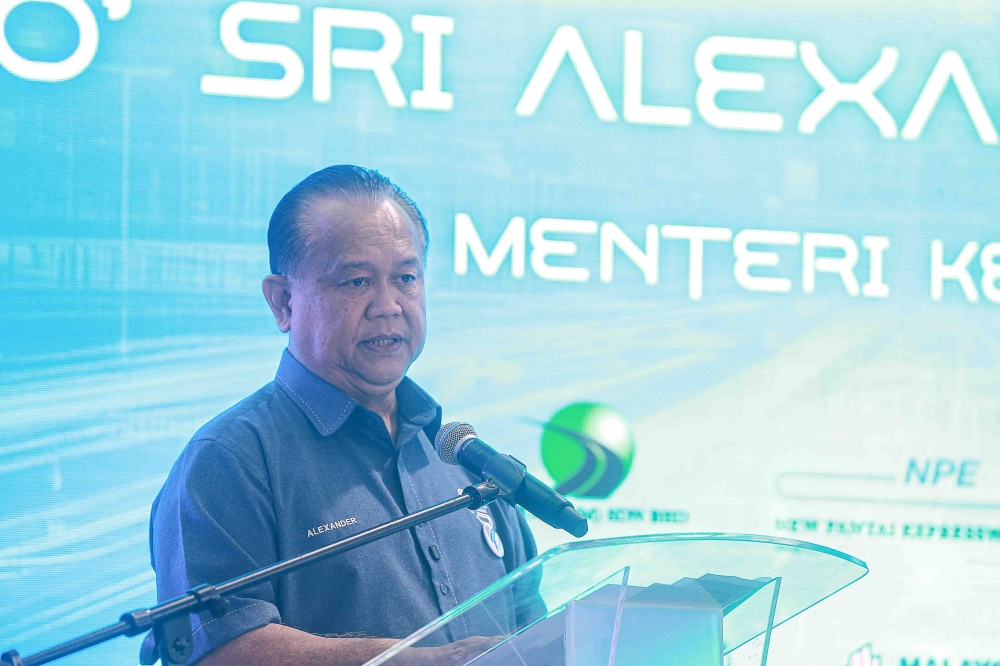
Works Minister Datuk Seri Alexander Nanta Linggi said data from the Malaysian Highway Road Accident Database System showed that 26,675 accidents were recorded on tolled expressways in 2025, including 839 fatality cases. He also said 85.4 per cent of traffic accidents on tolled expressways last year were linked to human factors, while the balance involved vehicle and environmental factors. Source: Malay Mail
The initiative supports the Malaysia Intelligent Transport System Roadmap 2030, which aims to develop expressways into connected, data-driven mobility ecosystems. At the national level, the Land Public Transport Authority’s traffic management centre already uses 873 integrated CCTV cameras and 278 variable message signs for continuous surveillance and communication. Source: Malay Mail
Why This Matters for Malaysian SMEs
You may not operate a highway, but your business relies on the road network every day. A furniture retailer arranging deliveries around Petaling Jaya, a maintenance company sending workers from Cheras to industrial sites, or a food distributor serving restaurants in Bangi all face the same operational problem: travel conditions can change faster than a manual plan can react.
Real-time traffic information can help you make better decisions before a delay becomes a customer complaint. If a major incident affects one of the monitored routes, your dispatcher can adjust delivery sequences, delay a non-urgent appointment, notify customers early or redirect a vehicle. The value is not simply knowing that traffic is heavy. It is having enough notice to change the plan while there are still useful options.
For SMEs, this can also improve safety controls. The source article reports that human factors were associated with most recorded accidents on tolled expressways in 2025. Source: Malay Mail You can respond by making safer driving part of operations rather than leaving it entirely to individual drivers. Set realistic schedules, discourage rushing, require rest breaks for longer routes and create a clear process for reporting fatigue, near misses and vehicle problems.
Vehicle monitoring can also support accountability without turning your workplace into a surveillance exercise. If your company uses vans, motorcycles or lorries, combine route records with practical reviews: Was the schedule realistic? Was the vehicle maintained? Did the driver face an unexpected road closure? This approach helps you identify process weaknesses instead of automatically blaming the driver.
| Business area | Practical SME action | Useful result |
|---|---|---|
| Dispatch | Check live traffic before assigning routes | Fewer avoidable delays |
| Customer service | Send early updates when incidents affect arrival times | Clearer expectations |
| Driver safety | Use realistic delivery windows and fatigue checks | Less pressure to rush |
| Operations data | Record delays by route, time and cause | Better scheduling decisions |
Start with a simple traffic-response workflow
You do not need a sophisticated control room to apply the same operating principle. Start by deciding which journeys matter most to your business. List regular delivery routes, high-priority customer visits, school-zone restrictions, loading times and locations where a delay creates the greatest disruption.
Next, assign responsibility. Someone should check road conditions before the first dispatch wave and someone should communicate changes to drivers and customers. This could be an operations executive, supervisor or owner in a smaller company. The important point is that the task is defined, rather than assumed.
Technology is most useful when it gives your team time to make a better decision before a road problem becomes a business problem.
Then record what happened. When a vehicle arrives late, note the route, departure time, incident and effect on the customer. After a few weeks, you may discover that certain appointments are regularly scheduled during difficult periods, or that one route needs a standing alternative. This turns daily frustration into operational information.
The Bigger Picture
The highway project reflects a wider change in how Malaysian organisations use technology. Sensors, cameras, connected signs and analytics are increasingly being combined so that people can respond to events as they happen. The Malaysia ITS Roadmap 2030 specifically emphasises smart mobility and real-time data analytics for traffic management and user experience. Source: Malay Mail
For SME owners, the lesson is not to buy every new tool. It is to build a business that can detect change, communicate quickly and adjust its plan. That may involve a shared dispatch dashboard, route-planning software, location sharing, digital checklists or a simple messaging protocol. The technology should match your actual workflow and protect customer and employee information.
The initiative also includes a virtual reality road-safety programme for school students, created with the Land Public Transport Authority and the Royal Malaysia Police. IJM said the programme focuses on safer motorcycle riding habits, while noting that motorcyclists account for 80 per cent of fatalities. Source: Malay Mail This is relevant to SMEs that employ riders or rely on motorcycle delivery. Training should cover defensive riding, visibility, weather conditions, route pressure and what to do after an incident.
Smart highways will not remove every delay or accident. They can, however, provide earlier information and stronger coordination. Your opportunity is to connect that information to better internal habits: safer schedules, faster customer updates, clearer responsibilities and decisions based on recurring patterns.
What you can do this month
- Identify the five routes that create the most disruption for your business.
- Assign one person to check traffic conditions before daily dispatches.
- Create a standard message for customers affected by travel delays.
- Review whether delivery windows encourage unsafe driving.
- Track delays, incidents and near misses in one shared record.
- Discuss alternative routes and emergency contacts with every driver.
As Malaysia develops smarter transport infrastructure, SMEs that organise their own information and response processes will be better prepared to use it. The competitive advantage is not merely having access to traffic updates. It is turning those updates into safer work, more reliable service and a business that can adapt when the road ahead changes.
Ready to Streamline Your Operations?
Technology moves fast. Your operations should keep up. AutoRunBiz builds AI systems that run your daily workflows — from WhatsApp order capture to accounting. Book a free 15-min ops audit →