
A Wider Route Can Expose Narrow Business Processes
If your business depends on deliveries, field technicians, sales visits or staff travelling between Kuala Lumpur, Seri Kembangan, Balakong and Putrajaya, small changes on the road can affect your whole working day. A delayed driver may miss a delivery slot. A salesperson stuck in traffic may arrive late for a customer meeting. Your operations team may spend the afternoon answering “Where is the order?” messages instead of serving customers.
The completed lane-widening project on the Sungai Besi Highway is therefore more than a traffic update for businesses near the route. It is a reminder that your business performance is connected to movement: people, vehicles, stock, documents and information. When physical journeys become smoother, your internal processes need to be ready to respond quickly.
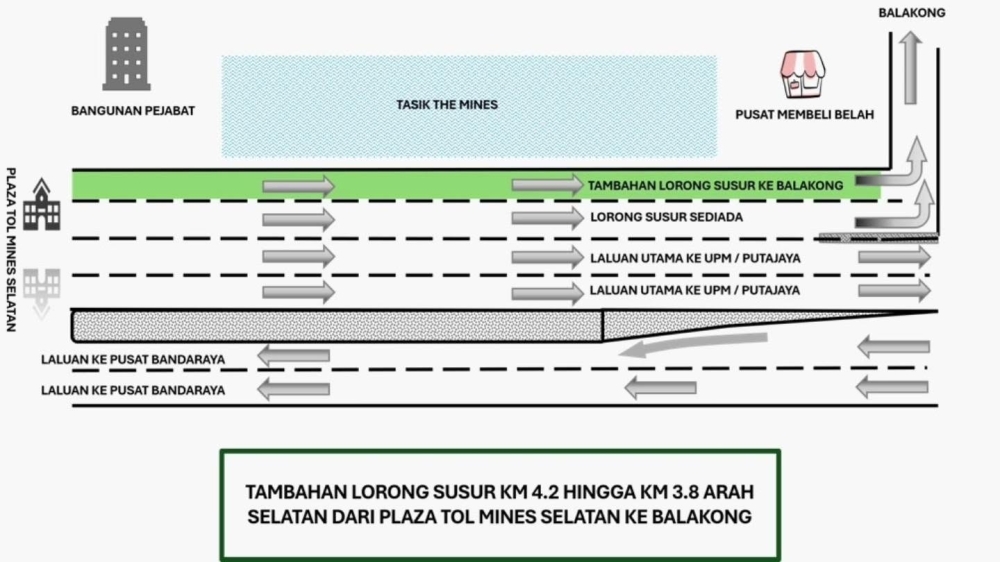
According to Malay Mail, the 400-metre widening near the Seri Kembangan Interchange, between KM4.2 and KM3.8 southbound, is scheduled to open to traffic on Monday. The report also says the tidal lane between KM5.3 and KM3.8 will be terminated.
TL;DR
A smoother route may improve delivery planning, staff scheduling and service coverage around Sungai Besi, Seri Kembangan, Balakong and Putrajaya.
Use the opportunity to review your dispatch records, customer updates and route-based workflows before assuming that better traffic automatically means better operations.
What This Means
The project adds capacity along a 400-metre section of the Besraya Highway and is intended to smooth traffic from the South Mines Toll Plaza towards UPM, Balakong and Putrajaya. The reported project value is RM5.22 million, and it involved Besraya with support from the Malaysian Highway Authority, according to the source report.
For you as an SME owner, the main concept is operational responsiveness. Your team should be able to adjust routes, appointments and customer commitments when travel conditions change. This does not mean sending staff out more frequently without control. It means using reliable information to decide which jobs should be grouped together, which deliveries need priority and when customers should receive an update.
Better road capacity may reduce friction, but it does not remove common business problems. A driver can still receive an outdated address. A customer can still be given the wrong arrival window. A manager can still assign two jobs in different areas to the same person at overlapping times. The road may improve while your processes remain slow.
Improved access only becomes a business advantage when your team can convert travel time into dependable service.
How This Applies to Malaysian SMEs
1. Delivery businesses can improve route planning. If you operate a bakery, frozen-food supplier, pharmacy distributor, hardware shop or online retail operation, your drivers may serve customers across Seri Kembangan, Balakong, Putrajaya and nearby areas. A wider section of the highway could make some routes more predictable, but you should confirm this using your own records rather than guesswork. Track planned departure time, actual departure time, arrival time, waiting time and delivery completion. After a few weeks, you can compare common routes and decide whether certain customers should be served in the same run.
For example, your admin staff can prepare a daily dispatch list that shows customer name, address, contact person, delivery priority and preferred time window. The driver can receive the latest version on a phone instead of relying on scattered WhatsApp messages. If an order is completed, the status should be updated immediately so your office does not call the driver unnecessarily. This simple flow reduces repeated checking and gives you a clearer view of the day.
2. Service companies can schedule field visits more carefully. Air-conditioning contractors, pest-control teams, maintenance providers, cleaning companies and equipment repair firms often lose productive time between appointments. A route improvement may help, but only if appointments are assigned based on location and realistic travel buffers. Grouping jobs by area can reduce unnecessary backtracking. You can also reserve a small number of urgent slots for breakdowns or same-day requests instead of filling every hour with fixed appointments.
A practical system should show each technician’s assigned jobs, customer address, required tools and job status. When a technician marks a job as completed, the office can prepare the next instruction without waiting for a long end-of-day report. If a job runs late, the customer should receive a clear message before the promised arrival window passes. That type of visibility protects trust even when traffic remains unpredictable.
3. Wholesalers and project suppliers can serve expanding areas with better control. Businesses supplying renovation materials, office equipment, signage, landscaping products or construction items may see more enquiries from commercial areas around Putrajaya, Balakong and the southern Kuala Lumpur corridor. Improved access may make these areas easier to include in your service territory. Before accepting more orders, check whether your warehouse, purchasing and delivery coordination can support the extra activity.
You can start by separating orders into stages: quotation, confirmed order, stock allocated, delivery scheduled, dispatched and completed. Each stage should have an owner and a next action. If stock is unavailable, the customer-facing team should know before promising a delivery date. If a delivery requires a lorry, lift access or site coordination, those details should be recorded alongside the order. This prevents a smoother highway journey from ending in a failed delivery at the destination.
4. Businesses with mobile sales teams can improve territory management. If your sales representatives visit retailers, restaurants, clinics or offices, use travel patterns to organise territories. Assigning nearby prospects on the same day can help representatives spend more time with customers. A shared calendar can show appointments, travel buffers and follow-up tasks. After each visit, the representative should record the outcome while the details are fresh, including the next action and expected date.
A Simple Operating View
Use the following measures to understand whether the highway change is helping your business. These are internal management measures, not claims about the project’s measured impact.
| Area | What to record | Useful review question |
|---|---|---|
| Travel | Planned and actual arrival time | Which routes regularly run late? |
| Delivery | Successful first-attempt deliveries | Are address or contact errors causing repeat trips? |
| Service | Jobs completed per technician per day | Is scheduling based on location and job duration? |
| Customer communication | Time between delay and customer update | Does the customer hear from you before asking? |
| Administration | Number of status-check calls or messages | Can staff see progress without chasing drivers? |
Keep the review simple. A spreadsheet is sufficient for a small team, provided everyone uses the same fields. If your staff already works through WhatsApp, create one consistent format for dispatch and completion updates. As your volume grows, an automation system can connect orders, schedules, driver updates and customer notifications in one workflow.
Practical Takeaways
- List every customer, supplier and service location affected by the Sungai Besi, Seri Kembangan, Balakong and Putrajaya corridor.
- Record planned versus actual arrival times for at least two working weeks.
- Group deliveries and appointments by area where practical.
- Include accurate addresses, contact names, access instructions and delivery requirements in every job record.
- Give drivers and technicians one current schedule instead of multiple conflicting messages.
- Set a clear rule for when customers receive delay or arrival updates.
- Review whether your team can accept more jobs without weakening service reliability.
- Use route and job data to adjust schedules, not assumptions about traffic.
- Automate repeated status updates when staff are spending too much time checking progress.
The Bigger Picture
Infrastructure changes can alter the practical reach of an SME. A location that previously felt inconvenient may become easier to serve. Customers may become more willing to request delivery, installation or on-site support. Employees may be able to attend jobs with fewer disruptions. These changes can influence which areas you target and how you organise your team.
However, growth in service coverage brings more coordination work. More routes mean more possible delays, more customer updates and more opportunities for information to be missed. The businesses that benefit most will not simply send vehicles onto the improved route. They will build dependable processes around those vehicles.
Start with one workflow, such as delivery scheduling or technician appointments. Make the steps visible, record the important times and remove repeated manual follow-ups. Once that process works, apply the same approach to quotations, stock allocation, invoicing and customer support. Over time, your operation becomes easier to manage because decisions are based on current information rather than memory.
The lane-widening project is a useful prompt for you to ask a broader question: if travel becomes more efficient, is your business ready to move at the same pace? By connecting route planning with simple digital records and timely communication, you can turn a change in the road network into a more reliable customer experience.
Source
Malay Mail: Sungai Besi Highway’s 400m lane-widening project completed, opens to traffic Monday
Ready to Streamline Your Operations?
Your business should run itself. AutoRunBiz deploys AI agents to automate your daily operations — WhatsApp orders, invoicing, customer follow-ups, and accounting. Book a free 15-min ops audit to see where automation fits your business →