
Why Tesla’s Latest Driving Update Matters to Your Business
Artificial intelligence is moving from an optional tool to a background safety layer. That shift matters to you if you run a Malaysian SME with company vehicles, delivery vans, sales teams or employees travelling between customer sites.
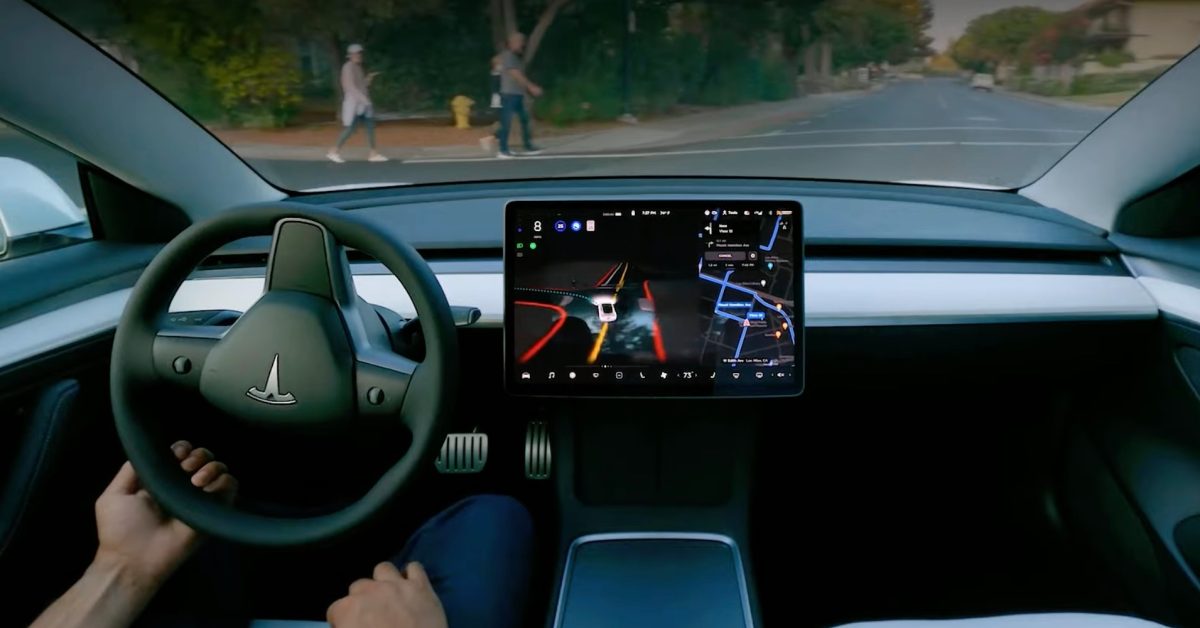
Tesla is rolling out an update that allows its Full Self-Driving (Supervised) system to intervene even when the driver is manually driving. The feature is designed to detect an imminent collision and, when braking may not be enough, take directional control to steer around an obstacle. For a business owner, the bigger lesson is not whether you operate a Tesla. It is how AI is beginning to make decisions in the background, sometimes before a person deliberately asks it to act.
That same pattern is appearing in business software. An automation platform may flag a suspicious transaction, pause an unusual payment workflow or alert you to a likely stock shortage without waiting for you to inspect every record. The benefits can be significant, but so can the risks when an automated system makes the wrong call.
What Happened
Tesla announced that Full Self-Driving (Supervised) version 14.3.9 was starting to roll out with a new “active safety feature set”. According to the original report, the system can activate on the driver’s behalf when it detects an imminent collision and believes Automatic Emergency Braking may not be sufficient. Source: Electrek
Automatic Emergency Braking normally responds by applying the brakes. Tesla’s new approach can add directional control, allowing the car to steer to avoid an obstacle when braking alone may not prevent a crash. The company also said the feature may engage when the driver appears heavily distracted or has accidentally disengaged Full Self-Driving. Source: Electrek
The important change is that the system is not limited to periods when the driver intentionally turns on Full Self-Driving. A part of the software stack can remain active in the background during manual driving, ready to intervene in selected situations. However, Tesla has not publicly explained all the conditions governing the feature, including whether it can be switched off or how the software determines that steering is safer than braking. Source: Electrek
The report also highlights concerns about false positives, including earlier observations of unexpected swerving and phantom braking associated with Tesla’s driver-assistance systems. A mistaken brake application can be alarming; an unexpected steering action can introduce a different category of danger. Source: Electrek
Why This Matters for Malaysian SMEs
Most Malaysian SMEs do not need to build autonomous vehicles. You do, however, need to manage decisions made by software. Consider a Klang Valley wholesaler whose driver delivers products to restaurants, a Penang engineering firm sending technicians to factories, or a Johor retailer coordinating stock across several outlets. Each operation depends on people making decisions quickly while handling incomplete information.
AI safety features can help reduce preventable mistakes. A fleet-management system could alert you when a driver is repeatedly braking harshly, travelling outside approved routes or driving for unusually long periods. A warehouse system could flag a mismatch between picked items and a customer order before dispatch. An accounting workflow could hold a payment when the supplier bank details change unexpectedly. These interventions follow the same broad principle as Tesla’s update: software watches continuously and steps in when a risk pattern appears.
Yet you should not treat an automated intervention as automatically correct. A delivery route may look unusual because a road is closed. A supplier’s bank account may change after a legitimate business restructuring. A customer’s order may be intentionally different from its usual pattern. If your system blocks, redirects or rejects work without a review path, the control intended to protect your company may interrupt operations instead.
| AI safety lesson | SME application | Control you should add |
|---|---|---|
| Intervene only when risk is meaningful | Flag unusual payments or orders | Set thresholds and exception rules |
| Keep a human responsible | Review supplier, payroll and customer changes | Require approval for high-impact actions |
| Record what the system did | Track blocked transactions and alerts | Maintain an audit trail |
| Test false alarms | Check whether alerts interrupt normal work | Review results monthly |
What You Can Do Now
Start by listing the business decisions where an error would create the greatest disruption. For a small manufacturer, that may include inventory purchasing, production scheduling and quality checks. For a services company, it may include appointment allocation, customer communications and employee access to confidential files. Rank these decisions by operational impact rather than by how impressive the technology sounds.
Next, decide which actions AI may perform automatically and which require your approval. Low-risk actions could include categorising emails, reminding customers about appointments or identifying duplicate records. Higher-impact actions such as changing bank details, issuing refunds, deleting records or altering payroll information should normally have a clear approval step.
Make sure your staff understand when automation is active. If employees do not know that software is screening transactions or monitoring vehicle behaviour, they may misunderstand an alert or assume that a blocked action is a system error. Simple internal instructions should explain what the tool checks, who receives an alert and how a legitimate exception is cleared.
You should also review the system’s activity logs. Look for repeated false alarms, alerts that nobody responds to and actions that staff routinely bypass. These patterns show where the rules need adjustment. Automation should reduce repetitive work without hiding important decisions from you.
Good automation is not software that takes every decision away from you. It is software that notices risk early, explains what it found and gives the right person a practical way to respond.
The Bigger Picture
Tesla’s update illustrates a broader development in AI: systems are becoming proactive rather than merely responsive. Earlier software waited for a command. Newer systems observe activity, predict potential problems and intervene. That can improve safety and efficiency, but it also raises questions about transparency, accountability and control.
For Malaysian SMEs, this means choosing technology based on operating controls, not just features. When you evaluate an AI-powered tool, ask what data it uses, what action it can take, how you can reverse that action and whether the system keeps a record. You should also ask what happens when the software is uncertain. A useful system should be able to escalate a questionable case instead of forcing a confident-looking decision.
The Tesla story is also a reminder that “supervised” automation still needs active human oversight. Whether the setting is a vehicle, a CRM system or an accounts workflow, the person responsible must understand the system’s limits. AI can process information quickly, but your team remains responsible for defining acceptable risk and checking whether the results fit the real situation.
As automation becomes more deeply embedded in daily operations, your competitive advantage will come from using it carefully. Begin with one process where errors are frequent and measurable. Add alerts, approval rules and an audit trail. Review the outcomes with your team, then expand only when the controls work. That approach lets you gain the practical benefits of AI while keeping your business decisions visible, accountable and manageable.
Ready to Streamline Your Operations?
Technology moves fast. Your operations should keep up. AutoRunBiz builds AI systems that run your daily workflows — from WhatsApp order capture to accounting. Book a free 15-min ops audit →