
Autonomous Driving’s Real Lesson for Your Business
A high-stakes technology battle is unfolding between Waymo and Tesla, but you do not need to operate a fleet of vehicles to learn from it. The central question—whether businesses should rely on a single powerful AI system or combine AI with multiple safeguards—applies directly to Malaysian SMEs adopting automation.
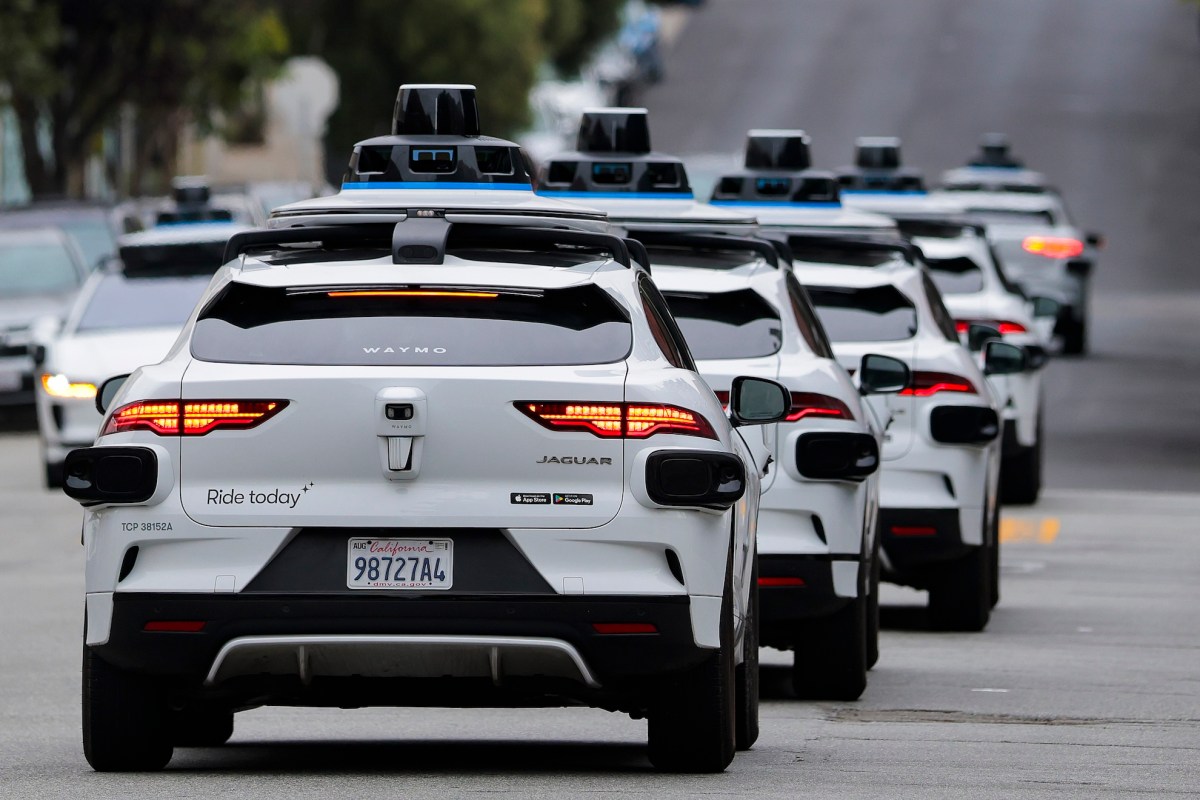
Waymo is defending its use of cameras, lidar and radar, while Tesla is pursuing a camera-and-AI approach for its planned Cybercab. The disagreement is not merely about vehicle design. It is about how much trust businesses should place in automation when mistakes affect people, operations and reputation.
For a Malaysian SME, the practical takeaway is clear: automation should not be judged only by how impressive it looks in a demonstration. You should assess how it performs in real conditions, how failures are detected and what happens when the system encounters something unexpected.
What Happened
According to TechCrunch, Waymo recently argued that fully autonomous vehicles require a combination of sensors rather than cameras alone. The company said its experience across more than 200 million real-world miles shows that cameras, lidar and radar create a more redundant view of the environment.
Waymo also criticised “pure end-to-end” AI systems that take raw visual information and directly produce driving commands. The company warned that such systems may experience black-box failures, where it is difficult to explain why the AI made a particular decision. Waymo made these points shortly before Tesla was expected to formally introduce its two-seater Cybercab at a September 3 event, according to the same TechCrunch report.
The two companies represent different paths. Waymo combines several sensors and operates vehicles supplied by other manufacturers. Tesla develops its own vehicles and is betting that cameras and AI can deliver full autonomy at scale. TechCrunch reported that Waymo’s network was operating in more than a dozen United States cities, with around 4,000 robotaxis and approximately 500,000 paid trips per week. Tesla, meanwhile, has been trialling a smaller robotaxi network in selected cities in Texas and Florida.
The debate has attracted attention because success could influence the future of driverless transport. Tesla’s Cybercab is designed without a steering wheel or pedals, while a recent company filing indicated an ambition to build more than 125,000 units annually, as reported by TechCrunch.
Why This Matters for Malaysian SMEs
You may not be developing autonomous vehicles, but your business is likely considering AI for customer service, sales administration, accounting, stock management, recruitment or marketing. In each case, you face the same design choice: should one AI tool make decisions end to end, or should it work alongside rules, human review and additional data checks?
Consider a Malaysian distributor using AI to process purchase orders. A single end-to-end system may read an email, identify products, update inventory and create an invoice. That can be convenient, but a typo in a product code or an unusual customer request could create a chain of errors. A more resilient setup might combine document recognition, inventory rules, approval thresholds and a final human check for unusual orders.
The Waymo example also highlights the importance of operating data. TechCrunch reported that Waymo used its accumulated real-world driving experience to support its position on sensor redundancy. For your business, this means testing automation against actual Malaysian conditions rather than relying only on vendor demonstrations. Your records may contain mixed Bahasa Malaysia and English, local abbreviations, handwritten notes, delivery instructions, festive-season demand spikes and inconsistent supplier formats.
For example, an AI chatbot may answer routine questions accurately but struggle with “boleh kurang sikit?” or a customer asking about delivery to a kampung address. An automated finance workflow may process standard invoices but misread service tax details, purchase order references or bank account changes. These are not reasons to reject AI. They are reasons to design a workflow that identifies uncertainty instead of silently guessing.
| Robotaxi lesson | SME application | Practical action |
|---|---|---|
| Use multiple sources of information | Do not depend on one data field or one AI output | Cross-check customer, stock and transaction records |
| Expect unusual real-world conditions | Prepare for incomplete documents and unexpected requests | Create exception categories for human review |
| Monitor performance after launch | Track automation errors and missed cases | Review a sample of completed tasks every week |
| Keep safeguards around high-impact decisions | Protect payroll, compliance and customer data | Require approval for sensitive changes |
The Bigger Picture
The Waymo-Tesla disagreement reflects a broader divide in AI development. One side prioritises a layered system with several inputs, explicit safeguards and extensive testing. The other focuses on a simpler architecture that may be easier to scale if the model performs reliably in the real world.
Neither approach should be accepted blindly. A system with more components can create additional maintenance and integration work. A simpler AI workflow can be faster to deploy but may be harder to inspect when something goes wrong. Your decision should depend on the consequences of failure, the quality of your data and the availability of human oversight.
Automation is not just about asking whether AI can complete a task. You should also ask how the business will know when AI is wrong.
This is especially relevant for SMEs because a single error can have an outsized effect. A wrong delivery address can cause delays. An incorrect quotation can damage trust. A mistaken payroll calculation can create staff dissatisfaction. A customer-service reply that misunderstands a complaint can spread quickly on social media.
A sensible starting point is to separate your processes into three groups. First, automate repetitive, low-risk tasks such as sorting enquiries, extracting invoice details or sending appointment reminders. Second, use AI with approval for medium-risk tasks such as drafting quotations, recommending stock replenishment or preparing payment reminders. Third, keep direct human control over high-impact decisions such as employee termination, credit approval, legal commitments and changes to bank details.
You should also ask technology vendors specific questions before deployment. What information does the system use? Can you view an activity log? How does it flag uncertainty? Can you correct an error without repeating the entire process? Where is business data stored? Can access be limited by employee role? What happens when the service is unavailable?
The robotaxi story is a reminder that impressive AI must still prove itself under pressure. For your company, the winning strategy is not necessarily the most advanced tool. It is the workflow that gives you reliable results, visible controls and a clear recovery process when reality differs from the data.
As AI adoption accelerates, Malaysian SMEs that combine automation with sensible checks will be better positioned than those that simply hand over decisions and hope for the best. Start with one process, measure the results, document the exceptions and improve the system using what your team learns.
Ready to Streamline Your Operations?
Technology moves fast. Your operations should keep up. AutoRunBiz builds AI systems that run your daily workflows — from WhatsApp order capture to accounting. Book a free 15-min ops audit →