
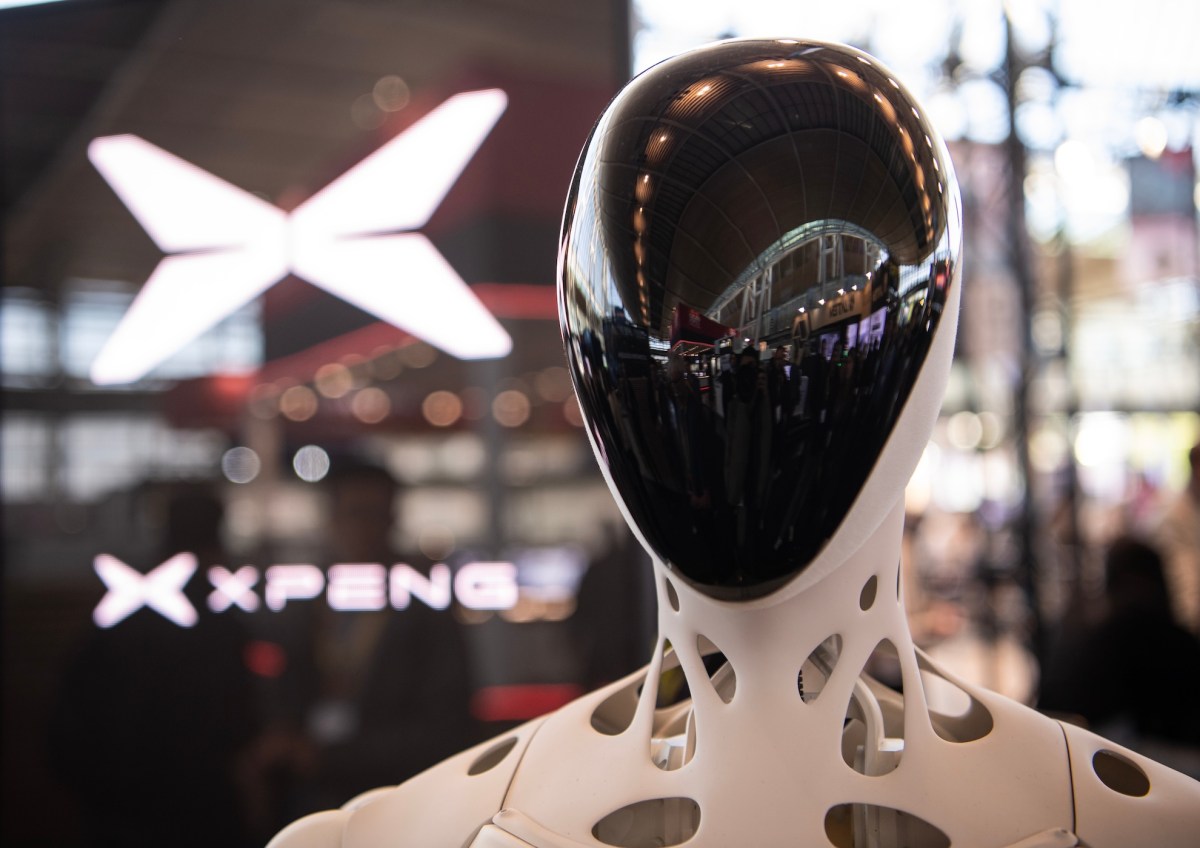
Robots Are Moving From Factory Floors Into Business Plans
You may not be planning to build a humanoid robot. You may be trying to manage late deliveries, staff shortages, repetitive paperwork, inconsistent stock counts, or a production line that depends too heavily on one experienced employee.
That is why the latest robotics push matters to you. Chinese automakers are investing heavily in humanoid robots because they already understand factories, supply chains, sensors, batteries, and mass production. The important lesson is not that your business should buy a human-shaped machine tomorrow. It is that physical automation is becoming more practical, and smaller businesses should start preparing for it.
TL;DR: Automakers are treating robots as a new business platform, not just factory equipment. For Malaysian SMEs, the immediate opportunity is to automate repeatable processes, capture operating data, and design work that can later be handled by software, machines, or both.
Humanoid robots are still developing, but the direction is clear: artificial intelligence is being connected to machines that can observe, decide, move, and complete physical tasks. Chinese companies such as Xpeng, Chery, BYD, Changan, GAC, Li Auto, SAIC, and Seres are exploring this area, following Tesla’s investment in its Optimus project. TechCrunch reports that Xpeng’s robotics unit raised more than $900 million at a valuation above $6.3 billion.
What This Means
A humanoid robot is designed to work in spaces built for people. That may include warehouses, factories, retail backrooms, kitchens, workshops, and loading areas. Instead of redesigning an entire workplace around a specialised machine, a humanoid robot could potentially use existing shelves, doors, tools, stairs, and workstations.
The technology combines several parts: cameras and other sensors to understand surroundings, motors and mechanical parts to move, artificial intelligence to interpret instructions, and software that helps the machine learn from examples. Researchers increasingly believe techniques used for language-based AI may help robots learn complex physical tasks. The source article explains that these developments are helping robots become more capable of learning different tasks.
However, you should separate useful automation from publicity. A robot that can walk, wave, or perform a controlled demonstration is not automatically ready for a busy Malaysian workplace. It must operate safely, work reliably, handle interruptions, and connect with your daily procedures.
The practical question is not “Can a robot do everything?” It is “Which repeatable task can you make clear enough for software or a machine to do consistently?”
Automakers have a strong starting position because they already have manufacturing expertise. According to the article, industry adviser Michael Dunne said Chinese automakers possess much of the hardware capability needed, while the major challenge is matching competitors on the artificial intelligence side. Read the full analysis on TechCrunch.
How This Applies to Malaysian SMEs
1. Warehousing and distribution. If you operate a wholesale, e-commerce, spare-parts, or distribution business, many daily tasks follow a pattern: receive goods, scan items, place products in locations, pick orders, pack cartons, and update records. You do not need a humanoid robot to benefit from this trend. Start by making product codes, shelf locations, picking instructions, and exception handling consistent. Once your process is structured, barcode tools, warehouse software, mobile devices, conveyor systems, or future robots can support it more easily.
2. Manufacturing and workshops. Malaysian SMEs in food processing, plastics, metal fabrication, electronics assembly, furniture, and automotive parts often rely on manual inspection, material movement, packing, and machine loading. These jobs may be suitable for gradual automation because they are repeated frequently. Begin with digital checklists and production records. Record which jobs cause delays, rework, or safety concerns. A clear record will help you decide whether the right solution is a sensor, a robotic arm, a vision camera, workflow software, or better staff training.
3. Retail, hospitality, and food operations. Shops, cafés, restaurants, laundries, and service businesses also have repeatable physical processes. Examples include replenishing supplies, checking order contents, preparing tables, sorting laundry, moving stock, and recording delivery arrivals. A humanoid robot may not be suitable for your premises for years, but the same thinking applies now: separate tasks that require judgement and customer interaction from tasks that simply follow a repeatable sequence. You can then automate the predictable part while your team focuses on service and problem-solving.
4. Construction, facilities, and maintenance. If your business manages buildings, equipment, air-conditioning systems, electrical installations, or property maintenance, better data collection may be more valuable than a robot. Use digital inspection forms with photos, timestamps, location details, and follow-up assignments. This creates a history of recurring faults. In the future, machines may assist with inspection or movement, but they will need clean instructions and reliable records to work safely.
5. Staff onboarding and knowledge transfer. Many Malaysian SMEs depend on experienced employees who know how to handle unusual orders, equipment, suppliers, or customer requests. When that person is absent, the business slows down. Record procedures as short videos, checklists, and decision guides. This does not replace practical judgement, but it gives new staff a dependable starting point. It also turns individual know-how into an operating asset that future automation can follow.
A Simple View of the Automation Path
| Business stage | What you should build | Example |
|---|---|---|
| Manual and inconsistent | Document the process | Write the steps for receiving stock |
| Digitally recorded | Capture events and exceptions | Log damaged items with photos |
| Partly automated | Connect tools and approvals | Trigger a reorder review after a stock update |
| Machine-assisted | Automate predictable physical work | Use scanning, conveyors, or robotic handling |
| Highly automated | Monitor safety and performance | Review errors, downtime, and human interventions |
The table is a practical roadmap rather than a prediction about when humanoid robots will arrive. Your business can move along these stages without waiting for a particular robot model.
Practical Takeaways
- List your repetitive tasks. Identify work repeated daily or weekly, especially lifting, sorting, counting, inspection, data entry, and movement.
- Measure frequency and errors. Track how often a task occurs and how many corrections or delays it creates. Do not rely only on memory.
- Standardise instructions. Use clear names, codes, locations, checklists, and approval rules.
- Start with low-risk automation. Digital forms, barcode scanning, automatic notifications, and workflow approvals are easier to test than complex machines.
- Protect human oversight. Keep a responsible person involved where safety, quality, customer commitments, or regulatory requirements are affected.
- Ask vendors practical questions. Check how a system handles exceptions, downtime, maintenance, training, data export, and integration with your existing tools.
- Review workplace readiness. Clear walkways, labelled storage, stable procedures, and reliable internet or connectivity help both people and machines work better.
- Do not automate a broken process. Fix unnecessary approvals, duplicate data entry, and unclear ownership before adding technology.
The Bigger Picture
The long-term importance of humanoid robots is not limited to the machines themselves. Automakers are showing that robotics may become part of a broader technology strategy involving artificial intelligence, manufacturing data, sensors, batteries, software, and after-sales service.
The article notes that Hyundai plans to bring Boston Dynamics’ Atlas robot to a Georgia factory and eventually use robots for tasks such as parts sequencing by 2028. TechCrunch provides these reported deployment details. Mobileye has also acquired humanoid robotics startup Mentee Robotics, while Rivian has developed a robotics spinout. The same report covers these industry moves.
For Malaysian SMEs, this could eventually create new suppliers, integrators, maintenance providers, training services, and specialist applications. You may not buy a general-purpose humanoid robot directly. Instead, you may use a local service provider that configures automation for pallet movement, inventory checks, cleaning, inspection, or production support.
Your best preparation is not to guess which robot will win. It is to build a business that understands its own work. Document the steps, collect reliable information, identify exceptions, and teach your team how to work with automation safely. When physical AI becomes more accessible, you will be in a stronger position to test it because your operations are already clear.
Robots may become a major part of industrial progress, but the immediate advantage belongs to businesses that start with disciplined processes. For you, the next action is simple: choose one repetitive task, document it this week, and identify what information a person or machine would need to complete it correctly.
Ready to Streamline Your Operations?
Your business should run itself. AutoRunBiz deploys AI agents to automate your daily operations — WhatsApp orders, invoicing, customer follow-ups, and accounting. Book a free 15-min ops audit to see where automation fits your business →