
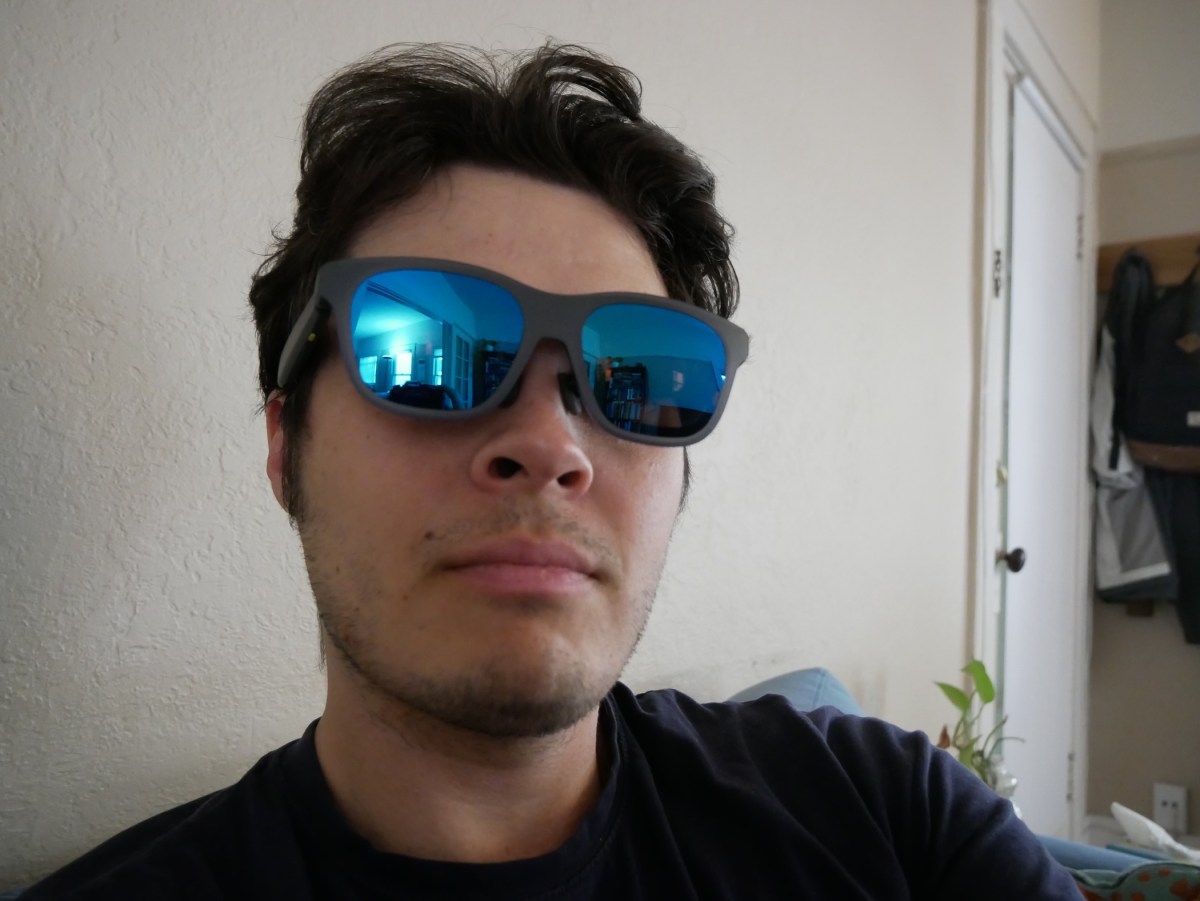
Smart Glasses Are Moving From Novelty to Business Tool
Smart glasses may look like a consumer gadget for watching films, but the more important story for Malaysian SME owners is what they reveal about the next stage of workplace technology. A pair of glasses that displays a large virtual screen could eventually help your staff inspect equipment, follow instructions, attend training or access customer information without holding a phone.
The immediate lesson is more practical: new technology is not automatically useful just because it feels futuristic. TechCrunch’s review of XREAL’s a01 wearable display shows both the promise and the limitations of screen-based glasses. For a small business with limited staff and tight operating capacity, this distinction matters. You need technology that removes friction from daily work—not another device that creates extra cables, heat, setup steps and support questions.
The XREAL a01 was released in May 2026 and is positioned mainly as a wearable display for gaming and entertainment. It uses dual mini OLED panels with 1080p resolution and brightness of up to 1,600 nits, according to TechCrunch. The glasses connect through USB-C to another device, such as a laptop, phone or handheld gaming system, because the glasses do not contain their own battery or internal computing system.
What Happened
TechCrunch writer Lucas Ropek tested the a01 mainly for watching films. He found that the image quality was vibrant and that pointing the glasses towards a wall created an experience similar to viewing a bright home projector. XREAL also presents the display as being comparable to a very large virtual screen, with the company claiming an equivalent viewing experience of 147 inches, as reported by TechCrunch.
However, the review identified an important weakness. When connected to a laptop, the same content still plays on the laptop screen only a short distance away. When connected to a phone, the phone must remain active because the glasses mirror the phone’s display. That makes the glasses less like an independent computer and more like a wearable external monitor. A separate Beam Pro device can provide a more isolated streaming setup, but TechCrunch reported that it is an additional device rather than part of the basic glasses experience.
The test also highlighted comfort and practical concerns. The glasses were described as relatively lightweight, but heat developed around the bridge of the nose and above the eyes during use. The review concluded that the a01 offered an interesting form of immersion, but was not necessarily better than watching a film on a conventional large television. That honest conclusion is useful for business owners: an impressive demonstration is not the same as a strong business case.
Why This Matters for Malaysian SMEs
For Malaysian SMEs, the strongest use cases are unlikely to be entertainment. They are more likely to appear in businesses where employees need both hands, work across different locations or repeatedly follow visual instructions. Think of a technician servicing air-conditioning equipment, a warehouse worker checking stock, a renovation supervisor reviewing a site plan or a café manager receiving step-by-step maintenance guidance.
A wearable display could allow a technician to view a checklist while keeping both hands on a machine. A field salesperson could access product specifications during a customer visit without repeatedly looking down at a phone. A logistics team could use visual prompts while scanning packages. A small manufacturing company could provide remote support to a worker on the factory floor, with an experienced supervisor guiding the task from another location.
These possibilities remain dependent on the hardware becoming more independent and business-ready. The a01 requires a connected device, and its screen-mirroring design may not be suitable for workflows where employees need to move freely or interact with several digital tools. Before you consider a purchase, ask whether the glasses solve a specific operational problem or merely display information in a different place.
| Potential SME use | What must be checked first | Practical starting point |
|---|---|---|
| Technician training | Hands-free viewing, comfort and safety | Test one guided maintenance procedure |
| Warehouse picking | Barcode integration and visibility | Trial a small stock zone |
| Remote site support | Mobile connectivity and video quality | Use one recurring inspection task |
| Sales presentations | Client acceptance and setup time | Compare with a tablet or laptop |
Your workplace environment also matters. Malaysia’s heat and humidity can make wearable electronics less comfortable, especially for outdoor work, kitchens, workshops and delivery operations. The TechCrunch review’s observation about heat is therefore more than a minor complaint. If a staff member removes the device after 20 minutes, it has little operational value regardless of its display quality.
“An impressive demonstration is not the same as a strong business case. Your team must be able to use the device safely, repeatedly and without disrupting the work it is meant to improve.”
How You Can Evaluate Smart Glasses
Start with the workflow, not the product. Choose one activity that currently causes delays, repeated questions or avoidable mistakes. Document how the task is performed today, including the devices used, the information employees need and the points where they stop working to check a screen.
Next, define a measurable outcome. You might track how long a site inspection takes, how often a technician calls a supervisor or how many stock-picking errors occur during a shift. Do not begin with a vague goal such as “modernise the business”. A clear baseline allows you to decide whether a wearable display helps.
- Connectivity: Confirm whether the device works with the phones, laptops or tablets your team already uses. The a01’s USB-C connection and phone compatibility considerations are described by TechCrunch.
- Mobility: Check whether staff can walk, handle tools and communicate safely while wearing it.
- Comfort: Test the device through a complete work session, not just a five-minute demonstration.
- Visibility: Assess performance in bright outdoor areas, dim rooms and reflective environments.
- Data protection: Decide what customer, employee or operational information may appear on the display.
- Support: Identify who will configure devices, troubleshoot connection problems and manage updates.
Run a short pilot with one employee and one process. Ask the user to complete the task using the wearable display, then repeat it using the existing method. Compare speed, errors, comfort and interruptions. If a tablet, phone or wall-mounted screen performs just as well, the simpler option may be the better choice for your business.
The Bigger Picture
The a01 review points to a broader transition in extended reality hardware. Today’s products may still depend heavily on another device, but manufacturers are working towards glasses with stronger processors, operating systems and interaction methods. TechCrunch reported that XREAL’s Project Aura is being developed with Android XR, includes native hand tracking and uses a separate computing puck that can be carried in a pocket. Those details come from TechCrunch.
For Malaysian SMEs, this means you do not need to rush. The technology is worth monitoring, particularly if your business involves field service, training, logistics, healthcare support, tourism or industrial work. But you should build the surrounding digital foundation first: organised documents, standard operating procedures, reliable mobile connectivity, clear access permissions and software that can provide information in a structured format.
When wearable displays become more independent, those foundations will determine whether your business can use them effectively. A pair of smart glasses cannot fix unclear procedures or scattered data. It can only present useful information if your business already knows what information staff need and when they need it.
The sensible approach is to watch the category, test only against a real workflow and keep your evaluation focused on staff safety and business results. Smart glasses may eventually become a practical tool for Malaysian SMEs. For now, the opportunity is not to buy the most futuristic device. It is to identify the tasks where hands-free information could genuinely help you serve customers better and operate with fewer interruptions.
Ready to Streamline Your Operations?
Technology moves fast. Your operations should keep up. AutoRunBiz builds AI systems that run your daily workflows — from WhatsApp order capture to accounting. Book a free 15-min ops audit →