
Why Tesla’s Solar Strategy Matters to Your Business
Tesla’s solar business is changing direction. The company has discontinued its Solar Roof product in the United States and is focusing instead on conventional solar panels, Powerwall batteries, software and a network of third-party installers. Electrek reported this change on 26 August 2026.
For you as a Malaysian SME owner, this is more than a story about an overseas electric vehicle company. It is a practical lesson in how energy technology is evolving. Businesses are moving from buying a single piece of equipment to adopting an integrated system involving generation, battery storage, monitoring, installation partners and digital service platforms.
Whether you operate a café, workshop, office, retail outlet, warehouse, clinic or small factory, electricity reliability and energy management affect daily operations. A power interruption can stop payment terminals, refrigeration, production equipment, internet access and customer service. Tesla’s shift shows why you should evaluate the whole energy system rather than focusing only on solar panels.
What Happened
Tesla launched Solar Roof in 2016 after acquiring SolarCity, previously one of the largest residential solar installers in the United States. However, Solar Roof did not achieve broad adoption. According to Electrek, Tesla had installed about 3,000 Solar Roofs in the US by the end of 2022, representing approximately 0.17% of residential solar installations that year. Source: Electrek.
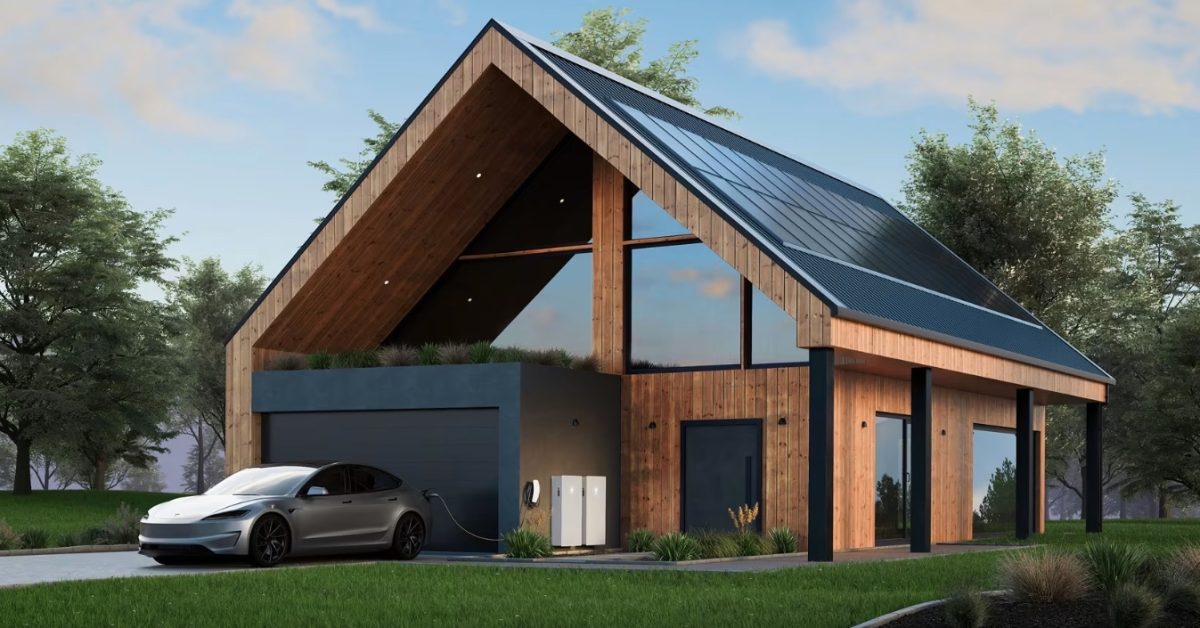
Tesla has now discontinued Solar Roof and is promoting a more conventional system based on a new 420-watt solar panel manufactured at its Gigafactory in Buffalo, New York. The panel is designed to work with Powerwall 3, which combines a home battery with a solar inverter. Tesla’s online design tool places solar panels and Powerwall 3 together as the default configuration, although customers can still select solar-only systems. Source: Electrek.
The other major change is Tesla’s installation model. Instead of relying mainly on its own installation crews, Tesla has expanded a certified partner network. Electrek reported that Tesla listed more than 7,000 installers across more than 35 countries, compared with about 2,000 certified installers across 14 countries in late 2024. These partners use Tesla’s “Tesla One” software platform to quote, install and service energy products. Source: Electrek.
Why This Matters for Malaysian SMEs
The first lesson is that solar adoption is becoming a systems decision. Installing panels may reduce your dependence on grid electricity during sunny hours, but a battery can help manage interruptions and shift stored energy to periods when your equipment still needs power. For example, a bakery may generate solar energy during the day while using refrigeration and production equipment throughout operating hours. A battery and monitoring system can provide additional flexibility when the business is not generating enough solar energy.
In Malaysia, the right setup depends on your building, operating schedule, roof condition, local electricity arrangements and equipment requirements. A restaurant that operates from morning until late night has a different energy profile from a logistics office that mainly operates during business hours. A small manufacturer may need to protect sensitive machinery, while a retail shop may prioritise uninterrupted point-of-sale systems and security equipment.
The second lesson is to examine the installer and service model carefully. Tesla’s experience shows that a recognisable technology brand does not necessarily mean every customer receives the same installation experience. In its current US model, the service may be delivered directly by Tesla or by a certified third-party installer, depending on location. Source: Electrek.
You should apply the same discipline when comparing Malaysian solar or battery providers. Ask who will perform the site survey, who is responsible for approvals, who monitors the system, who handles warranty claims and how quickly replacement parts can be supplied. A cheaper quotation may not be useful if no one takes ownership when the system develops a fault.
| Business question | What you should check |
|---|---|
| What problem are you solving? | Lower daytime grid usage, backup power, energy visibility or a combination |
| When do you use the most electricity? | Match your operating hours with solar generation and battery requirements |
| Who installs and supports it? | Confirm the contractor, qualifications, response process and warranty contact |
| How will you measure results? | Track generation, consumption, battery activity, downtime and equipment alerts |
| Can the system grow? | Check whether additional panels, batteries or monitoring integrations can be added |
What You Can Learn From Tesla’s Product Decision
Solar Roof was visually distinctive because the roof itself incorporated solar technology. Yet the product was difficult to scale. Electrek described it as expensive, slow to install and unable to reach a meaningful share of the residential solar market. Source: Electrek.
For your business, this is a reminder to favour dependable solutions over impressive demonstrations. A standard solar panel system may be less visually novel than a solar roof, but it may be easier to inspect, repair, replace and expand. When selecting technology, ask whether it solves an operational problem consistently, not whether it attracts attention during a product launch.
This principle also applies to business software. You may be tempted by an advanced automation platform with many features, but the better choice is usually the one your staff can use reliably. The same applies to inventory systems, customer relationship management, accounting tools and energy monitoring platforms. Practical adoption matters more than a long feature list.
The Bigger Picture
Tesla’s overall energy revenue reached $12.8 billion in 2025, an increase of 27% year on year, but Electrek reported that the growth was driven mainly by battery storage products such as Megapack and Powerwall rather than rooftop solar. Source: Electrek.
This suggests a wider technology trend: energy businesses are increasingly becoming software and infrastructure businesses. Panels produce electricity, batteries store it, inverters control it, sensors measure it and software helps people understand and optimise the system. The physical hardware is only one part of the value.
For an SME, the important question is not simply “Should we install solar?” It is “How can we make our energy supply more visible, resilient and manageable?”
That question connects directly with automation. A monitoring platform could notify you when solar output falls unexpectedly, when battery performance changes, or when a refrigeration unit consumes more electricity than normal. You could combine energy data with operating schedules, maintenance records and production information to identify waste before it becomes a larger operational issue.
Before making a decision, document your current electricity usage and identify the equipment that must remain operational. Separate essential loads from non-essential loads. Request proposals from more than one provider and insist on a clear handover process. Ensure your staff know how to read basic system alerts and whom to contact during a fault.
Tesla’s retreat from Solar Roof does not mean solar technology is disappearing. It shows that successful deployment often depends on standardisation, reliable partners and a complete service model. For Malaysian SMEs, the practical takeaway is straightforward: choose technology that fits your building and workflow, verify the people behind the installation, and connect the system to the way you already manage your business.
Ready to Streamline Your Operations?
Technology moves fast. Your operations should keep up. AutoRunBiz builds AI systems that run your daily workflows — from WhatsApp order capture to accounting. Book a free 15-min ops audit →