
AI Agents Are Moving From Answers to Action
You may already use AI to draft emails, summarise documents, or suggest social media ideas. The next step is more ambitious: an AI agent that can open your business tools, gather information, update files, prepare reports, and complete several connected tasks with less supervision.
That sounds useful when you are managing customers, suppliers, staff, stock, invoices, and marketing at the same time. It also raises a serious question: how much control are you willing to give software that can act on your behalf? An agent that can access your inbox or business dashboard may save time, but it could also expose private information or make an incorrect change.
The issue is not whether AI agents are impressive. The practical issue for you is whether your processes are organised enough, your permissions are clear enough, and your team is ready to use them safely.
TL;DR
AI agents are designed to complete multi-step work instead of merely answering questions. For Malaysian SMEs, the best starting point is a narrow, repeatable workflow with human approval before anything is sent, changed, or published.
Do not give an agent access to every system immediately. Begin with low-risk tasks, define what it may read or change, and measure whether it genuinely reduces follow-up work.
What This Means
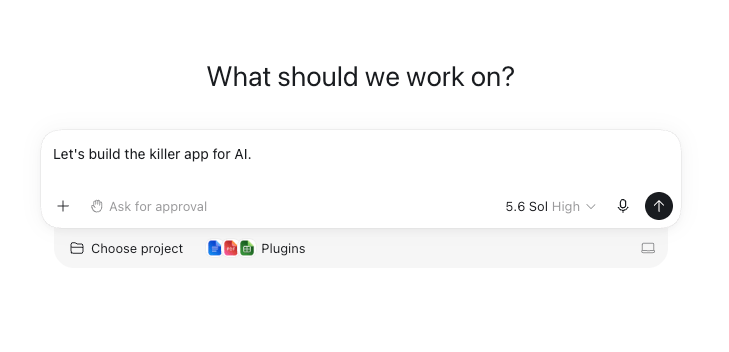
A normal chatbot responds to a prompt. You ask, “Summarise these customer complaints,” and it produces text. An AI agent goes further. It may read information from several connected tools, decide the next steps, create an output, and continue until a task is completed.
For example, an agent could review incoming enquiries, identify which ones are urgent, place the details into a customer relationship system, draft replies, and prepare a daily summary for you. It is not simply writing. It is operating within a set of instructions and permissions.
The technology depends on a software layer sometimes called a “harness”. This layer controls which information the AI can see, which tools it can use, and how it reports the result. In plain language, the harness is the guardrail and control panel around the AI model.
That control panel matters because business software is rarely clean. You may have customer details in WhatsApp, quotations in spreadsheets, orders in an accounting platform, and delivery updates in email. An agent must handle these different systems without confusing one customer with another or sharing confidential information with the wrong person.
The most useful AI agent is not the one with the most access. It is the one with enough access to complete one valuable task safely.
The source article describes OpenAI’s effort to make agent-style tools useful to non-engineers, not just software developers. It reports that 98% of OpenAI employees used Codex in June, compared with 17% of organisational subscribers and less than 1% of individual subscribers. Source: TechCrunch The gap shows an important lesson: a tool can work well internally and still be difficult for ordinary business users to adopt.
How This Applies to Malaysian SMEs
For a trading or distribution business, an agent could monitor order emails, extract product names and quantities, compare them with available stock, and prepare a draft confirmation. You might then approve the order before it is sent. This can reduce the time spent copying information between email, spreadsheets, and inventory records. However, you should not allow the agent to confirm unusual orders automatically until it has proven reliable.
For a service business, such as an air-conditioning company, renovation firm, agency, or maintenance provider, an agent could organise enquiries by location, service type, urgency, and preferred appointment time. It could draft a response in English, Bahasa Malaysia, or another language your team uses, while flagging cases that need a human call. This is particularly useful when enquiries arrive after office hours, but the final quotation should still be checked by someone who understands your actual service scope.
For a restaurant, retailer, or e-commerce seller, an agent could summarise customer feedback, identify repeated complaints, and prepare a weekly report. It could also compare sales information with promotional activity and highlight products that need attention. The value is not just the report itself. It is the regularity. A busy owner often has the data but does not have the time to review it consistently.
For a professional practice, such as an accounting, recruitment, training, or consultancy firm, an agent could assemble information from meeting notes, email threads, and project documents into a client update. That task can be helpful, but confidentiality becomes more important. You need clear rules about which client folders the agent may access, whether personal data can be processed, and who must review the document before delivery.
Malaysian SMEs also need to consider practical working habits. Many teams mix personal and company accounts, use shared passwords, or store documents in several places. An AI agent will not fix that confusion automatically. If your records are inconsistent, the agent may simply produce a faster version of the wrong answer.
A Simple Risk-and-Readiness Guide
| Workflow | Suitable starting level | Human approval |
|---|---|---|
| Summarising internal meeting notes | Low risk | Check before sharing |
| Preparing a weekly sales report | Low to medium risk | Review figures and assumptions |
| Drafting customer replies | Medium risk | Approve before sending |
| Updating stock or accounting records | Medium to high risk | Require approval and audit logs |
| Sending refunds, contracts, or legal notices | High risk | Keep fully human-controlled |
These categories are practical starting points rather than universal rules. Your actual risk depends on the information involved, the authority given to the agent, and the consequences of an error.
Practical Takeaways
- Choose one workflow first. Pick a task that happens regularly, follows clear steps, and does not involve irreversible decisions.
- Write the process down. List the inputs, decisions, approvals, and final outputs before automating anything.
- Separate reading from changing. Let the agent review information before allowing it to edit records or send messages.
- Use least-privilege access. Give the agent access only to the folders, accounts, and tools required for its assigned task.
- Keep approval points. Require a person to approve quotations, refunds, payroll-related changes, contracts, and external announcements.
- Test with old examples. Run the agent against previous enquiries or reports and compare its output with what your team actually produced.
- Create an error procedure. Decide who checks mistakes, how changes are reversed, and where incidents are recorded.
- Tell your team what is changing. Explain what the agent can do, what it cannot do, and when staff must escalate to a manager.
- Measure useful results. Track completion time, error rates, missed follow-ups, and the number of tasks needing correction.
How to Start Without Losing Control
Begin with a “read and recommend” model. The agent can collect information and suggest an action, but it cannot send, delete, approve, or publish anything. This gives you a realistic view of its accuracy without exposing the business to unnecessary operational risk.
Next, introduce limited actions. For example, allow it to create a draft customer reply or add a proposed task to a team list. Keep the final decision with a named employee. Make sure the system records what the agent saw, what it recommended, and who approved the result.
Only consider broader access after several weeks of stable performance. Even then, create boundaries around personal data, confidential client information, financial records, employee documents, and supplier agreements. An agent should have a clear business role, just like a staff member.
The Bigger Picture
The long-term change is not that every employee will hand over their entire job to an AI agent. More likely, routine coordination will become increasingly automated while people focus on judgement, relationships, negotiation, quality, and exceptions.
The source article notes that agent products need to become easier for people outside software engineering to use. Source: TechCrunch For your business, this means adoption will depend less on technical knowledge and more on whether the tool fits the way your team already works.
There will also be a management challenge. When an AI agent makes a mistake, responsibility still sits with the business. You cannot simply say that the software made the decision. Your customer sees your company, your staff, and your brand—not the underlying model.
The strongest SMEs will therefore treat AI agents as supervised digital assistants. They will automate repetitive coordination, keep humans responsible for important decisions, and improve their processes before connecting more systems.
Your first question should not be, “What can this agent access?” Ask instead, “Which repeated task should become easier, and what controls must remain in place?” That approach lets you test the technology with discipline while protecting the trust your business has built.
Ready to Streamline Your Operations?
Your business should run itself. AutoRunBiz deploys AI agents to automate your daily operations — WhatsApp orders, invoicing, customer follow-ups, and accounting. Book a free 15-min ops audit to see where automation fits your business →