
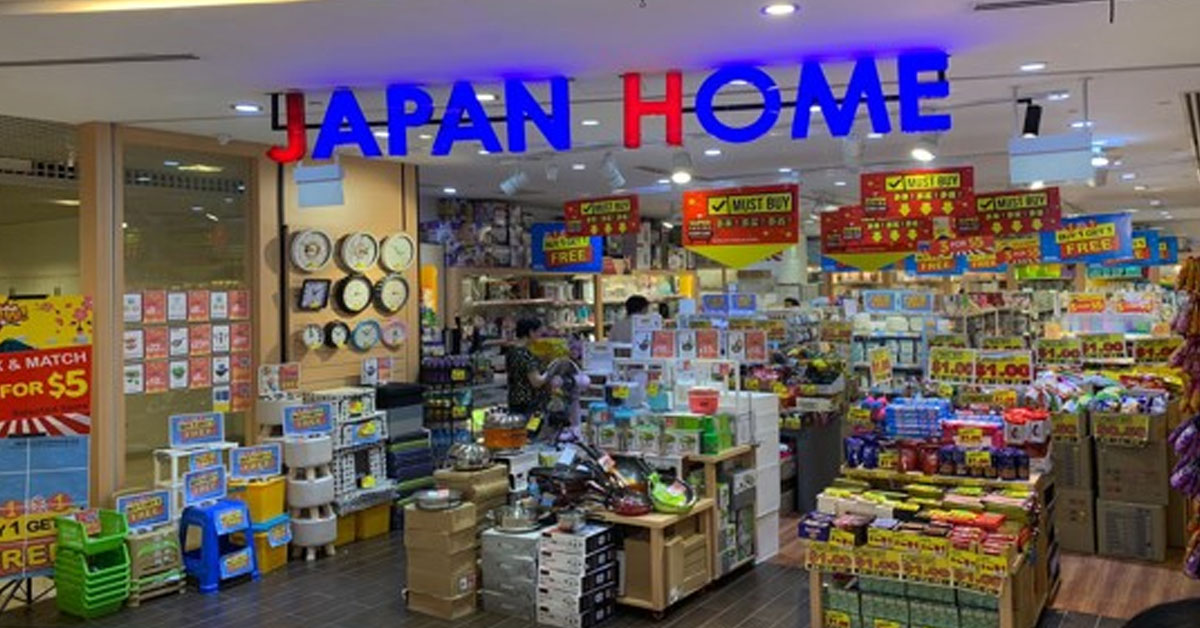
When a familiar shop starts disappearing, customers notice
If customers suddenly find your outlet closed, your product range changed, or your brand replaced by another name, they will start asking questions before you are ready to answer them. For a small business, uncertainty can spread quickly through WhatsApp groups, social media comments and word of mouth.
The reported changes at Japan Home in Singapore offer a useful lesson for Malaysian SME owners. The issue is not only about retail closures. It is about what happens when customer habits change, online competitors offer similar products, and a business must decide whether to reduce outlets, change operators or refresh its model.
Japan Home reached a peak of 34 Singapore outlets in June 2026, while at least five outlets announced closing-down sales between June and July 2026. Source Several more outlets were reportedly closed or undergoing stocktaking when visited in August 2026. Source
TL;DR
Japan Home’s Singapore situation shows how quickly a familiar retail model can come under pressure when shoppers compare products online and expect more convenience.
For your SME, the practical response is to monitor outlet performance, customer behaviour, stock movement and digital enquiries early—then make controlled changes before the problem becomes urgent.
What This Means
Japan Home is a household retail chain that built its appeal around affordable homeware and convenient physical locations. Its Singapore business reportedly licensed the operation of its remaining stores to Radha Exports, the company behind Valu$, under a three-year agreement effective 19 August 2026. Source
Some stores reportedly displayed Valu$ merchandise, while staff at one outlet were seen wearing Valu$ shirts. Other locations were described as joint operations or undergoing management changes. Source Whatever the final store format becomes, the underlying business decision is familiar: when a brand’s existing model becomes harder to sustain, management may consolidate operations, change the product mix, bring in a partner or reduce its physical footprint.
The financial figures explain why such decisions matter. Japan Home Singapore’s revenue fell from S$53.7 million to S$51.7 million for the financial year ended 30 April 2024. Source Losses after tax from continuing operations then increased from S$858,596 to S$2.3 million for the financial year ended 30 April 2025. Source
Customers also experienced operational changes. Japan Home terminated its JFUN and Gold Membership Programme from 21 July 2026, with members given until 18 August 2026 to redeem points and rebates. Source Its online e-shop was also taken down for maintenance, according to the report. Source
The important lesson is not “physical shops are finished”. It is that a business must regularly prove why customers should buy from it instead of choosing a cheaper, faster or more convenient alternative.
How This Applies to Malaysian SMEs
1. Your outlet network needs regular performance reviews. If you operate several shops, kiosks, service counters or branches, do not judge them only by sales. Track enquiries, repeat visits, average transaction size, stock turnover, staff workload, customer complaints and fulfilment delays. A branch may look busy but still consume too much management attention. Another may have modest daily sales but strong repeat customers and future potential.
You can begin with a simple monthly branch dashboard. Compare each location against the previous three months, not just against an annual target. Flag outlets where sales are falling for two consecutive months, slow-moving stock is increasing, or customers are asking for products that are not available. Early warning gives you more choices: change the assortment, improve local promotion, adjust staffing, share stock with another branch or test an online ordering option.
2. Product discovery has moved beyond the shop lot. Malaysian customers can compare household items, fashion accessories, phone products, beauty supplies and small equipment across marketplaces and social platforms before visiting you. The source article specifically identifies Chinese e-commerce platforms such as Taobao, Pinduoduo and Shein as important competitors to Japan Home’s value proposition. Source
That does not mean you must copy every online competitor. Instead, identify what customers still value about buying from you. It may be immediate availability, product inspection, advice, local warranty handling, easier exchanges, installation support or the ability to bundle related items. Make these advantages visible on your storefront, website, WhatsApp replies and social media posts. If your only message is “cheap”, a larger marketplace may eventually compare more favourably.
3. A change in operator or brand can confuse customers unless communication is planned. The reported Japan Home changes included closures, stocktaking, new merchandise and staff wearing another brand’s shirts. Source For a Malaysian SME, even a smaller change—such as a new franchise partner, relocation, business transfer or product-line replacement—can create uncertainty.
Prepare a customer communication checklist before the change begins. Explain what is changing, when it takes effect, whether existing orders remain valid, how warranties will be handled, where customers can obtain support and whether membership benefits continue. Put the same information on your shop notice, Google Business Profile, website, WhatsApp auto-reply and social pages. Consistent answers protect trust better than waiting for rumours to spread.
4. Loyalty programmes need operational discipline. A membership programme can encourage repeat purchases, but it also creates a promise. If you collect points, rebates or vouchers, your system should show balances accurately and your terms should be clear. When Japan Home ended its membership programme, members were given a limited redemption period before unused benefits expired. Source
For your business, keep a current customer list, record every reward issued and schedule reminders before expiry. Do not rely on one employee’s spreadsheet. A simple cloud-based customer and sales system can help you track purchase history, outstanding rewards and follow-up dates. This is particularly useful for salons, tuition centres, workshops, clinics, retailers and service businesses that depend on repeat visits.
Numbers worth watching
| Business signal | Reported Japan Home reference | What you can monitor |
|---|---|---|
| Store footprint | 34 Singapore outlets at peak in June 2026 Source | Sales, enquiries and stock turnover by branch |
| Announced closures | 5 outlets between June and July 2026 Source | Locations with repeated weak performance |
| Revenue movement | S$53.7 million to S$51.7 million for FY ended 30 April 2024 Source | Monthly revenue trend and category contribution |
| Losses | S$858,596 to S$2.3 million for FY ended 30 April 2025 Source | Operating expenses, waste and underperforming activities |
| Operating agreement | Three years, renewable for another three years Source | Contract dates, renewal conditions and transition duties |
Practical Takeaways
- Review every branch monthly: compare sales, customer enquiries, stock movement and repeat purchases.
- Separate products by role: identify bestsellers, reliable repeat items, seasonal products and stock that rarely moves.
- Record customer questions: repeated requests for unavailable items may reveal a product or service gap.
- Give customers a reason to visit: offer advice, immediate collection, demonstrations, fitting, repair support or easier returns.
- Prepare a transition message: explain changes to operating hours, product range, memberships, warranties and support contacts.
- Reduce manual reporting: connect sales, inventory and customer records so you see problems without chasing multiple spreadsheets.
- Keep an outlet contingency plan: know how orders, staff and stock will be handled if a location closes temporarily.
- Protect customer data: document who can access customer records when management or operating partners change.
The Bigger Picture
The long-term issue for Malaysian SMEs is not whether customers still shop offline. They do. The issue is that customers now move easily between physical stores, marketplaces, social commerce, messaging apps and direct brand websites. A shop is no longer the entire buying journey; it is one part of it.
This creates opportunities as well as pressure. A physical business can use its local presence to build trust, provide faster service and understand customer needs directly. A digital channel can extend your reach, collect enquiries and make it easier for existing customers to reorder. The strongest practical approach is usually not choosing between offline and online, but connecting the two.
Start small. Make your current stock visible on a simple catalogue. Let customers ask questions through WhatsApp. Record enquiries that do not become sales. Follow up with customers after delivery or service. Use those records to decide which products deserve more attention and which activities are distracting your team.
Japan Home’s reported restructuring also shows why owners should act before the numbers become severe. A business may remain familiar to customers while its underlying economics deteriorate. By the time closures become visible, the available choices may already be limited. Your advantage as an SME is speed: you can test a new product mix, change a process or improve customer communication without waiting for a large organisation-wide decision.
The best next step is straightforward: review your last three months of branch, product and customer data, then identify one area where customers are choosing a competitor because your process is less convenient. Fix that point first, measure the result and continue from there.
Ready to Streamline Your Operations?
Your business should run itself. AutoRunBiz deploys AI agents to automate your daily operations — WhatsApp orders, invoicing, customer follow-ups, and accounting. Book a free 15-min ops audit to see where automation fits your business →