
That Storeroom Full of Old Electronics Is a Problem You Can’t Ignore
Picture this: in the corner of your office, or maybe at home, there’s a box. Inside it sits three dead laptops, a monitor with a cracked screen, two printers that stopped working years ago, and a tangle of cables you keep telling yourself you’ll sort out someday. You’ve thought about getting rid of them, but you’re not sure how. So they sit there, gathering dust.
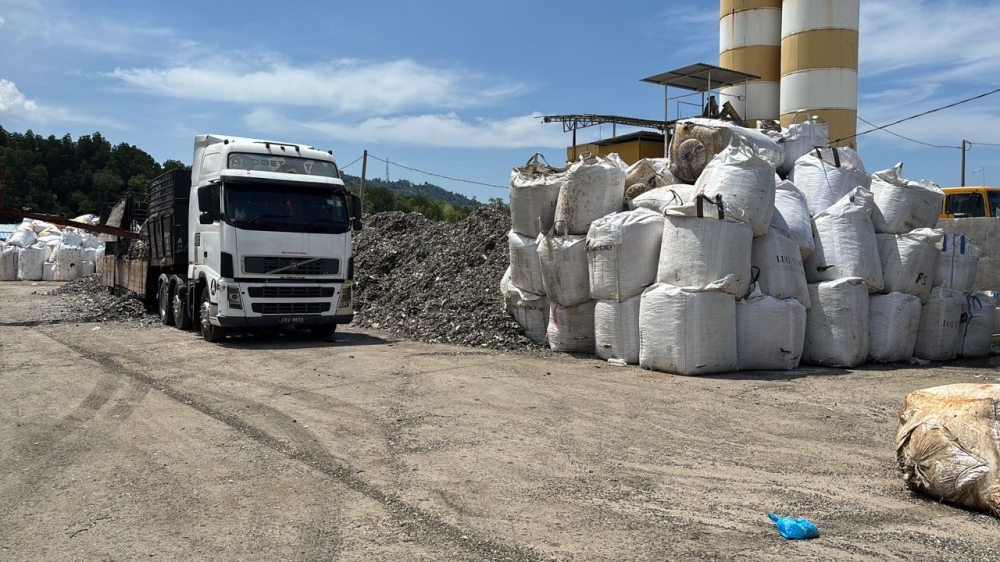
Now consider this: every year, thousands of tonnes of electronics leave Malaysian businesses just like yours — some through proper channels, and some through collectors who promise to “handle everything” while charging you nothing. That second group is exactly the problem. Malaysia’s enforcement agencies are now sending back 1,259 shipping containers of illegal electronic waste to their countries of origin by the end of 2026. That’s roughly 8,000 metric tonnes of seized e-waste accumulated over just two years — and a big chunk of it started as someone’s “perfectly fine disposal.”
If your business owns computers, phones, routers, or even a point-of-sale system, this directly concerns you. Not because you’re breaking the law — but because the people who collect your e-waste might be.
TL;DR
The Malaysia Border Control and Protection Agency (AKPS) is repatriating 1,259 containers of illegal e-waste across three enforcement phases. This matters to you because your old office electronics could be entering that illegal pipeline without your knowledge — with consequences that trace back to your business. This article explains what’s happening, what it means for you, and how to protect yourself.
What This Means: The One-Way Ticket Explained
The operation is being handled by AKPS together with the Royal Malaysian Customs Department and Port Klang Authority. So far, 255 containers have already been shipped out. The second phase is currently in progress, targeting 533 containers, and the third phase begins October 1, aiming for the remaining 578 containers.
Here’s the part that should grab your attention: the enforcement team has discovered that while these banned materials aren’t being re-imported, some containers are coming back to Malaysia carrying other commercial goods. That means the illegal e-waste trade isn’t just a one-way problem. It’s an organised operation with a return loop built in.
“AKPS and other enforcement agencies remain committed to tightening risk profiling and taking stern legal action against any party attempting to violate laws and international conventions.” — Datuk Nik Ezanee Mohd Faisal, AKPS Port Klang commander
For a small business owner, this translated into a simple reality: ignoring what happens to your old electronics is no longer a neutral choice. It’s a risk you’re accepting by default.
How This Applies to Malaysian SMEs
1. Your Business Name Can End Up in an Illegal Chain
Think about how you’ve disposed of electronics before. Maybe you sold your old company laptops to a walk-in buyer at a second-hand shop. Maybe you handed them to a “recycling company” that a friend recommended. Perhaps you gave them to a relative who “knows someone” in the IT trade. In every one of these scenarios, the trail leads back to you. When enforcement agencies inspect a container of seized e-waste, they don’t just see circuit boards — they see serial numbers, asset tags, and paperwork. Your company’s old devices, bearing identifiable markings, can end up in an illegal export shipment. Even if you didn’t intend that, you’re now part of an investigation chain.
AKPS commander Nik Ezanee acknowledged that scanning machines are highly efficient but human weaknesses in their operation still pose challenges. That statement reveals something important: enforcement relies on catching shipments as they move. The onus is on you to ensure your e-waste never enters that pipeline in the first place. You can’t assume “someone else will handle it properly.” You need to verify where your electronics go after you hand them over.
2. Your Customer Data Is Sitting in That Storeroom
Here’s the angle most business owners miss. That box of old laptops isn’t just obsolete hardware — it’s a storage unit for customer data, employee records, supplier details, and years of business communication. Under Malaysia’s Personal Data Protection Act (PDPA), you’re responsible for what happens to that data, even after you’d consider the device “dead.” A hard drive that won’t boot is still recoverable with the right tools. A phone with a cracked screen still contains messages your customers sent you in confidence.
If you hand those devices to an illegal e-waste collector, you haven’t disposed of your data problem — you’ve relocated it to an unmonitored location. The trade that Malaysia is now dismantling involves containers of toxic electronic waste heading to countries with loose data protection laws. The risk isn’t just environmental; it’s a genuine data breach waiting to happen, and the legitimate responsibility sits with you as the business owner.
3. Legitimate Recycling Services Exist — And You Should Be Asking Them Tough Questions
The good news is that this crackdown is pushing the e-waste industry toward professionalism. Collectors who once operated informally are now facing more scrutiny, which means the market is opening up for verified, compliant recycling and refurbishment services. As an SME owner, you now have an incentive to demand documentation: ask your collector for a disposal certificate, ask where devices end up, ask whether they perform data wiping before resale. Legitimate operators welcome these questions because they differentiate themselves from the unlicensed operators who make the industry look bad. If a collector gives you vague answers or says “don’t worry about it,” that’s your signal to walk away.
Practical Takeaways: Your E-Waste Disposal Checklist
- Conduct an e-waste audit. Walk through your office and count every electronic device that’s no longer in use. You can’t manage what you haven’t inventory-ed.
- Ask for references. Before using any collector, ask for client references and check whether they have any enforcement history attached to their name.
- Demand a chain-of-custody document. Get written confirmation of where your devices will go — whether for refurbishment, parts harvesting, or material recovery.
- Destroy data before disposal. For hard drives and storage media, use a certified data destruction service or physically destroy the drives yourself. There’s no reasonable excuse for handing over functional drives with intact data.
- Remove asset tags. If your devices carry company labels or inventory stickers, remove them before disposal so there’s no visible trace linking the hardware to your business.
- Keep a record. Hold onto the paperwork for at least three years, in case any question arises about past disposal practices.
The Scale, At a Glance
Here’s how the current repatriation operation breaks down, according to the numbers reported from Port Klang:
| Phase | Containers | Status |
|---|---|---|
| Phase 1 (completed) | 255 | Already shipped out |
| Phase 2 (in progress) | 533 | Currently being returned |
| Phase 3 (starts Oct 1) | 578 | Targeted for return by year-end |
| Total | 1,259 | ~8,000 metric tonnes over two years |
The Bigger Picture: Stricter Enforcement Is Here to Stay
This operation isn’t a one-off gesture. It reflects a sustained policy direction: Malaysia is serious about not being the region’s e-waste dumping ground. The continuous training of scanning officers mentioned in the report signals that enforcement capabilities are improving, not stagnating. For business owners, that means the risk of being caught up in an illegal e-waste chain will grow over time, not shrink.
What’s the long-term trajectory? In other countries that faced similar e-waste crises, the next steps were usually tighter import/export licensing, mandatory tracking for electronic waste handlers, and eventually, producer responsibility schemes that hold businesses accountable for the full lifecycle of their electronics. Malaysia is likely to follow a similar path — driven by commitments to international conventions against illegal waste handling. Forward-looking SMEs should get ahead of this shift now by building relationships with legitimate disposal partners, even if that small effort feels unnecessary today.
Your storeroom isn’t just clutter. It’s a decision awaiting your attention. The enforcement authorities are sending illegal e-waste back where it came from — make sure your business isn’t inadvertently part of the problem that comes knocking.
Ready to Streamline Your Operations?
Your business should run itself. AutoRunBiz deploys AI agents to automate your daily operations — WhatsApp orders, invoicing, customer follow-ups, and accounting. Book a free 15-min ops audit to see where automation fits your business →