
Your Phone Camera Is Already Running Your Marketing
Think about how often you grab your phone to shoot something for your business. A new product. A before-and-after shot. A quick video of your team at work. You probably do this multiple times a week without thinking about it. So when a phone maker announces a camera that moves on its own, it’s natural to ask: is this actually useful, or is it just something to gawk at?
The Honor robot phone is a headline-grabber. But you’re not a phone reviewer. You’re a business owner with a payroll to run and customers to serve. What you need to know is simple: will this help you produce better content with less effort?
Here’s an honest look at the technology and whether it earns a place in your daily workflow.
TL;DR
- The Honor robot phone uses a motorized camera module that physically tilts, pans, and rotates to track subjects and stabilize footage.
- For Malaysian SMEs, the practical wins are hands-free demos, smoother product videos, and easier self-recording without hiring anyone.
- It’s promising, not essential. Wait for local reviews and test the tracking in your actual working environment before buying.
What This Means: A Camera That Moves Itself
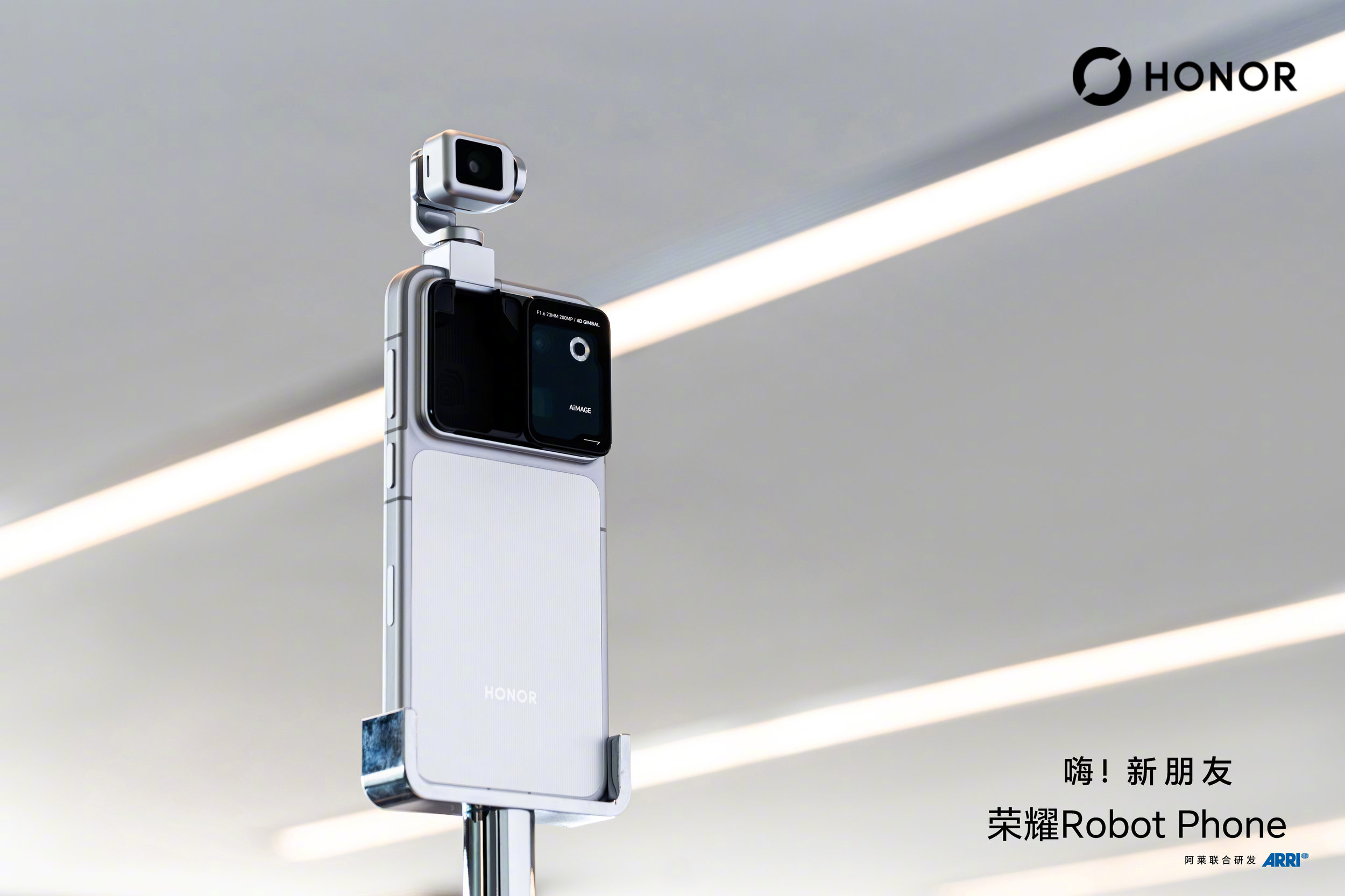
Most phone cameras today are fixed. The lens sits still, and the software compensates for shaking by cropping into the frame. That works, but it lowers the video quality and creates a slightly zoomed-in look. The Honor robot phone takes a different route. The entire camera module sits on a tiny motorized mount, similar to the gimbal rigs professional videographers use. When you move, the module moves in the opposite direction to keep your shot steady. When an object or person moves across the frame, the camera can rotate to follow it on its own.
That’s a meaningful difference. Instead of your phone guessing what to keep in frame, the lens physically points where you need it. For someone who records themselves cooking, demonstrating a product, or walking through a workspace, this removes the biggest headache in phone videography: keeping yourself in frame while your hands are busy.
The catch? A moving camera means more moving parts. Durability, battery drain, and software reliability are all open questions for any phone with mechanical hardware. That’s why the answer to “gimmick or innovation” lies not in the spec sheet, but in how well it works after a month of daily use.
How This Applies to Malaysian SMEs
Walk through any shop lot or operate a business long enough, and you’ll recognise the scene: an owner holding a phone at arm’s length, trying to show a product while also demonstrating how it works. The food vendor flipping roti canai while recording a Facebook reel. The boutique owner arranging batik on a mannequin while filming for TikTok Shop. The workshop foreman documenting a repaired engine block for a customer claim. Every one of them hits the same wall — you need two sets of hands, but you only have one.
A motorized camera with subject tracking changes that equation. Place the phone on a stand, hit record, and the camera follows your movements. A baker can tear a loaf slowly while the lens tracks the action. A hardware store owner can pick up a drill, demonstrate it on a piece of wood, and put it back without touching the phone once. For online sellers listing on Shopee, Lazada, or TikTok Shop, this means product videos that show every angle of an item without needing to edit or reshoot constantly.
There’s also the selfie factor. The robot camera can rotate to the front of the phone, which means you get the main camera’s sensor quality for self-recording — not the weaker front camera that most phones use. For business owners who record educational content or live-stream directly from their phones, this is a genuine upgrade in clarity. You no longer need to choose between seeing yourself and looking crisp.
But here’s the honest counterweight. Malaysian SMEs operate with thin margins and even thinner time budgets. If the camera app is buggy, the tracking misses, and the phone overheats during a 30-minute live sale, none of the hardware matters. The technology’s success depends on execution. Early adoption comes with risk, so the sensible move is to wait for Malaysian reviewers to test it in our heat, our indoor lighting, and our typical use cases before making a decision.
New camera hardware always looks impressive in a shop demo. What matters is whether it saves you time on the 47th use, not the first. For business owners, consistency beats novelty every time.
How Businesses in Malaysia Create Content Today
To understand whether this camera matters, look at how Malaysian SMEs already approach content:
| Content Activity | Typical Equipment | Main Struggle |
|---|---|---|
| Product photos for online listings | Smartphone, basic lighting | Shaky angles, inconsistent framing |
| Short-form videos for social media | Smartphone, tripod | Needing two hands for product demos |
| Live selling on marketplaces | Smartphone, ring light | Staying in frame while moving |
| Documentation for insurance or records | Smartphone | Getting a clear, complete shot |
These are day-to-day realities across the country. Any phone feature that removes one of these struggles directly buys you back time. That’s the real question to ask — not whether the phone is impressive, but whether it removes friction from work you already do.
Practical Takeaways
- Test before you commit. If you can, try the tracking feature in your actual workspace — a dim storefront or a bright outdoor stall — not just in an air-conditioned phone shop.
- Use it for hands-free demos first. The highest-value use for most SMEs is the ability to record a product demo without needing a second person to hold the camera.
- Pair the phone with a proper stand. A motorized camera still needs to be positioned at the right height. A simple tripod transforms what this phone can do for you.
- Check your streaming apps. Make sure the phone works with the platforms you already use for live selling or video publishing. A great camera that can’t stream directly is a partial tool.
- Think about your customers, not the specs. Buy because it helps you show your product clearly, not because a camera mount is cool. Your customers decide to buy based on what they see — make that look better.
The Bigger Picture
This phone is part of a longer trend: the slow disappearance of the barrier between thinking of a video and publishing it. For the past decade, smartphone cameras have improved through software. The next decade will see hardware that moves, rotates, and follows subjects on its own. The practical consequence for business owners is that creating professional-looking content will eventually require no camera skill at all — just a product and the willingness to press record.
This aligns with what we do at AutoRunBiz: removing repetitive work so you can focus on your actual business. A camera that tracks and stabilises on its own is, at its core, a small piece of automation. It handles the physical work so your attention stays on your product and your customer.
The smartest approach is to stay alert but not impulsive. The Honor robot phone may be the first of many. Even if this generation is not perfect, it signals where the market is heading. In a year or two, tools like this will be common, and the businesses that learn to use them early will have built a content library and a customer base while others were still deciding. That’s an advantage worth preparing for.
Ready to Streamline Your Operations?
Your business should run itself. AutoRunBiz deploys AI agents to automate your daily operations — WhatsApp orders, invoicing, customer follow-ups, and accounting. Book a free 15-min ops audit to see where automation fits your business →