
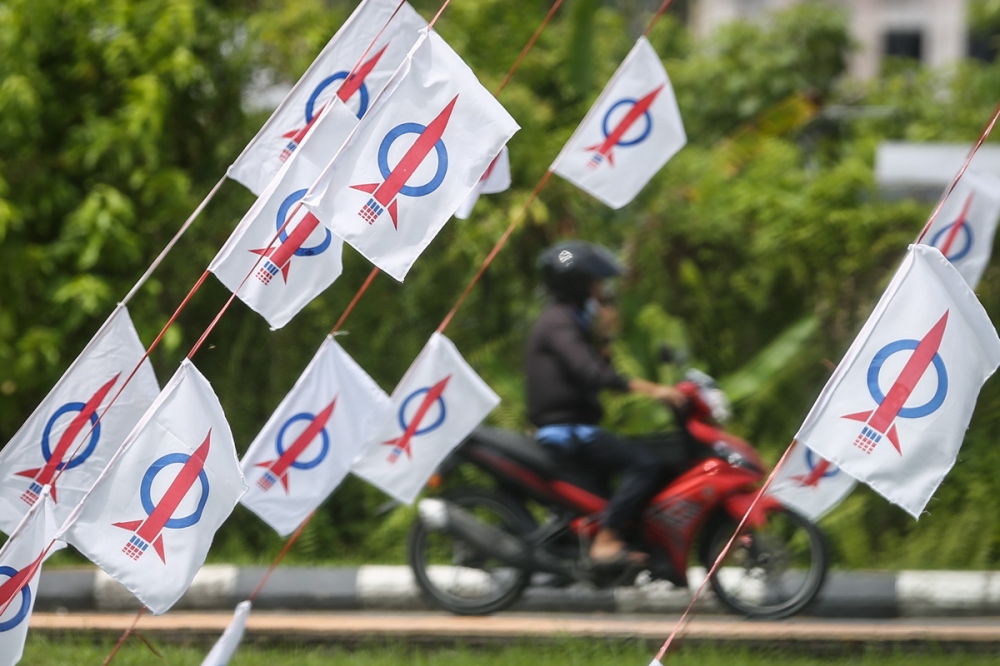
Another Political Headline. Why Should You Care?
You scroll past political news most days. Another statement, another party position, another round of speculation. It feels distant from your daily reality — serving customers, managing staff, keeping operations moving.
But think back to 2020 through 2022. Malaysia went through four changes of prime minister in seven years, a stretch that rattled the economy and spooked investors according to Malay Mail. Remember what that period felt like for your business? Orders slowed. Clients delayed decisions. Suppliers turned cautious. You held off on hiring, expansion, and upgrades because you could not predict what would change next.
That explains why a party’s decision to stay in government is not just political chatter. It is a signal about the environment you will be operating in for the next stretch of time. For a small business, the environment matters every bit as much as your product.
TL;DR: Perak DAP has confirmed it will remain in the Unity Government and support the reform agenda (source). For Malaysian SME owners, this points to more political continuity — fewer sudden policy shifts, steadier consumer confidence, and a longer runway to invest in your business. You do not need to follow every political twist, but you should understand what stability means for your plans.
What This Means, in Plain Language
On August 12, Perak DAP announced it will remain in the Unity Government and mobilise the party machinery to support Prime Minister Anwar Ibrahim’s reform agenda. The statement lands ahead of the 2026 DAP Party Conference, where 4,264 delegates from 1,704 eligible branches will vote on whether the party stays in the federal government (source).
Strip away the party politics and the core message is simple: a key governing party is choosing continuity over disruption. The announcement lists reform priorities including institutional reforms, judicial independence, anti-corruption efforts, easing household financial pressure, reforming the national revenue system, and protecting the rights of Malaysia’s multiracial society (same source).
The reasoning is stated plainly: Malaysia has already seen four changes of prime minister in seven years, and that instability hurt the economy and investor confidence. Staying in government, the party argues, prevents that “bitter experience” from repeating (quoted by Malay Mail).
“Political instability isn’t an abstract concept for small businesses. It shows up in delayed decisions, cautious customers, and a hesitation to commit to anything beyond the next few months.”
How This Applies to Malaysian SMEs
Here is how this plays out for a business owner like you — and why it is worth paying attention.
First, your planning horizon just got longer. SMEs contribute more than a third of Malaysia’s GDP and employ close to half of its workforce according to SME Corp Malaysia. Yet small businesses are also the most exposed to political whiplash — you lack the buffer to absorb sudden regulatory swings. When a major party commits to staying in government, it lowers the odds of a mid-term collapse. The assumptions you bake into your annual plan — about licensing, compliance, and tax treatment — are more likely to hold for the full year.
Second, the reform agenda touches your daily operations. Take the priorities named in the announcement and map them to your world. Anti-corruption efforts matter when you apply for permits or tender for projects. Judicial independence matters when a client refuses to pay and you need fair recourse. Revenue system reform matters because tax rules shape how you structure everything from payroll to expansion. These are not abstract governance topics. They determine how predictable your operating environment really is (reform agenda as listed by Perak DAP).
Third, consumer confidence follows political calm. When households are not anxious about national turmoil, they spend more normally. Your shop, workshop, clinic, or online store depends on customers who feel secure enough to make discretionary purchases. A stable news cycle is one of the quiet forces behind steady demand. When that stability lasts for months, consumer spending tends to hold up better across the board.
Fourth, stability changes what you can become. During turbulent stretches, most SMEs go into survival mode. Hiring freezes, training stops, upgrades get postponed. A stable window flips that incentive. The businesses that use calm stretches to build better operations — automating repetitive tasks, improving record keeping, developing their teams — pull away from competitors who spend the same period simply coasting.
| Reform area mentioned | What it can mean for your SME |
|---|---|
| Institutional reforms | More predictable processes for licensing, permits, and compliance |
| Judicial independence | Fairer outcomes when contracts or payments go wrong |
| Anti-corruption | Less pressure from unofficial demands in approvals and tenders |
| Easing household expenses | Customers keep their spending power |
| National revenue reform | Clearer, more transparent tax rules for your business structure |
| Multiracial harmony | A stable domestic market for your products and services |
Practical Takeaways for Your Business
Here is a checklist you can act on without becoming a political analyst:
- Track implementation, not headlines. Follow announcements from the relevant ministries — if revenue system reform is on the agenda, watch for consultation papers.
- Review your regulatory touchpoints. List the licences, renewal dates, and approvals your business depends on. Identify which ones could be affected by reform priorities.
- Extend your planning horizon. If you have been running 6-month plans, test whether a 12-month plan is realistic now.
- Watch your customers’ confidence. If orders are steady, it may be a good stretch to introduce new products or services rather than staying defensive.
- Use the calm to build better systems. Identify which parts of your operations are manual, repetitive, and error-prone — those are the first candidates for automation.
- Keep a “what if” file. Political continuity is likely but not guaranteed. Write down what you would do if the situation changed, so you are never reacting from scratch.
The Bigger Picture
Long-term, this signals Malaysia maturing as a political environment. The shift from rapid changes of government toward a coalition serving a full term matters beyond Malaysian politics. It affects foreign investment, the strength of the ringgit, and the confidence of large corporations — and ultimately, who those corporations choose as suppliers, partners, and vendors. SMEs ride on those currents.
Your job as a business owner is not to become a political commentator. It is to read the direction of the wind and position your business accordingly. A stable government gives you something precious: time. Time to improve your operations, train your people, and build systems that do not depend on you being everywhere at once.
At AutoRunBiz, we help Malaysian SMEs turn stable periods into productive ones by automating the repetitive work that drains attention and slows growth. When the environment stays calm, the businesses that pull ahead are the ones that used the calm wisely.
Ready to Streamline Your Operations?
Your business should run itself. AutoRunBiz deploys AI agents to automate your daily operations — WhatsApp orders, invoicing, customer follow-ups, and accounting. Book a free 15-min ops audit to see where automation fits your business →