
A San Francisco conference you’ll never attend — and the lessons you can still use
When you run a business with 5 to 50 employees in Malaysia, a startup conference in San Francisco can feel like it belongs to another universe. You’re juggling inventory, payroll, and customer complaints. You don’t have time to dream about building the next billion-dollar startup. So why should you care about TechCrunch Disrupt 2026?
Because the entire event is built around one question: “How do you build an enduring company in the AI era?” That’s the theme TechCrunch set for its own flagship conference, and it applies to your business in Johor Bahru, Penang, or Petaling Jaya just as much as it applies to startups in Palo Alto.
You don’t need a plane ticket to extract value from this event. Here’s what the agenda tells you about where business is heading — and how to prepare your Malaysian SME for it.
TL;DR
- TechCrunch Disrupt 2026 runs October 13–15 at Moscone West in San Francisco, featuring more than 200 expert sessions across six stages according to the official guide.
- The focus isn’t predicting AI’s future — it’s building companies in the AI era right now.
- Malaysian SME owners can apply the same “Monday morning” standard to their operations, networks, and AI adoption — without attending the event.
What This Means
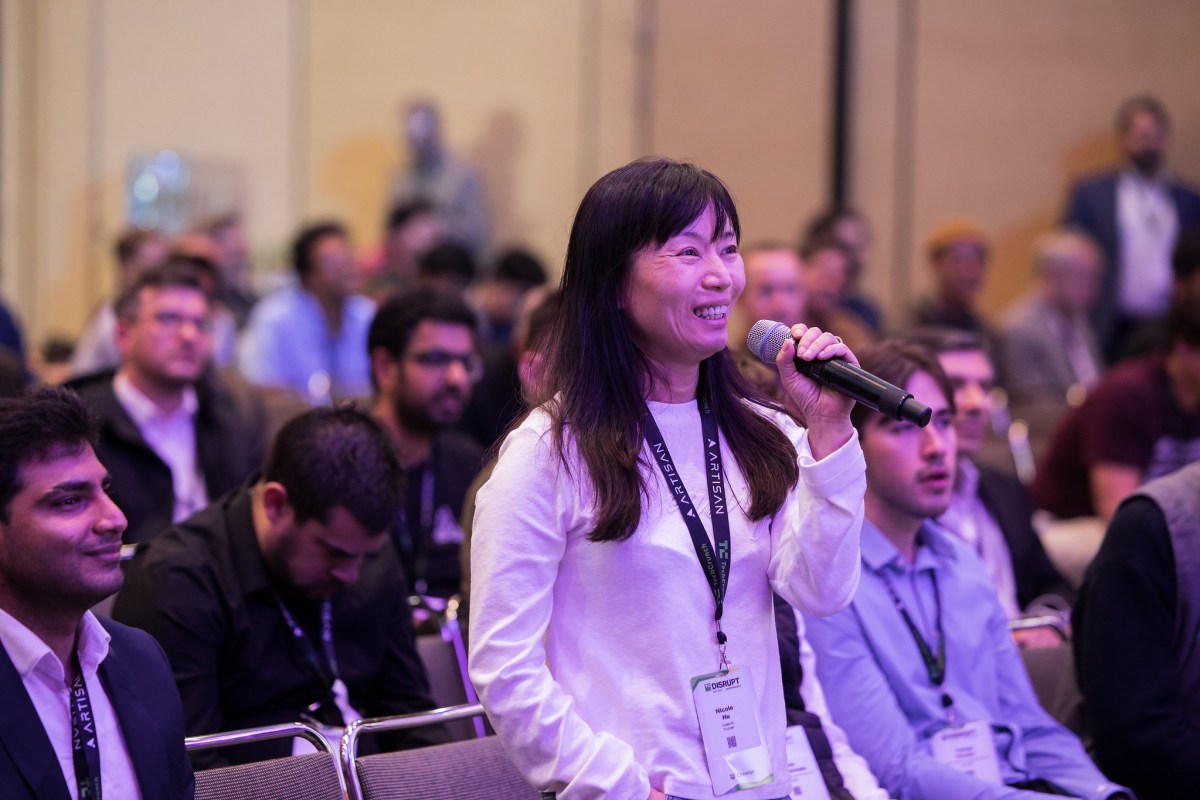
TechCrunch Disrupt is TechCrunch’s flagship event, drawing thousands of founders, investors, and startup team members. This year’s edition is built around a sharply practical focus: how do you build an enduring company in the AI era? The organizers say their programming reflects feedback from the startup community and “the reality on the ground.”
There’s the Startup Battlefield pitch competition, where selected startups pitch in front of top-tier VCs. There’s an Expo Hall and side events designed to spark conversations. And there are six stages covering the full spectrum of building a business.
Here’s what those six stages cover
| Stage | What it covers | What it means for an SME owner |
|---|---|---|
| Disrupt Stage | Big conversations with founders and industry leaders | Context for where technology is heading |
| Builders Stage | The tactical playbook: fundraising, hiring, go-to-market, scaling | Directly transferable to how you run your business |
| AI Stage | How startups build, deploy, and monetize AI | What you could be automating in your own operations |
| Real World AI Stage | Robotics, manufacturing, healthcare, autonomous systems | Matters if you’re in manufacturing or supply chains |
| Smart Money Stage | Fintech, payments, embedded finance | How money moves — affects your payment tools and cash flow |
| Smart Systems Stage | Chips, compute, energy, data centers | The infrastructure your software tools rely on |
All six stages are detailed in the founder’s guide to Disrupt 2026, which notes the event will feature names like RJ Scaringe of electric vehicle maker Rivian, Panos Panay of Amazon, and Paolo Ardoino of Tether.
What the “AI era” actually means for a Malaysian SME
You might think the AI era is about building chatbots or raising venture capital. It’s not. For a small business, it’s about doing everyday tasks faster and more reliably. The AI Stage at Disrupt focuses on how companies are building, deploying, and monetizing AI right now with practical lessons on agents, models, and infrastructure. For you, “deploying” might mean using AI tools to handle customer inquiries, summarize supplier quotes, or draft marketing copy in Bahasa Malaysia, English, or Mandarin.
The Real World AI Stage matters even more for Malaysia. It covers robotics, manufacturing, and autonomous systems — AI moving beyond the screen and into the physical world according to TechCrunch. Malaysia is a major player in electronics manufacturing and the E&E supply chain. Even if you run a service business, your manufacturing customers are adopting these tools — and they’ll expect their suppliers and vendors to keep up.
How This Applies to Malaysian SMEs
1. The “Monday morning” standard is your new filter for everything. The organizers say every session at Disrupt is designed to answer one question: “What can I take back to my company on Monday morning?” Apply that filter to every conference, webinar, or workshop you spend time on. If a session can’t give you one action you can implement this week, it’s not worth your time. Most Malaysian business events fail this test — you’re allowed to be selective.
2. Build your own “Disrupt moments” — locally. TechCrunch highlights founders who got extraordinary results from the event. One founder had nearly 30 back-to-back conversations with investors after an onstage pitch. Another saw a 3x oversubscription for their next funding round and more than 100 investor inbounds after being confirmed for Startup Battlefield. The article says these results aren’t the exception — that’s the point.
You don’t need Silicon Valley for this. Malaysian SME owners have access to MDEC programs, MATRADE trade missions, SME Corp workshops, and industry cluster events in every state. The difference is intentionality. The founders getting results at Disrupt attend with a plan: they prioritize certain stages, prepare their pitch, and follow up on every conversation. Show up to your next business event with that same discipline — a goal, a clear explanation of what you do, and a follow-up plan — and you’ll see more value from one local dinner than from three years of passive attendance.
“That’s not the exception at Disrupt — that’s the point. Every conversation in the Expo Hall or in a Side Event can create an opportunity for your startup.”
That sentence, from TechCrunch’s own guide, applies to your business too. The opportunity might not be a VC investment — it could be a distributor in Singapore, a new supplier from China, or a corporate client who needs what you sell. Extraordinary results come from showing up consistently and having real conversations.
3. The fundamentals still matter more than technology. The Builders Stage at Disrupt is described as the tactical playbook for building a startup — covering fundraising, hiring, go-to-market, product, and scaling in sessions designed to give founders practical advice they can use immediately. These are the exact pain points of Malaysian SMEs. Finding and keeping good staff remains one of the hardest problems for local business owners. The Disrupt agenda signals that even the most advanced AI-era companies still wrestle with the basics. That’s reassuring: your competitive edge still comes from clear positioning, disciplined hiring, and a repeatable sales process — not from chasing every new tool.
4. Use AI to remove bottlenecks, not replace people. The Smart Systems Stage covers the chips, compute, and data centers behind the AI boom and how they shape the next generation of technology companies. You don’t need to understand the hardware. But you should understand this: the infrastructure is mature enough that AI tools are now practical for small businesses. Your accounting software, your CRM, and your customer support tools all have AI features built in. The question is whether you’ve configured them to save you time.
Practical Takeaways
- Before you attend any business event, write down one “Monday morning” action you want to leave with.
- Audit your daily routines — find one repetitive task (follow-up emails, data entry, inventory checking) you could automate with a simple AI tool this month.
- Prepare a one-paragraph description of your business and use it at every networking opportunity.
- Follow up with every business contact within 48 hours. Treat each conversation as a potential opportunity.
- If you’re in manufacturing or retail, track how automation and robotics are being adopted in your sector — competitors are already testing these tools.
- Review your go-to-market approach once a quarter, the way the Builders Stage agenda suggests, instead of waiting for sales to dip.
The Bigger Picture
TechCrunch Disrupt 2026 is a signal, not a call to action. When an event with this much reach pivots its entire agenda around building enduring companies in the AI era, it tells you that the era of speculation is over. The question is no longer “what will AI do to business?” It’s “what are you doing with AI in your business?”
For Malaysian SME owners, this is good news. You don’t need to be a technologist. You don’t need venture funding or a presence in San Francisco. You need to be intentional: about the tools you adopt, the events you attend, the people you meet, and the follow-ups you make. The founders flying to Moscone West are getting access to some of the world’s sharpest thinking on these questions. You can get a surprising amount of that same thinking just by paying attention to what they’re being told — and applying it to the work that matters for your own customers.
The conference runs October 13–15, 2026. You’ll probably be busy running your business that week. That’s fine. The lessons will still be here — and now you already know what they are.
Ready to Streamline Your Operations?
Your business should run itself. AutoRunBiz deploys AI agents to automate your daily operations — WhatsApp orders, invoicing, customer follow-ups, and accounting. Book a free 15-min ops audit to see where automation fits your business →