
Google’s Ask Maps Update Is a Wake-Up Call for How Malaysians Will Find Your Business
When you close your restaurant kitchen at 9pm, do you know exactly what your customers see when they pull up your location on Google Maps? If Google’s newest update to its “Ask Maps” assistant is any indication, that question is about to get a lot more complicated — and a lot more important.
The tech giant just added agentic capabilities to the Gemini-powered Ask Maps assistant, turning the app from a navigation tool into something that completes tasks on your behalf (MacRumors, August 2026). For Malaysian SME owners — whether you run a nasi kandar shop in PJ, a homestay in Ipoh, or a logistics company in Johor — this is a clear glimpse of how your customers’ relationship with maps is shifting from “find me” to “do it for me.”
What Happened
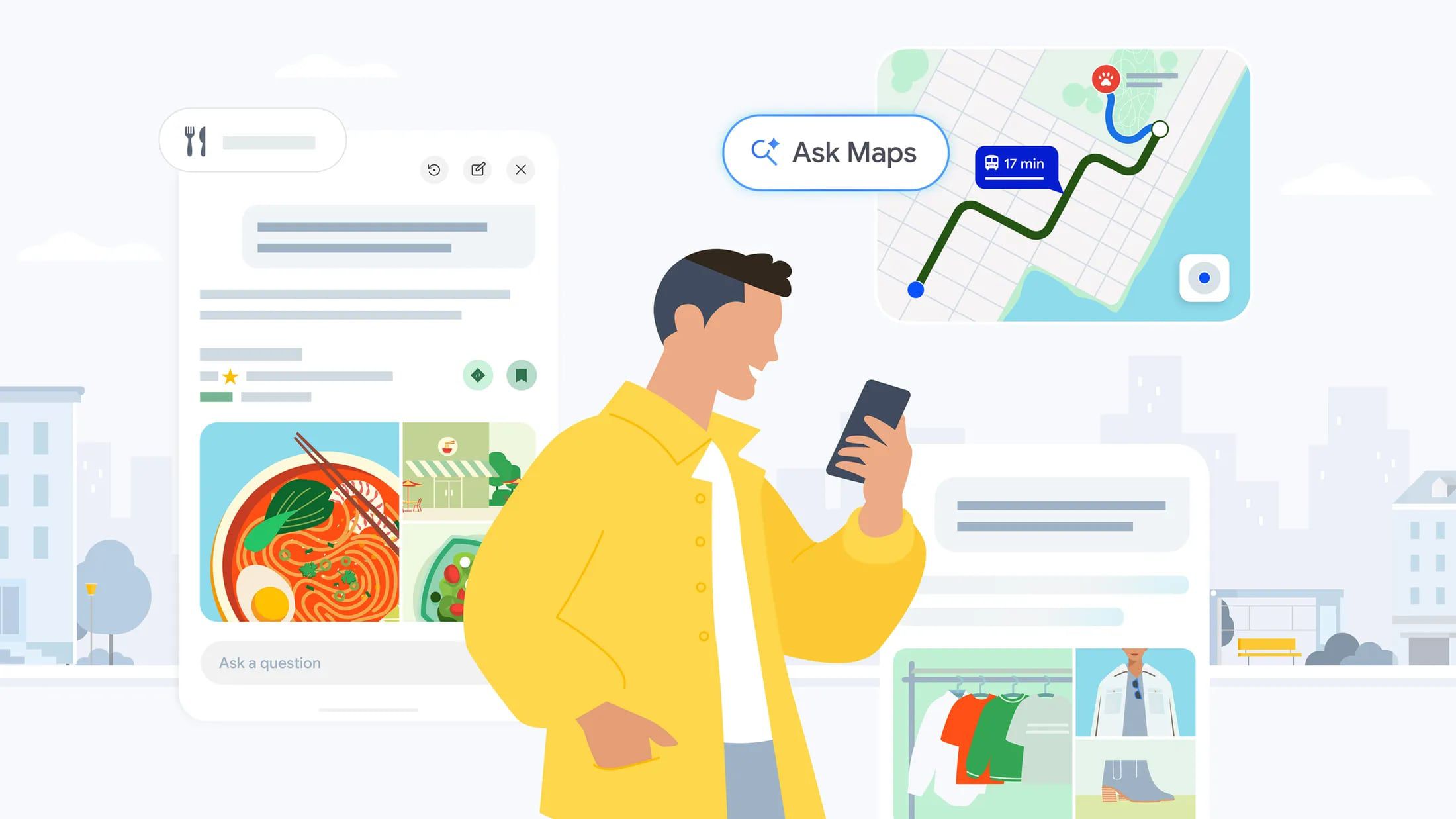
Instead of searching for a restaurant and then separately opening a food delivery app, a user can simply say “order spicy pad kee mao with seafood for me to pick up on my way home” and Ask Maps will find open restaurants along the route, let the user pick one, and add the dish to the cart for review before checkout (MacRumors). Food ordering launches with Square and Toast as partners, with Uber Eats integration expected soon.
That’s not all. Ask Maps can now check hotel availability in real time and suggest nearby activities — practical when you’re planning a quick team retreat in Genting or scouting a venue for a client dinner. For transit users, a new widget surfaces up-to-the-minute delay information for buses, trains, subways, and ferries (MacRumors). Anyone who has waited for a Komuter at a dark platform in the rain will understand the value of this instantly.
There’s a bigger twist. A “Personal Intelligence” option lets Ask Maps connect to Gmail — opt-in and off by default — to factor in upcoming plans without specific instructions, and it can remember prior conversations for context if history settings are enabled (MacRumors). Ask Maps is expanding to Australia, Brazil, Canada, Indonesia, Japan, and Mexico, plus more than 150 countries and territories in English (MacRumors). The live transit widget, personalized responses, and conversation memory roll out everywhere Ask Maps is available — while food ordering and hotel discovery remain US-only for now.
Why This Matters for Malaysian SMEs
Malaysia isn’t on the initial launch list, but Indonesia is — and English-language support across 150+ territories means the agentic layer is much closer than most small business owners assume. The transit and memory features are already rolling out everywhere Ask Maps is available (MacRumors). The practical concern for you isn’t when Malaysian users get food-ordering Ask Maps. It’s that Google is actively building a layer that sits between your customers’ intent and your storefront — inside the most-used map app in Malaysia.
Think about the last time a customer called to ask why your pin showed the wrong floor, or why your festive hours were outdated. Now imagine an agent deciding which restaurant to recommend based on your business profile’s completeness, your photos, your review velocity, and whether your opening hours are accurate enough to survive a multi-step order flow. The stakes on basic listing hygiene just went up. If Ask Maps is going to recommend you along a route, your address, hours, phone number, and menu categories need to be consistent across every platform.
There’s also an opportunity hiding in the transit and memory features. If you run a service-based SME — event planning, catering, or home services — a customer who has given Ask Maps access to their Gmail and travel plans might receive a proactive suggestion during a route disruption: “there’s a wedding in Kuala Kangsar next month, and this caterer comes highly recommended nearby.” That is no longer search; that is a recommendation engine with context and memory — and it only works if your digital presence gives it something to remember.
“The shift is from the map as a tool you look at, to the map as an agent that acts — and if your business isn’t fully visible in the tool, you’ll be invisible to the agent.”
The Bigger Picture
Google is moving from showing results to completing tasks. That has a quiet consequence for small business owners: your Google Business Profile is becoming machine-read before it’s human-read. The source article notes Ask Maps supports conversational edits, where you can tell the assistant about an insider tip and it will offer that information to others in the community (MacRumors). Community contributions are becoming part of a dataset an AI uses to make choices on your behalf — including whether to show your shop to someone in a hurry.
In a market like Malaysia — where a large share of consumer discovery begins on Google Maps and WhatsApp, where transit delays are a daily reality, and where the F&B and tourism sectors are fiercely competitive — the businesses that treat maps as a real-time operational surface will have the edge. That means updating your listing when Ramadan hours change, posting fresh photos when your menu changes, responding to reviews promptly, and making sure your location is accurate to the metre in dense areas like Bangsar or Bukit Bintang where GPS drift is common.
Ask Maps already works on the web and in the Google Maps app for iOS, so the assistant is iterating quickly (MacRumors). The interface you see today is not what you’ll see in a year. But the direction is unmistakable.
What You Can Do This Month
- Audit your Google Business Profile — confirm your exact address, festive-season hours, menu items, and primary category align with how customers actually search for you.
- Check your NAP (Name, Address, Phone) consistency across Google Maps, Facebook, and your website — AI agents scrape all three.
- Add fresh photos with descriptive filenames and geotags, so image-based discovery works when commuters search along their LRT and MRT routes.
- Monitor your review velocity — a steady trickle of genuine reviews is the signal both Google’s ranking and future agents rely on.
- Test the transit widget yourself — if you travel to any newly added country, open Ask Maps and observe how it suggests businesses near delays or route changes.
The bottom line: you don’t need to build AI into your business this month. You need to make sure your business is visible and trustworthy to the AI that is already mediating your customers’ choices. Start with your map pin — that is your first storefront.
Ready to Streamline Your Operations?
Technology moves fast. Your operations should keep up. AutoRunBiz builds AI systems that run your daily workflows — from WhatsApp order capture to accounting. Book a free 15-min ops audit →