
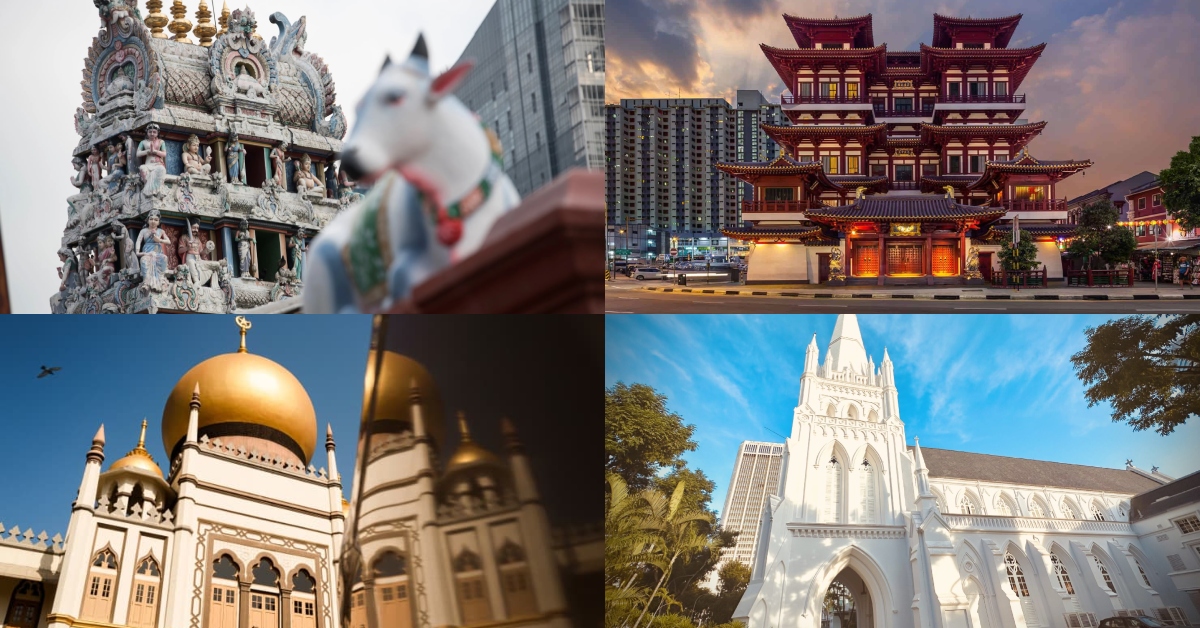
The quiet machine behind S$1 billion that your SME can learn from
Imagine waking up knowing that a predictable stream of income has already landed in your account — before you’ve made a single sales call or sent a single reminder. That’s not a fantasy. It’s how Singapore’s religious organisations operate, and they’ve turned it into a system that collects over S$1 billion a year without selling a single product.
While that might sound far removed from your business, it isn’t. These organisations have solved the exact problems you face every day: unreliable cash flow, payments that need constant chasing, and income that depends on continuous effort. The numbers behind Singapore’s religious economy contain practical lessons for any Malaysian business owner who wants steadier revenue and cleaner books.
TL;DR: Singapore’s religious charities collected S$1.4 billion in donations in FY2024 — nearly 40% of all charitable donations in the country. They did it through automated, recurring giving systems and diversified income, not occasional windfalls. The same principles — predictable billing, financial transparency, and multiple revenue streams — apply directly to how you structure your SME.
What this means in plain language
Behind the billion-dollar figure is a simple observation: many small, regular payments create massive collective scale. Take the Mosque Building and Mendaki Fund (MBMF) in Singapore. Every working Muslim contributes S$3 to S$26 per month through the CPF system — an automatic deduction that most contributors barely notice. That “small” monthly amount grew from S$421,203 in 1975 to S$48.9 million in 2024, with accumulated reserves of S$230.6 million. Five decades of consistent, automatic small payments created a financial engine larger than most companies will ever see.
The same pattern repeats at the organisation level. New Creation Church recorded S$205.4 million in total receipts for FY2025, with about 75% coming directly from recurring tithes and offerings. The Kwan Im Thong Hood Cho Temple reported S$35.9 million in receipts, 80% from donations, and holds S$238.3 million in reserves. None of these organisations rely on a few big donors. They rely on thousands of small, recurring contributions — collected consistently, recorded diligently, and reported transparently.
Religious organisations in Singapore didn’t build a billion-dollar economy on occasional generosity. They built it by making small, consistent contributions automatic — then tracking every sen of it.
Transparency is part of the system. Registered charities in Singapore must file annual returns with the Commissioner of Charities, and bodies like MUIS require all mosques to use a common financial accounting system with annual external audits. That discipline isn’t bureaucracy — it’s what lets them see exactly where money comes from and where it goes.
| Religious organisation revenue source | How it works | Your SME equivalent |
|---|---|---|
| Tithes and offerings (New Creation Church: S$154.7M from tithes) | Members give a recurring percentage of income | Monthly retainers or subscription packages |
| MBMF payroll deductions (S$3–S$26 per worker monthly) | Automatic deduction at source | Standing instructions or autopay from clients |
| Programme fees and services (S$597.5M in “other income” across the sector) | Paid activities and services beyond donations | Workshops, premium support tiers, add-on services |
| Merchandise and venue operations (malls, performing arts centres) | Physical assets generate ongoing income | Renting out unused space or equipment |
What this means for your Malaysian SME
Here’s the uncomfortable question: if you stopped making sales calls today, how long would your revenue keep flowing? For most Malaysian SMEs, the answer is “until existing invoices are paid” — and plenty of those get paid late. Singapore’s religious organisations have the opposite situation. Their income is structured to arrive automatically, month after month, without anyone chasing it. That stability is what allows them to fund schools, nursing homes, and community programmes — because they can plan around money they know is coming.
The first lesson is about recurring revenue. The MBMF model — small, automatic deductions from every working Muslim’s salary — is the closest thing to a subscription engine in the religious world. You can replicate this with retainers, maintenance packages, or subscription tiers. A client who pays you a set amount monthly for ongoing support is worth more than a client who pays once a year, because the monthly client makes your business predictable. You can plan hiring, inventory, and marketing around them. If you don’t already offer a recurring package, that’s the single highest-impact change you can make to your revenue structure. A cleaning company, for instance, could convert one-off deep cleans into monthly maintenance contracts. An accounting firm could move from yearly tax filing to quarterly compliance packages.
The second lesson is automation of collections. Singapore’s charities use PayNow transfers, recurring GIRO setups, and CPF payroll deductions to capture money at the moment it’s available. Malaysian SMEs have equivalent tools — DuitNow, autopay, and direct debit. The barrier isn’t the payment infrastructure; it’s whether you’ve set it up. When you invoice manually and wait for transfers, you add friction to your own cash flow. Automated billing doesn’t just save time; it changes the psychology of collections. Money arrives because the system runs, not because you remembered to chase it. Set up recurring invoices in your accounting software, enable payment reminders, and give clients a standing instruction option. Then watch how many late payments simply disappear.
The third lesson is clean, real-time financial records. Because Singapore’s religious bodies are required to report annually and standardise their accounting systems, they always know their true financial position. For your SME, having daily visibility into your numbers — via automated bookkeeping, bank feeds, and reconciled accounts — puts you in a position to make decisions on facts rather than gut feel. When you know your monthly recurring revenue, your outstanding invoices, and your real expenses, you can price smarter, cut waste, and grow with confidence. This isn’t about complex ERP software. Even a simple cloud accounting tool connected to your bank account gives you a live picture that a manual spreadsheet never will.
The fourth lesson is diversification. Singapore’s religious sector recorded S$597.5 million in “other income” — programme fees, services rendered, investment income, and merchandise. New Creation Church operates a performing arts centre, a mall, a bookshop, and a travel agency through its subsidiary. These aren’t distractions; they’re stability layers that keep the core funded even when donations dip. For your SME, the equivalent question is: what else can you sell to your current customers? Training, maintenance, consulting, content, or a premium tier — each additional stream reduces your vulnerability to any single client or market shift.
Five practical moves you can make this week
- Inventory your revenue. List your last 20 invoices. Which clients pay repeatedly? Those are your retainer candidates. Approach them with a monthly package that consolidates work you already do for them.
- Turn on auto-billing. In your accounting software, set up recurring invoices and automatic payment reminders. Offer clients the option of standing instructions or autopay.
- Create one new income stream. Based on what you already do well, what could you package as a repeatable service? A monthly report, a maintenance check, a scheduled audit? Choose one and put it on your website this week.
- Automate your financial reporting. Connect your bank accounts to accounting software so numbers update daily. Review a one-page dashboard weekly: money in, money out, outstanding invoices, and recurring revenue.
- Track recurring revenue as a metric. Write down your monthly recurring revenue every week and watch it trend upward. What gets measured gets managed.
The bigger picture
What Singapore’s religious economy demonstrates is that scale isn’t about size — it’s about systems. A group of organisations collecting S$2.02 billion in total receipts in FY2024 didn’t get there through heroic individual effort. They got there by normalising small, automatic, recurring contributions, and by building the financial infrastructure to handle those contributions efficiently.
Malaysian SMEs are sitting on the same opportunity. The tools for automation — cloud accounting, recurring billing, autopay, digital payments — are more accessible than ever. The gap between businesses that thrive and businesses that struggle isn’t talent or effort. It’s whether you’ve built systems that keep working while you sleep.
You don’t need to be a megachurch or a billion-dollar institution to benefit. You just need to start with one recurring payment, one automated process, one clean report. That’s how a S$421,203 fund became a S$48.9 million one over five decades — one small, consistent step at a time. The system you build this month is the revenue you’ll collect years from now, without lifting a finger.
Ready to Streamline Your Operations?
Your business should run itself. AutoRunBiz deploys AI agents to automate your daily operations — WhatsApp orders, invoicing, customer follow-ups, and accounting. Book a free 15-min ops audit to see where automation fits your business →