
What If Your Next Sale Comes From a Chatbot, Not Google?
You’ve heard the fear for years: AI is coming for search, and your online store will lose traffic. Maybe you’ve even adjusted your Google strategy, worried that summaries at the top of results pages are already stealing clicks.
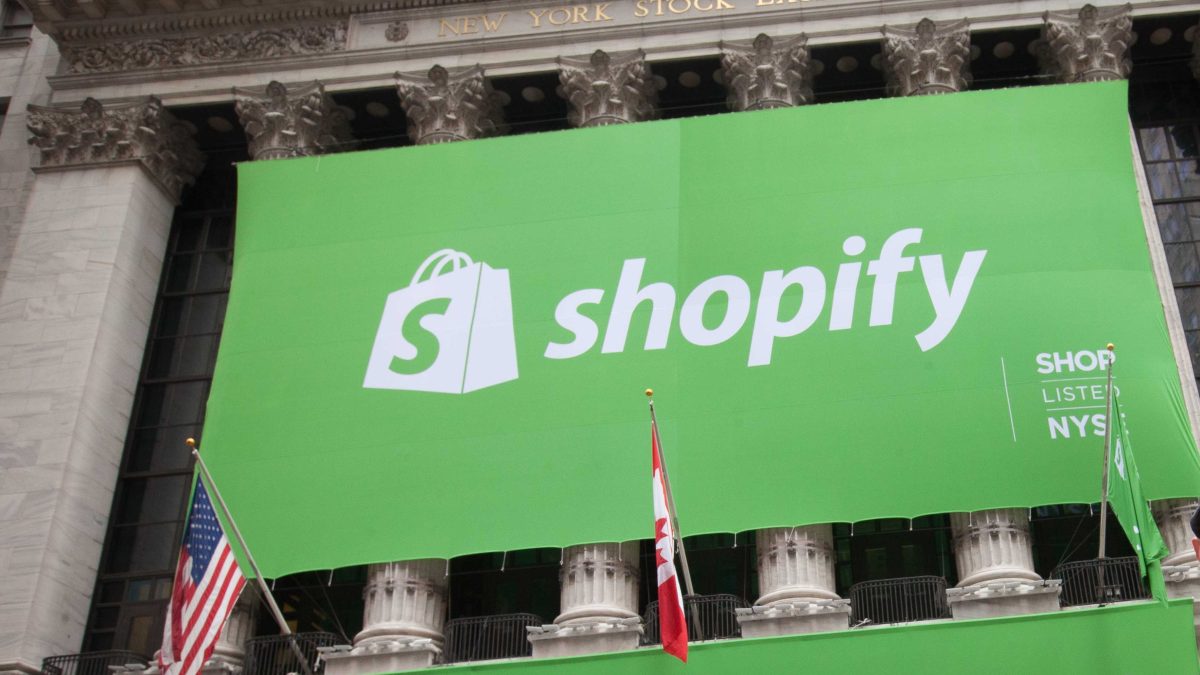
But for e-commerce, the story is different. Shopify, the platform powering millions of online stores, just reported that AI-driven traffic and orders to its merchants tripled in the last year. And Google? It’s still growing as a source of buyers. AI isn’t replacing Google — it’s adding a fresh stream of customers who find you through a chat interface instead of a search box.
This isn’t a tech trend for someone else. It’s happening to stores of your size, and it changes how you need to think about being found online. The question isn’t whether AI search will matter for your Malaysian business. It’s whether your product data is ready for it.
TL;DR
- AI search is sending directly to product pages and boosting orders for smaller merchants — Shopify reports AI-attributed purchases are up 3x year-over-year.
- This is extra traffic, not a shift away from Google — traditional search sessions are still growing and hold a third of storefront sessions.
- To capture AI-referred buyers, you need richer product data and polished product description pages — not bigger ad budgets.
What This Means: AI Agents Read Your Catalog Like a Smart Assistant
Think about how Google works today. You type “car seat,” and it ranks results by keywords and popularity. Bigger brands with more links and stronger domain authority usually win. Now think about how you ask a friend for advice. You say, “I need a car seat that fits three children across the back row of a sedan.” Your friend asks about the car model, the age of the kids, the seat belt types. Then they recommend something that actually works.
AI agents do the same thing. Instead of ranking a few keywords, they make multiple calls into a merchant’s product catalog, reading structured data to match your item against the buyer’s specific request. When a shopper asks an AI assistant for a “breeze-proof nursing cover for travel,” the AI doesn’t just look for “nursing cover” — it checks dimensions, fabric weight, portability, and whether it fits a baby carrier. That level of matching is why conversions are better.
Shopify’s president, Harley Finkelstein, gave the key example on the earnings call: “While search engines rank by popularity against a handful of keywords, AI agents make multiple calls into Shopify’s catalog, working with richer structured data to match products with the buyer’s specific intent, rather than just keywords.”
“Buyers’ shopping journeys are being compressed — half of all AI-referred sessions are landing directly on a product description page. That is 2.5 times more than what we see with traditional search.” — Harley Finkelstein, Shopify President
That’s the key insight: AI search doesn’t send people to a homepage or a category page and hope they browse. It sends a ready buyer straight to the product that fits their need. That shortens the journey, and it means your product page does the selling — not your marketing.
How This Applies to Malaysian SMEs
You might be thinking, “But my customers aren’t using AI assistants to shop. They still use Shopee or walk into my shop.” True. But consider how quickly Malaysian consumers adopt new tools. Ride-hailing took less than a decade to feel essential. E-wallets followed the same curve. And right now, the biggest AI assistants — ChatGPT, Claude, Perplexity — are all integrating with commerce platforms. Shopify has already built connectors to Claude, ChatGPT, Perplexity, Manus, Replit, Vercel, and vibe-coding platforms like Lovable. That means the moment a Malaysian shopper asks an assistant for a recommendation, your store can be in front of them — if your product data is readable.
For a store selling batik shirts, the difference is huge. On Google, someone searches “batik shirt” and gets the big fashion retailers, the busiest marketplaces, and the occasional blog. With AI search, a buyer might ask: “What’s a breathable batik shirt for a wedding in Penang in June?” The assistant looks for material (cotton or rayon), weight (light), chest measurements, and perhaps honest reviews. It doesn’t care about your domain authority. It cares whether your product listing answers the question.
This also plays into the long tail of e-commerce, which is exactly where most Malaysian SMEs live. Shopify noted that 75% of AI-attributed purchases in Q2 happened outside the top 100 categories — in categories where big brands don’t dominate. That’s your sweet spot. If you make custom-made tudung, handmade soaps, or specialized food-processing tools, AI search is designed to surface your products because it matches specific needs, not just “how many people searched this keyword.”
Even if you don’t use Shopify, the principle applies. Malaysian marketplaces like Shopee and Lazada are already embedding AI recommendation engines. And as more buyers start with an AI assistant instead of Google, having well-structured product listings will matter more than paying for ads. The good news? You don’t need to become a tech expert. You just need to describe your products the way an assistant would understand them: with real attributes, multi-dimensional details, and precise use cases.
Practical Takeaways: Prepare Your Store for AI Buyers Today
- Review every product title and description. Add specifics: size, weight, material, colour, compatibility, and usage scenario. Write “breathable cotton nursing cover that folds into a small pouch” instead of “nursing cover”.
- Add structured data to your product pages. Schema markup tells AI agents exactly what your product is, its price, availability, and attributes. Shopify, WooCommerce, and most platforms have plugins for this.
- Polish your product description pages (PDPs). Since half of AI-referred sessions land directly on the PDP, your product page must answer doubts immediately: dimensions, care instructions, warranty, shipping timelines.
- Answer the questions your best customers ask. Use those in your product copy and FAQ sections. AI assistants are trained to pull from this content.
- Track your traffic sources properly. In analytics, look for “AI” or “chat” referrals. See which products get AI traffic and which ones convert. Double down on the ones that do.
- Consider platforms like Shopify that already connect to major AI tools — but don’t wait. Even upgrading your existing product feeds on your current platform helps.
Table: How Traditional Search and AI Search Differ For Your Store
| Factor | Traditional Search (Google) | AI Search (ChatGPT, Perplexity, etc.) |
|---|---|---|
| How it ranks products | Keywords and popularity | Multiple constraints and buyer intent |
| Where traffic lands | Homepage or category page | Directly on product description page |
| Who benefits most | Established brands with strong SEO | Long-tail merchants with detailed product data |
| Session behavior | Multiple clicks, browsing, comparing | Compressed journey — a buyer arrives ready |
| What you should optimise | Backlinks and blog content | Product attributes and structured data |
The Bigger Picture: The Advantage Moves To Product Clarity
For the last two decades, being found online meant winning the SEO game — backlinks, ad budgets, and brand recognition. AI search flips that. It rewards stores that clearly describe what they sell and how it solves a problem. That’s a structural shift that gives smaller Malaysian businesses a fairer shot.
This doesn’t mean Google is dead. Shopify explicitly said traditional search is still growing and remains a major source of buyer traffic. But the smart play is not to choose between Google and AI search. It’s to make sure your online store works for both. That means accurate, detailed product data, fast-loading pages, and a clear product story.
As AI agents get better at making purchases on your behalf, your store’s data quality will become its own salesperson. The companies that invest now — the ones that clean up their product feeds and write descriptions that answer real questions — will get found by the next generation of customers. And they won’t even have to type your name into a browser.
Ready to Streamline Your Operations?
Your business should run itself. AutoRunBiz deploys AI agents to automate your daily operations — WhatsApp orders, invoicing, customer follow-ups, and accounting. Book a free 15-min ops audit to see where automation fits your business →