
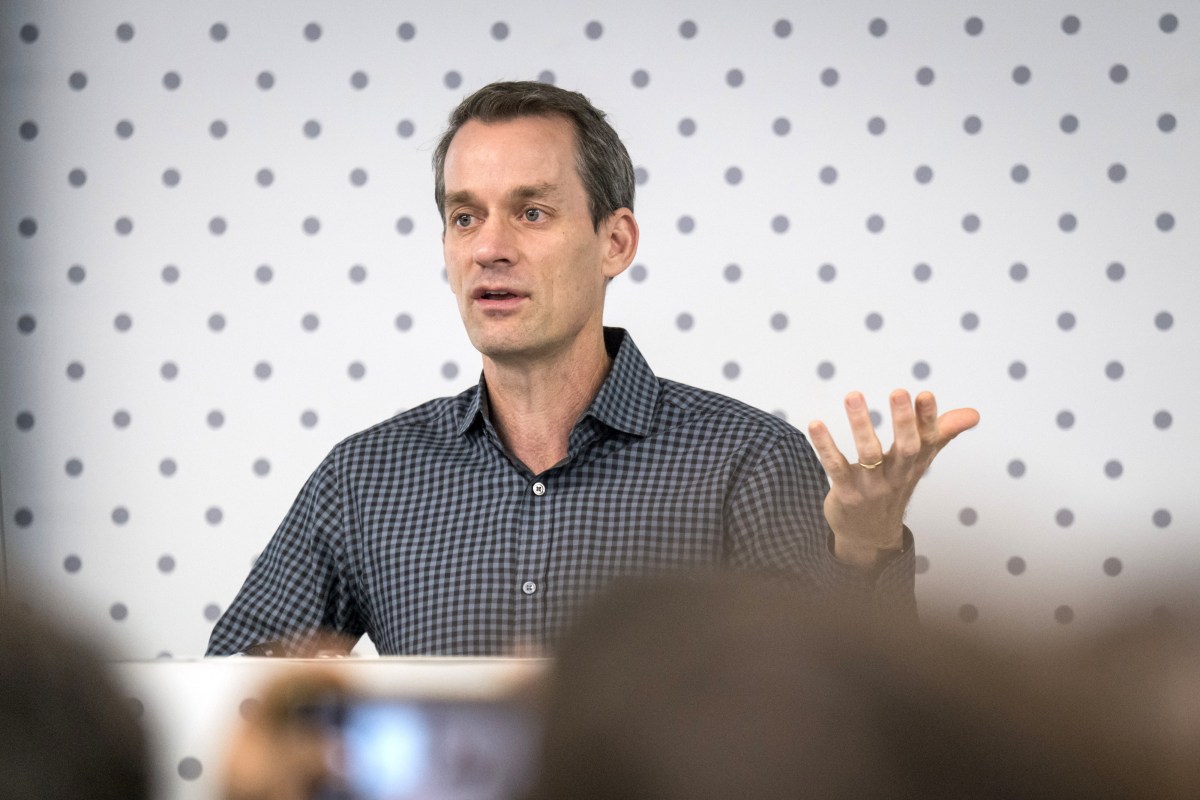
The Quiet Signal in Silicon Valley You Shouldn’t Ignore
Jeff Dean isn’t a household name in Malaysia, but his fingerprints are all over the internet you use every day. As Google’s 30th employee, he helped build the crawling, indexing, and query-serving systems that made Google Search what it is today (source). Many of the AI features you’ve started encountering in Google Maps, Gmail, or Google Ads trace back to work Dean and his colleagues did. Now, after more than 25 years, he’s leaving to launch a startup called Discovery Loop — and the reasoning behind that move tells you a lot about where AI is heading next.
For a Malaysian SME owner — someone running a food manufacturing operation in Johor, a logistics company in Penang, or a retail chain in KL — it’s easy to dismiss this as big-tech drama in Silicon Valley. But the pattern here matters. Whenever a cluster of top researchers leaves a giant company with a bold mission, the results eventually become tools you can use. The question is whether you’re paying attention early enough to benefit.
What Happened
Dean is stepping down from Google to become CEO of Discovery Loop, a public benefit corporation co-founded with several heavyweight researchers: Sanjay Ghemawat, a senior fellow and top engineer at Google; Quoc Le, a founding member of Google Brain; and Oriol Vinyals, a senior research scientist at Google DeepMind (source). That’s an unusual concentration of talent in one room, and it signals the founders see a rare opportunity.
The company’s mission is to use AI to accelerate scientific research. Instead of researchers running experiments one at a time — hypothesize, test, analyze, adjust, repeat — Discovery Loop wants to automate the experimental loop entirely. The idea is to run thousands of experiments simultaneously, with AI systems initiating, monitoring, and iterating on them without waiting for human intervention (source).
Its ambition doesn’t stop there. The startup is also exploring what’s known as recursive self-improvement — using AI to build more powerful AI (source). And it’s already attracted serious backing: the initial funding round is co-led by Radical Ventures and Khosla Ventures, with participation from Kleiner Perkins, Lightspeed, and Doerr Capital — as well as Alphabet itself, Google’s parent company (source).
“The next great frontier for AI is to go beyond answering questions and to begin making discoveries,” the founding team said in a joint statement. “By fundamentally accelerating how engineering and scientific discovery are conducted, we can deliver the benefits of transformative technologies to the world far sooner.” (source)
Why This Matters for Malaysian SMEs
Your business already runs experiments — you just call them something else. Product trials, menu testing, packaging iterations, supplier evaluations, marketing A/B tests. Every time you tweak a recipe, change a material, or trial a new delivery route, you’re running a single experimental loop with you at the centre of it. That’s exactly the bottleneck Discovery Loop’s founders are trying to remove. If AI can compress months of trial-and-error into days, the gap between businesses that adopt these capabilities and those that don’t will widen quickly.
Consider what this means for a Malaysian food manufacturer. Formulating a new sauce or snack currently means weeks of kitchen trials, shelf-life testing, and taste panels. Now imagine an AI system that runs thousands of formulation variations simultaneously, evaluating texture, stability, and ingredient behaviour before a single human taste-test. Or picture an agri-SME working with palm oil or rubber — two industries where Malaysia has deep expertise — using AI-driven experimentation on crop treatments or processing methods at a scale no human research team could match. Your country’s competitive advantage has always been in commodities and manufacturing; automated discovery is about to make those sectors move faster.
Dean himself put it plainly in an interview with The New York Times: “We think there is opportunity for AI to more fully automate what has traditionally been a very human-intensive experimental loop. You will get both a higher quantity and a higher quality of experiments, and that will lead to scientific breakthroughs and advances” (source). For you, the immediate takeaway isn’t to rush out and buy new AI tools. It’s to recognise that the cost of “figuring things out” is about to drop dramatically — and to start asking which parts of your business depend on slow, repetitive iteration.
The Bigger Picture
Discovery Loop’s formation fits a larger pattern. The most senior AI researchers are increasingly leaving established giants to build their own companies, and they’re framing their missions around real-world problems rather than consumer features. Notice also that the startup is structured as a public benefit corporation — a sign that the founders anticipate the need for accountability as AI pushes into areas like scientific discovery that carry real consequences (source).
For Malaysian SMEs, history offers a useful precedent. Google’s earliest breakthroughs in search and AI were developed inside a giant company, then gradually made accessible through tools that any business could use. The same trajectory is likely here. Discovery Loop’s systems may initially serve large pharmaceutical or material-science companies, but over time, the underlying capabilities — automated experimentation, faster iteration, massive parallel testing — will become available as services and platforms. Your job is to be ready when they are.
That preparation starts with inventorying the repetitive experiments in your own business. Which processes require you to try, check, and try again? What would faster iteration mean for your product development or service quality? The researchers leaving Google aren’t just chasing a new venture — they’re signalling that the next decade of AI won’t be about chatbots answering questions. It’ll be about systems that discover things. The businesses that understand this shift — and start thinking about discovery as a capability they can tap into — will be the ones that stay ahead.
| What happened | What it means for you |
|---|---|
| Jeff Dean, Google’s 30th employee, left to launch Discovery Loop with three top AI researchers (source) | Top talent is shifting from consumer AI to discovery-focused AI |
| Discovery Loop aims to automate experimental loops at massive scale (source) | Faster trial-and-error means faster product improvement for SMEs |
| Alphabet and major venture firms backed the venture (source) | This is a long-term bet, not a flashy experiment |
Keep an eye on Discovery Loop in the coming months. Not because you’ll be a customer — not yet, anyway — but because it’s a preview of how your own product development, testing, and problem-solving could work in the near future. The businesses that treat discovery as a discipline, rather than an occasional activity, will find themselves on the right side of this shift.
Ready to Streamline Your Operations?
Technology moves fast. Your operations should keep up. AutoRunBiz builds AI systems that run your daily workflows — from WhatsApp order capture to accounting. Book a free 15-min ops audit →