
The AI Agent That Codes All Night — What It Means for Malaysian SMEs
You probably don’t need another AI update. And honestly, most AI news deserves a quick skim and a shrug. But this one is different — because it isn’t about a chatbot that writes funny emails. It’s about software that builds software. And that directly affects every digital tool your business depends on.
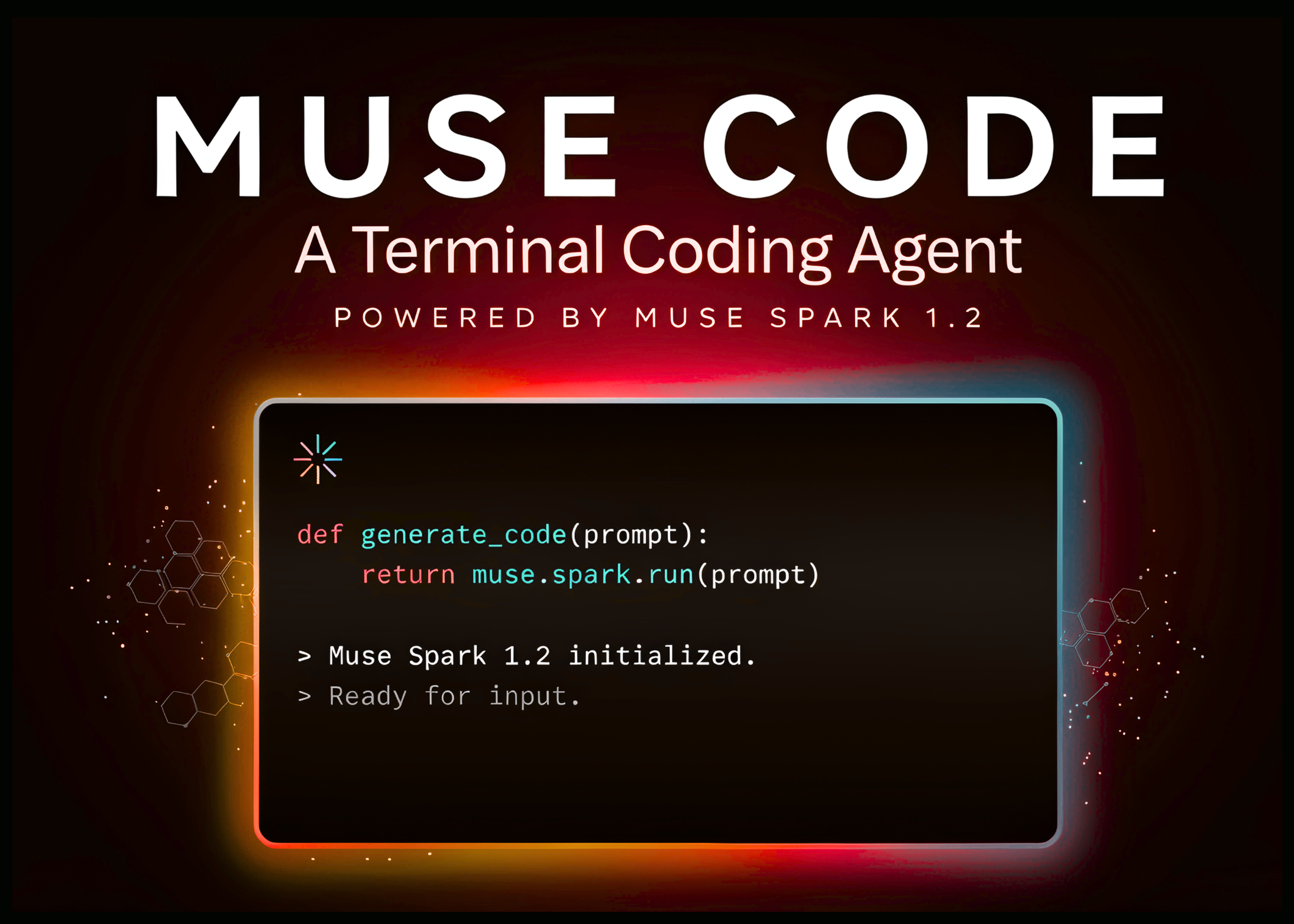
Think about the last time you needed a custom feature, a small system, or a fix for your existing software. Maybe the quote made you wince, or you were told it would take months. Meta has just released Muse Code (beta), an AI coding agent that can plan changes, write code, and validate results across large codebases — all on its own. For a busy owner, that sounds like a developer’s problem. But it’s actually a business opportunity.
TL;DR: Meta’s Muse Code is a beta tool for programmers that can plan, write, and test code over long sessions, even recovering from crashes. You won’t use it directly, but it’s a sign that custom software for SMEs is becoming faster and easier to build. Smart owners should start thinking about what they’d automate if software development weren’t the biggest bottleneck.
What This Means
A “terminal coding agent” is essentially a robot developer that lives inside a plain text window called a terminal. You give it a task — “fix this bug in our inventory module” or “build a customer portal” — and it goes to work. Muse Code does this with what Meta calls persistent async background agents. Instead of starting from scratch on every small task, these specialized agents stay alive the whole session. They gather information once, keep working in the background, and check back with the main agent only when they have something useful. That makes it much better at long, complicated jobs.
Meta also built in a local event log. Every model call, tool run, approval, and edit gets recorded. If the computer crashes, the agent can resume exactly where it stopped. This sounds like technical trivia, but for a business owner it means the difference between a tool that works while you sleep and a demo that breaks halfway through the night.
The future of software isn’t about matching a big company’s IT headcount — it’s about describing what your company needs and letting AI do the mundane building work.
How This Applies to Malaysian SMEs
First, consider your own software projects. You might run a trading company in Johor Bahru that still relies on handwritten delivery notes, or a clinic in Petaling Jaya with a patient database that can’t talk to your billing system. You’ve probably been told, “custom software isn’t realistic for a company your size.” That was true because developers were the scarce part. With tools like Muse Code, the effort required to write code drops dramatically. One developer can now do the work of a small team if they use these assistants well. So a project that used to take six months could shrink to six weeks. That changes what you can reasonably ask a vendor to build for you.
Second, this isn’t about you becoming a coder. It’s about being a better buyer. When you talk to your software vendor, ask a direct question: “Are you using AI coding agents to speed up our work?” Many forward-thinking Malaysian agencies already do. Then ask how they guard against AI mistakes. The good ones will tell you that all AI-written code gets reviewed by a human — which means the quality bar stays high. The practical result is faster delivery for you, with the same reliability.
Third, look beyond software. The same kind of AI that writes code can also inspect business processes. Meta says Muse Spark 1.2 was co-trained with the agent harness itself, and reports gains in complex debugging, codebase understanding, and end-to-end developer workflows. Source. The bigger message for Malaysian SMEs is that “software” is becoming easier to produce. That means the bottleneck isn’t coding anymore — it’s figuring out which workflows to automate. Start documenting one annoying process today. For example, how your admin team copies WhatsApp orders into Excel. By the time you’re ready to act, the tools will be more than ready.
And for businesses in sectors like food and beverage, logistics, or wholesale, the persistence matters. Meta tested its agent on GPU kernel optimization, running over 1,000 tool calls across 24 hours to progressively improve code. It’s not a stretch to imagine an AI agent spending all night reconciling your inventory records and preparing a morning report — quietly, without needing supervision.
Putting the Numbers in Perspective
| Number from the announcement | What it means for you |
|---|---|
| 24-hour sessions and 1,000+ tool calls in Meta’s kernel optimization test | AI can work through the night on complex tasks, so your projects aren’t limited to business hours. |
| All 89 tasks on Terminal-Bench 2.1, evaluated at pass@1 over five attempts | The benchmark is rigorous, which makes the claims less fluffy than most product launches. |
| 113 tasks across 91 repositories and five languages on DeepSWE v1.1 | The agent can read unfamiliar codebases — essential when it touches your outdated, patchwork systems. |
| Muse Spark 1.1 scored 80.0 on Terminal-Bench 2.1 | These models are already at a level where they’re genuinely useful in real projects, not just demos. |
Practical Takeaways
- Don’t install Muse Code yourself. It’s a beta terminal tool for developers, and unless you have a technical team, you’ll spend hours just setting it up.
- Ask your software vendor how they’re using AI coding tools. If they aren’t, that’s a red flag.
- Choose one manual process — like order entry, invoicing, or inventory tracking — and document how it works today. That document becomes your spec.
- Talk to AutoRunBiz about which workflows can be automated right now. You don’t need to wait for a perfect AI; the current generation of tools is already capable.
- Challenge long delivery timelines. If a vendor says a project will take a year, ask what AI assistance can compress. You might be surprised by the honest answer.
The Bigger Picture
Meta’s release is just one data point in a much larger trend. Over the next few years, the effort required to build custom software will fall dramatically. Malaysian SMEs have historically been at a disadvantage because your requirements are often too specific for off-the-shelf software, and custom work felt out of reach. That is changing.
But there’s a catch. The companies that benefit won’t be the ones that download the tools. They’ll be the ones that know their own processes well enough to explain them clearly. AI agents make execution faster; they don’t make strategic thinking easier. The competitive advantage shifts from “we know how to code” to “we understand our customers and our operations.” An herbal medicine SME in Penang that documents its supply chain thoroughly will get more value from these tools than a tech startup that can’t articulate what it actually does.
As these agents mature, overseas clients will also start looking for vendors who use them. Malaysian SMEs can tap into global developer pools that are AI-empowered, opening doors beyond the local market. See this as a signal to get your operations ready. The software will be there. The question is whether you’ve decided what to build.
Start with one process. Write it down. You’ll be surprised how much you can automate in the next six months.
Ready to Streamline Your Operations?
Your business should run itself. AutoRunBiz deploys AI agents to automate your daily operations — WhatsApp orders, invoicing, customer follow-ups, and accounting. Book a free 15-min ops audit to see where automation fits your business →