
The New Riyadh–KL Route Is a Business Bridge. Here’s How Your SME Walks Across It.
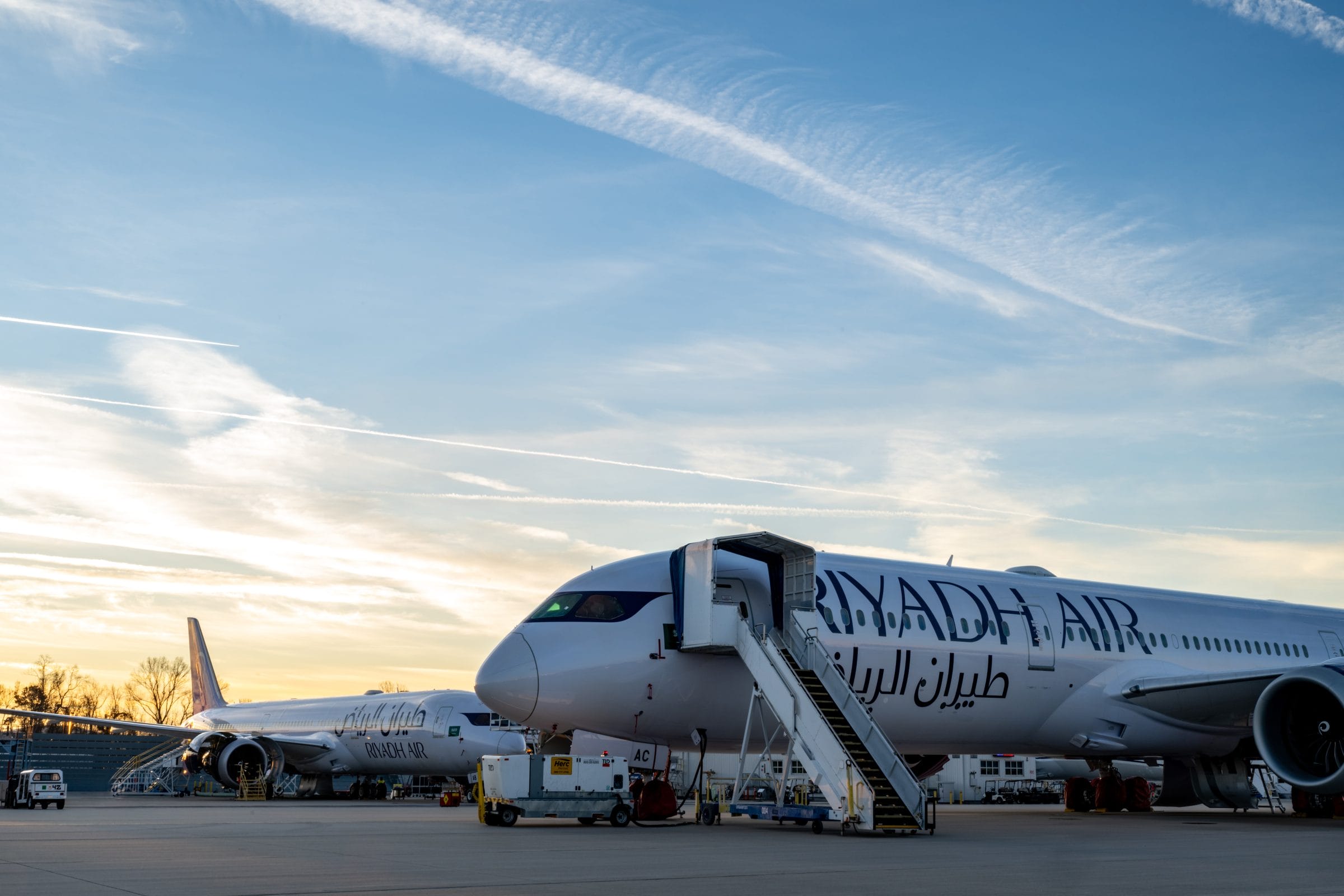
On July 30, a Boeing 787-9 touched down at Kuala Lumpur International Airport carrying something more valuable than passengers: the first direct commercial link between Saudi Arabia and Malaysia operated by Riyadh Air (source). If you run a Malaysian SME, this route is not a travel convenience. It is a direct pipeline to a market that is actively buying services, products and partnerships from Southeast Asia — but the pipeline only works if your business has the digital systems to receive what flows through it.
Here is why this flight matters beyond the aviation headlines, what it changes for you practically, and how automation determines whether you capture the opportunity or watch it pass by.
What Happened
Riyadh Air launched its first Southeast Asian route with a direct service between King Khalid International Airport in Riyadh and KLIA, operating three times weekly on Tuesdays, Thursdays and Saturdays (source). The inaugural ceremony was attended by Saudi Arabia’s Ambassador to Malaysia, Malaysia’s Ministry of Transport Secretary General, and Malaysia Airports’ Managing Director — a signal that both governments view this as a strategic connection, not just another airline schedule (source).
The route is designed to support tourism, business, education, trade and religious travel between the two countries (source). Riyadh Air operates the flight with Boeing 787-9 Dreamliners across four cabin classes, and its loyalty programme, Sfeer, offers benefits that include complimentary onboard Wi-Fi and rewards from the first flight (source). The airline’s broader ambition: connect Riyadh to more than 100 destinations worldwide by 2030 under Saudi Arabia’s Vision 2030 (source).
“Today’s inaugural flight to Kuala Lumpur is a defining moment for Riyadh Air as we establish our footprint in Southeast Asia. This route is far more than a direct connection between two capital cities; it builds a vital bridge between Saudi Arabia and the broader ASEAN region.” — Tony Douglas, CEO, Riyadh Air (source)
Restated plainly: the Saudis are building a bridge into ASEAN, and Kuala Lumpur is the anchor. The question for you is whether your SME has a ramp on your side of that bridge.
Why This Matters for Malaysian SMEs
Saudi Arabia is not a niche market. Under Vision 2030, the country is deliberately transforming its economy beyond oil, with major focus on tourism, healthcare, technology, education and logistics. Malaysian SMEs — especially those in halal food and beverage, professional services, medical tourism, Islamic finance, education and trade — are natural fit partners. Before this route, engaging Saudi clients meant multi-leg flights and days of lost productivity. Now, a Malaysian business owner can plausibly fly to Riyadh in the morning, hold meetings, and be back in KL within the week. But here is the catch: your sales process must move as fast as the plane.
This is where automation becomes the deciding factor. When a Saudi buyer, distributor or institutional partner sends an inquiry, their expectation is a rapid, professional response. If your SME still relies on manual email replies, spreadsheets and follow-up reminders that live in one person’s head, your response time will be measured in days — time your competitor will use to close the deal. Automated lead capture, instant quotation workflows, CRM pipelines with Arabic-language support, and scheduled follow-up sequences turn a single meeting into a repeatable revenue process. The route shortens the distance; automation shortens the sale.
Also consider the inbound direction. This flight brings Saudi business travellers, tourists and students directly into KLIA. Hospitality, retail, travel, private education and logistics SMEs will see a growing number of Arabic-speaking visitors who expect smooth digital experiences: booking confirmations in their language, automated payment reminders, instant customer service on WhatsApp. If your front desk runs on manual coordination and paper forms, those visitors will take their business elsewhere. But if your booking, inquiry and check-in systems are automated and multilingual, you convert a first-time visitor into a repeat client.
Take the education angle specifically. The article explicitly lists education as one of the route’s target flows (source). Malaysian private universities, training centres and certification providers — many of them SME-sized — can now recruit Saudi students with far less friction. Yet recruitment is a document-heavy process: application reviews, verification, enrollment paperwork. SMEs that automate these workflows can process a Saudi applicant’s onboarding while their competitors are still replying to the first email.
The Bigger Picture
Direct air routes do not just move travellers; they rewire business relationships. The Riyadh–KL connection is one piece of a much larger ASEAN–Middle East corridor that has been strengthening over the past decade. As Riyadh Air grows toward its 100-destination goal by 2030 (source), expect more Gulf carriers to expand into Southeast Asia, more trade missions in both directions, and deeper capital flows between the regions. For Malaysian SMEs, this is an early-mover moment. The businesses that digitise their front door now — Arabic-enabled landing pages, automated WhatsApp Business flows, cloud-based client portals, e-invoicing — will be the ones Saudi partners find when they land next year.
The bridge is built. The ramp is on you.
| Sector | What the route unlocks | Where automation helps you |
|---|---|---|
| Tourism & hospitality | Direct arrival of Saudi travellers and business visitors | Automated bookings, multilingual confirmations, chatbot concierge |
| Halal trade & F&B | Fast access to Saudi buyers and importers | Automated export documentation, inventory alerts, quote generation |
| Education & training | Recruitment of Saudi students and trainees | Automated application triage, document checks, onboarding sequences |
| Professional services | Face-to-face consulting and partnership meetings | CRM pipelines, automated follow-ups, client portals |
Four actions you can take this week:
- Set up a CRM with an Arabic language interface so your team can manage Saudi leads without friction.
- Create automated follow-up sequences for every business meeting you hold via the new route — one day, one week, one month.
- Enable e-invoicing and digital payment acceptance so Saudi clients can transact with you remotely.
- Build a WhatsApp Business automation flow that greets Arabic-speaking inquiries instantly, even outside business hours.
The plane is already in the air. The question is not whether the opportunity will arrive — it is whether your SME will be ready to receive it.
Ready to Streamline Your Operations?
Technology moves fast. Your operations should keep up. AutoRunBiz builds AI systems that run your daily workflows — from WhatsApp order capture to accounting. Book a free 15-min ops audit →