
The Jenga Game That Could Change Your Business
You know the frustration. You have a task that needs real human dexterity—sorting mixed inventory, assembling delicate components, or inspecting products for defects. Standard automation feels rigid, expensive, and dumb. A robot can pick a perfectly aligned box, but if a batch changes or a part arrives slightly damaged, the whole system stalls. You stick with manual labor, but labor is hard to find and keep.
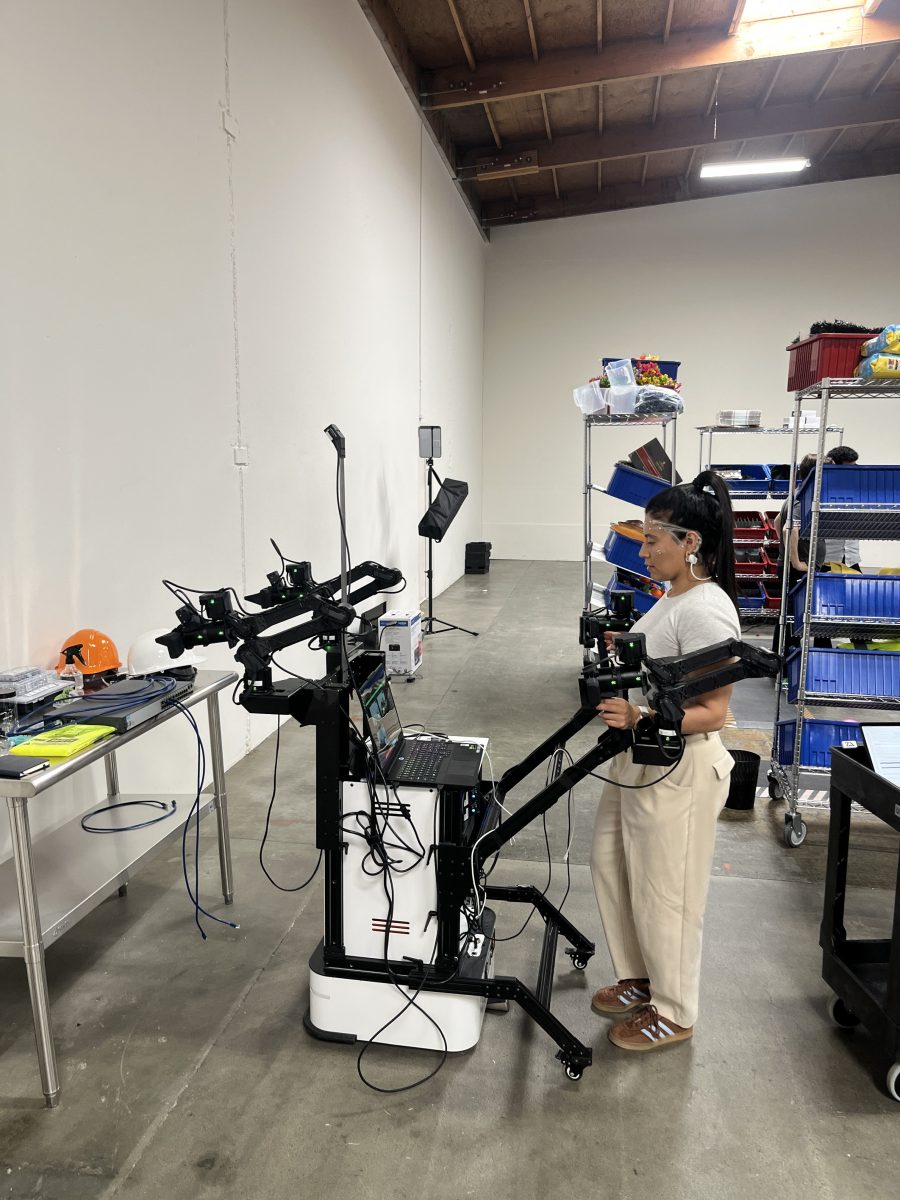
A recent visit to a California warehouse by TechCrunch reveals a radical attempt to solve this exact problem. Workers wear headsets that read their brain waves while they do ordinary tasks—playing Jenga, stacking poker chips, plugging cables into servers.
This isn’t science fiction. It represents a fundamental shift in how we teach machines to work in the messy, unpredictable real world. And for Malaysian SMEs, understanding this shift means understanding the future of flexible automation.
TL;DR: Robots learn from data, just like AI chatbots. But physical data is scarce and hard to collect. A new method uses EEG brain wave sensors and arm muscle sensors to capture a human’s intent, hesitation, and error correction while performing a task. This creates much richer training data than standard video or teleoperation. For Malaysian SMEs, this means future automation could finally handle the diverse, high-mix, low-volume realities you deal with every day—without requiring a team of AI specialists.
What This Means: Teaching Robots the “Why” Behind the Motion
When you train an AI like ChatGPT, you feed it the entire text of the internet. That data exists already, waiting to be scraped.
Teaching a robot a physical skill is nothing like that. There is no warehouse of “how to grasp a slippery object” or “how to sort a mixed bin of goods” ready for download. As Vineeth Velmurugan, head of robot learning at Encord, puts it in the TechCrunch article: “The data simply does not exist.” This data has to be manufactured from scratch.
Current methods have big drawbacks:
- Egocentric Video: A worker wears a camera. The AI watches the video. It sees the motion, but it doesn’t know why the worker corrected their approach or when they realized a mistake was happening.
- Teleoperation: A human controls a robot arm. This generates precise data, but the interface is slow and doesn’t use natural human movement.
This is where the Zander Labs brain wave headset comes in. It measures electrical activity in the brain. As a human “pilot” performs a task, the headset captures the neural signature of their intent. Combined with arm sensors that measure electrical signals in the muscles (EMG), the system builds a 3D model of the hand’s position, not just a 2D video. It captures the skill behind the action, not just the action itself.
“Rather than just helping robotics companies manage the data they have, Encord is building a business around manufacturing the data they don’t.”
— Tim Fernholz, TechCrunch
How This Applies to Malaysian SMEs
You don’t need a neuroscience lab to benefit from this trend. You need to recognize that the economics of training a robot are changing. Here is how this directly impacts your business.
1. It Finally Solves the “High Mix, Low Volume” Trap
Most Malaysian SMEs don’t produce millions of identical units. You change batches frequently. You handle different parts. Traditional automation hates this—it demands perfect repetition and expensive reprogramming for every product change.
Brain-wave tagged data teaches the AI the intention of the task, not just a single visual pattern. Imagine a warehouse worker sorting assorted items—the exact scenario Encord tests with “pallets of fake flowers in vases, books, plastic vegetables, kitty litter trays and scoops” according to the report. A robot trained on standard video would fail when the box is crushed or lighting changes. A robot trained on intent-based data has internalized the goal of “sort by category” and is much more adaptable. This makes automation viable for the bespoke manufacturing and flexible logistics that define the Malaysian SME landscape.
2. Directly Supports Malaysia’s Growing High-Tech Sectors
The TechCrunch article specifically highlights a test case of teaching robots to plug and unplug ethernet cables into servers—a high-stakes, high-precision task currently requiring skilled human hands in data centers.
Malaysia is aggressively expanding its Electrical & Electronics (E&E) and Data Center sectors, particularly in Johor. The companies servicing these facilities face a constant need for adaptable, high-precision labor. This technology allows a skilled technician to perform a task once while wearing sensors. The system learns the exact motions, pressure, and sequence. The business can then replicate that skilled performance. Your experienced technician becomes a digital instructor, and their expertise is no longer a single point of failure.
3. Elevates Your Workforce from Machine Operators to Robot Instructors
The classic fear is that automation eliminates jobs. This technology suggests a different path. The workers in Encord’s facility are called pilots. They aren’t programmers. They use their existing manual expertise to teach the models.
For a Malaysian SME owner, this is a massive opportunity. Your most valuable employees—the ones with 20 years of experience in assembly, inspection, or sorting—suddenly have a direct way to encode that expertise into a scalable digital format. Instead of being the only person who can perform a specific complex adjustment, their knowledge can be distributed across the entire operation. The role shifts from “machine operator” to “machine instructor,” which aligns perfectly with the national push towards higher-value, skilled employment.
Practical Takeaways
This technology is still at the “bleeding edge,” according to Velmurugan. But the direction is clear. Here is how you can prepare:
- Audit your complex tasks: Make a list of the top 5 manual tasks in your business that require high dexterity, judgment, or problem-solving. These are prime candidates for future “Intent-Driven Automation.”
- Watch for data generation services: In the next few years, you may see specialised firms offering “skill capture” or “model training as a service.” You don’t buy a robot yourself; you hire a company to capture your process using headset-wearing pilots and deliver a trained model ready to run on standard robot hardware.
- Rethink your hiring strategy: The most valuable future hire isn’t just a programmer. It is a skilled technician who can clearly demonstrate complex motions. Their ability to teach the AI will be their primary qualification.
- Start small, think big: If you already use advanced cameras or sensors, talk to your suppliers about AI training capabilities. The infrastructure for data capture might already be partially in place.
| Training Method | Data Captured | Key Limitation | Best Use Case for SMEs |
|---|---|---|---|
| Standard Video | Visual cues, motion paths | Misses context, fragile to changes | Simple, repetitive pick-and-place |
| Teleoperation | Robot-specific joint data | Slow data collection, expensive rigs | High precision, very low variation tasks |
| Brain Wave + EMG | Intent, error signals, muscle activity | New technology, needs validation | Complex, high-mix, dexterous tasks where human judgment is required |
The Bigger Picture: From Hardware to Teaching
For years, the promise of Physical AI was held back by one simple fact: the data required to teach robots real-world skills simply did not exist. Companies like Encord are becoming “data manufacturers.” They aren’t selling robot arms. They are selling the high-quality, intent-rich data that makes robot arms useful in the first place.
This marks a fundamental shift in focus from hardware to teaching. For Malaysia, a nation with a deep bench of skilled technicians and a growing industrial base, this is a significant opportunity. We are not just a market for imported automation. The human expertise needed to train these models is abundant here. The Jenga game in a California warehouse is a small glimpse of a future where the most valuable skill a worker can have is the ability to show a robot how to do their job.
The question for your SME is simple: are you ready to be a teacher, or just a user?
Ready to Streamline Your Operations?
Your business should run itself. AutoRunBiz deploys AI agents to automate your daily operations — WhatsApp orders, invoicing, customer follow-ups, and accounting. Book a free 15-min ops audit to see where automation fits your business →