
The Software That Works… Until It Doesn’t
You know the feeling. You finally find a way to automate a tedious task—maybe it’s syncing your online store with your accounting software or generating daily sales reports from SQL Account. You ask a developer (or an AI tool) to build it. They return a solution that looks perfect. But the moment you try to use it in your real business, it breaks. The database crashes. The fields don’t match. The email never sends.
This “it works on my machine” problem is the single biggest frustration Malaysian SME owners face when trying to adopt custom software solutions. You aren’t just buying code; you are buying a promise that the code will function within your specific, messy, real-world environment. And until now, that promise was often broken.
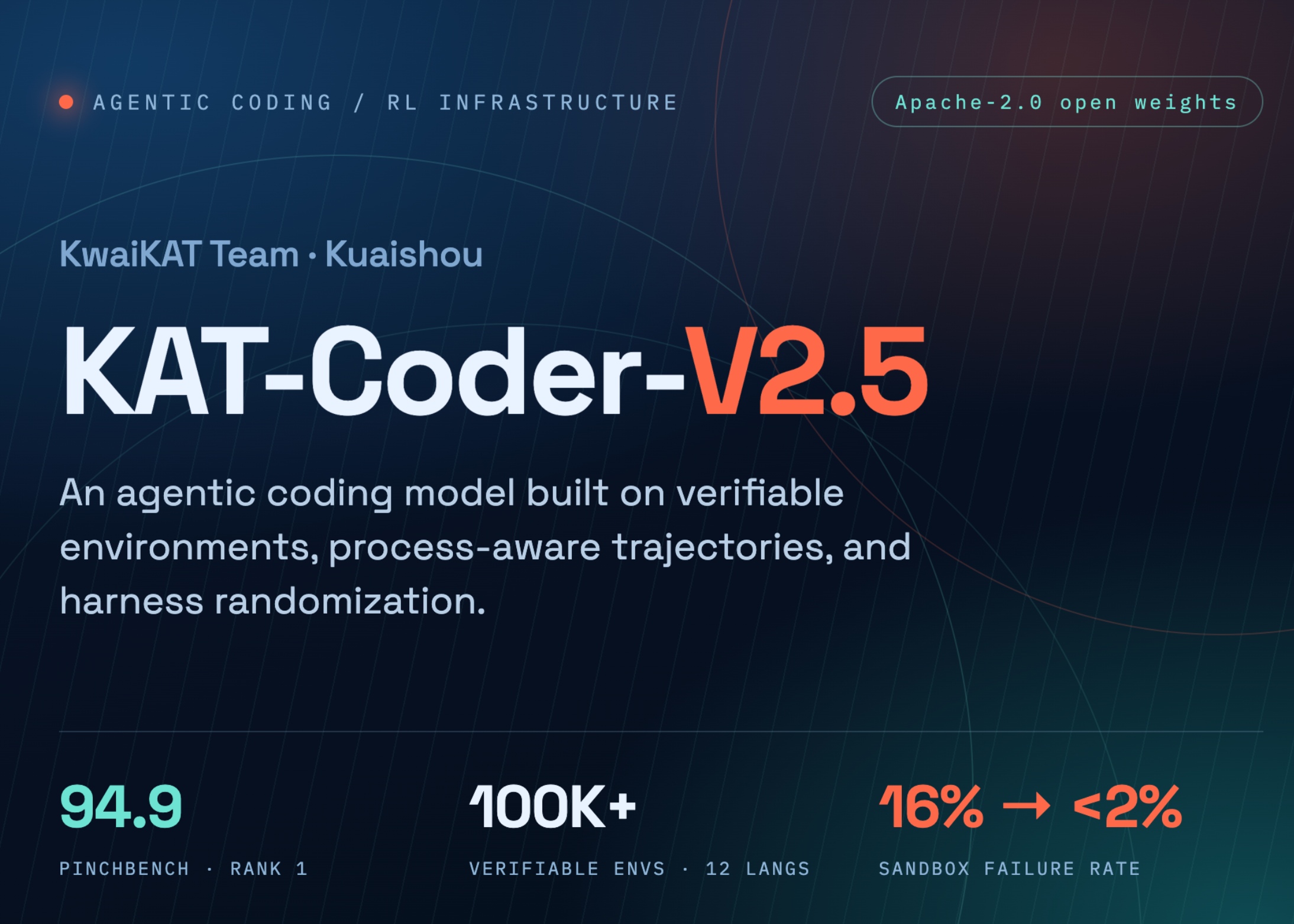
Here’s the shift. A research team at Kuaishou recently released KAT-Coder-V2.5, an AI that was trained completely differently. Instead of learning from textbooks, it was trained inside copies of real software repositories. It learned to read existing code, write a fix, run the actual tests of that program, and only pass if everything worked together [source]. This is a fundamental change that affects how you should think about every software purchase and automation project in your business.
TL;DR
AI coding is moving from writing isolated code snippets to operating as “agents” inside your actual business systems. New models like KAT-Coder-V2.5 can test, debug, and fix code within a copy of your software environment. For Malaysian SMEs, this means fewer integration headaches, faster custom automations, and a drastic reduction in the time wasted chasing technical bugs.
What This Means: From Recipe Writer to In-House Chef
Think of standard AI coding tools as a brilliant recipe writer. You give it a prompt like “Write a script to send invoices from Excel,” and it produces a perfect set of instructions. The recipe is correct. But it doesn’t know your kitchen. It doesn’t know your Excel file uses Malay column headers. It doesn’t know your email server requires two-factor authentication.
When the recipe fails, you are the one who has to figure out why.
KAT-Coder-V2.5 is a chef who enters your kitchen. It opens your fridge, checks your pantry, and then starts cooking. The team calls this “agentic coding,” and they built a system called AutoBuilder to help the AI look at a real software project, understand its structure, and generate working tests that verify its changes [source].
The most important detail for you is this: the researchers discovered that a shocking 16% of their AI’s training failures were not due to bad logic or bad code. They were caused by problems in the testing environment itself—the sandbox was broken, not the AI [source]. When they fixed their infrastructure, training collapses dropped by an order of magnitude.
What this tells you is simple: Your business software success depends less on finding a “smarter” coder and more on having a solid process for testing and deployment.
How This Applies to Your Malaysian SME
You run a real business. Your “kitchen” is a mix of WhatsApp Business, SQL Account, Autocount, Shopify, POS terminals, and maybe a custom PHP app built in 2014. This specific combination of tools is unique to you, and it is the hardest environment for generic software to handle.
1. Smarter Custom Integrations
Want your e-commerce platform to talk to your inventory system? An agentic AI model does not just give you a script. It can be pointed at both systems, read their code or APIs, and run integration tests. If the connection fails because of a specific data format your POS uses, the AI can see that failure, analyze it, and rewrite the script until the data flows correctly. This is a massive leap from the old “here is the code, good luck debugging it” approach.
2. Maintaining Aging Software
Many Malaysian SMEs rely on software built years ago by a small vendor. Maintaining this software is expensive. Finding a developer who understands your old code is harder. An agentic AI can be fed that old repository. Because it has been trained on 100,000+ software environments spanning 12 languages [source], it can effectively patch security holes, update features, or even document your code, extending the life of your critical business software without a complete overhaul.
3. Nearly Zero-Risk Automation of Admin Tasks
Automating a process that involves multiple steps is risky. One wrong assumption and you corrupt data. The key innovation in KAT-Coder-V2.5 is the “verifiable environment.” The AI creates a safe, isolated copy of your system, performs the automation, runs tests, and only graduates the solution to your live system if the tests pass. For an SME owner worried about losing a month of sales data, this built-in safety net is the single most valuable feature of modern agentic coding.
4. Faster Response to Market Demands
Need a promotion code system for Hari Raya? Need a specific report for your auditor by next week? The model scored 94.9 on PinchBench, a test that measures how fast and accurately an AI can fix bugs and add features in real codebases [source]. This speed means you can request a specific feature for your business system and get a verified, working solution much faster than waiting weeks for a developer.
“The research team treats agentic coding as an infrastructure problem, not a model-scale problem.”
This is the core lesson: a great AI model is useless if the testing and deployment process is flawed. The real value is in the system that verifies the work.
Practical Takeaways for the Busy Owner
You don’t need to understand Python or PPO algorithms to benefit from this. Here is your action plan for the next time you need custom software or automation:
- Ask about sandbox testing. When a vendor promises to build you a solution, ask how they verify it works with your specific data and setup. A good answer involves creating a test server or environment that mirrors your live system.
- Give the “problem statement,” not the “solution.” The best AI agents work by understanding your business context. Instead of saying “Write code to call API X,” say “I need to send the daily sales figure to the management group chat every evening at 6 PM.” Let the technology figure out the technical path.
- Start with one painful, repetitive task. Look at your team’s workflow. Is there something they do manually every single morning that takes 30 minutes? That task is an ideal candidate for an agentic AI solution. The process is simple enough to verify and has a massive time-saving payoff.
- Don’t underestimate the “environment.” If an AI solution fails, it might not be the AI’s fault. Check your own internet connection, your firewall, your software permissions, or your data formatting. The “infrastructure” problem is real, and fixing it unlocks everything else.
| The Old Way (Plain AI Coding) | The New Way (Agentic AI) |
|---|---|
| Writes code based on a prompt | Explores the entire software environment first |
| Offers zero guarantee of execution | Generates and runs its own tests |
| You debug the failures | The AI sees the failure and self-corrects |
| Works best on simple, isolated tasks | Handles complex, multi-step business workflows |
| Trained on clean datasets | Trained on 100,000+ “messy” real-world repositories (source) |
The Bigger Picture: How This Changes Your Business Strategy
For years, having custom software was a luxury reserved for big corporations with large IT teams. The cost and risk of building, testing, and maintaining custom applications were simply too high for a 5-person or 50-person SME.
Agentic AI models like KAT-Coder-V2.5 are collapsing that barrier. The bottleneck is shifting from “who can write the code” to “who can clearly describe their business process.”
For Malaysian business owners, this is a massive strategic advantage. Your deep knowledge of your own industry, your customers, and your local compliance requirements (SST, EPF, SOCSO) becomes the most valuable ingredient. The AI agent is the tool that can turn that knowledge into working software almost instantly.
The future of SME software is not about buying giant, expensive, one-size-fits-all platforms. It is about having an AI agent that can build, test, and fix the exact software you need, for your exact business, in your exact environment.
The question is no longer if you can afford custom automation. It is which manual process in your business you want to hand over to your new digital chef first.
Ready to Streamline Your Operations?
Your business should run itself. AutoRunBiz deploys AI agents to automate your daily operations — WhatsApp orders, invoicing, customer follow-ups, and accounting. Book a free 15-min ops audit to see where automation fits your business →