
What happens to your business when the internet goes dark?
You are juggling multiple channels every day. Orders come in through WhatsApp, payments depend on a stable cloud connection, and your team coordinates on Telegram. Then it stops. No signal in the shop lot. The WiFi is down. Your entire operation stalls. This is the nightmare that keeps many practical Malaysian SME owners up at night.
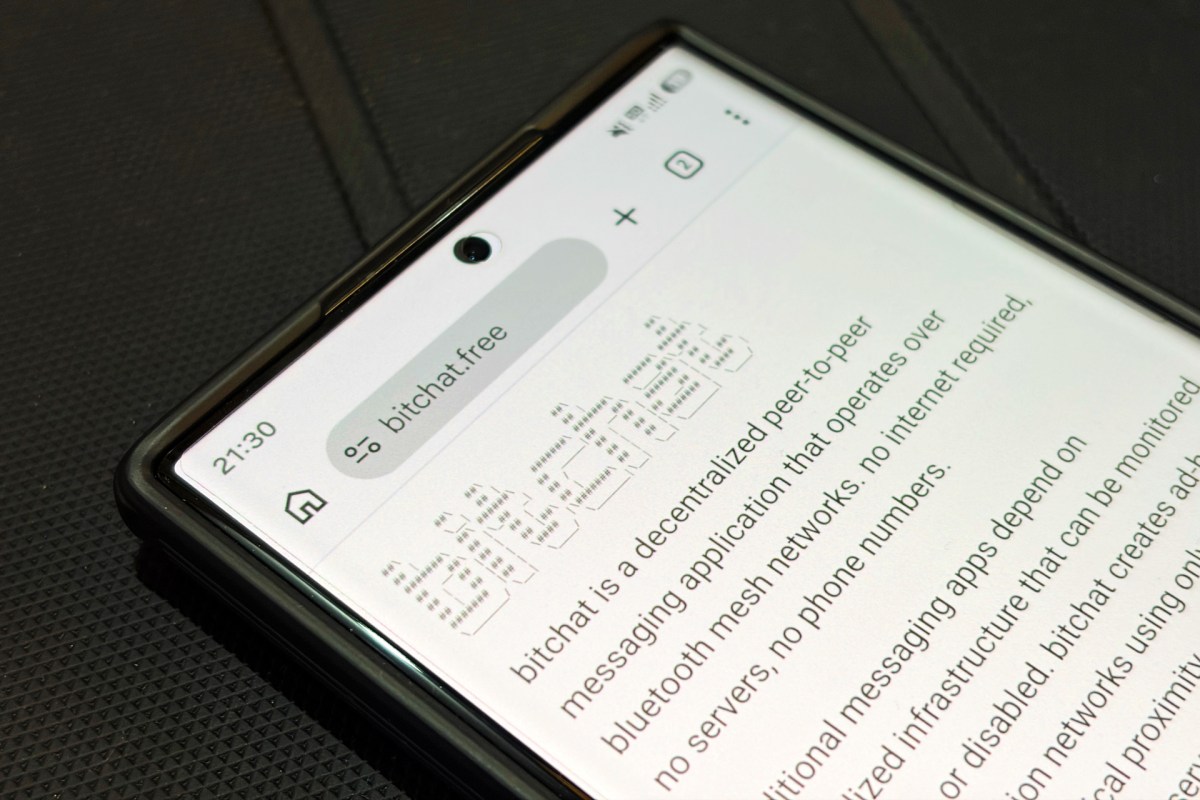
A dramatic real-world example of this digital fragility just unfolded in India. Jack Dorsey’s Bitchat app, built to work entirely offline through Bluetooth mesh technology, suddenly became a national hot potato. The Indian government tried to force GitHub to delete the app’s source code, not because of any specific illegal content, but simply because of how the app works. This event is a massive red flag for every business owner relying on a fragile digital stack.
TL;DR: The Core Alert for Your Business
The Indian government targeted Bitchat because it enables communication without an internet connection or central servers. Attempting to delete its open-source code proves that authorities are willing to attack the functionality of tools, not just the content within them. For you, a Malaysian business owner, this highlights a critical vulnerability: over-reliance on cloud apps that fail the moment the internet is blocked, unstable, or regulated out of existence. You need a practical, low-tech resilience plan.
What This Means
Bitchat is an open-source messaging app. Instead of sending your data through a central company server (like WhatsApp or WeChat), it creates a local “mesh network.” Your phone talks directly to other phones nearby via Bluetooth and WiFi peer-to-peer. Message a colleague ten feet away. He passes it to the next person. It is a digital bucket brigade. No central server to block, no internet connection required.
The government notice argued that this architecture “could facilitate unlawful activity” and allow communication “even during network restrictions and internet shutdowns.” In plain language, the government is scared of tools they cannot turn off. For them, this is a surveillance problem. For you, it highlights that the tools you depend on have a master switch held by someone else.
| Metric | Bitchat Performance in India (July 17-23, 2026) |
|---|---|
| Share of Global Downloads | 85% |
| Total Downloads (5 days) | 91,000+ |
| Download Spike (Jul 19 vs Jul 18) | 32x Jump |
| Peak Daily Active Users | 330,000 |
Source: Sensor Tower data via TechCrunch
People don’t rush to download a clunky, anonymous Bluetooth app for fun. They download it when the usual channels are blocked or unreliable. This is a direct signal about user behavior that every business owner must understand.
How This Applies to Malaysian SMEs
You might think, “I’m not a protester in India, this doesn’t apply to me.” Think again. The underlying issue is operational fragility. Malaysian SMEs face unique challenges: flash floods, rolling blackouts in industrial areas, inconsistent bandwidth in shop lots, and the very real possibility of political or regulatory changes affecting the digital landscape.
1. Your local communication has no backup.
Consider a logistics coordinator in a large warehouse in Shah Alam. His team relies on a specific group chat for dispatch instructions. If the internet backbone experiences a hiccup, that coordinator is blind. Unlike Bitchat’s mesh, he has no local fallback. What is your plan for internal communication when the 4G network is throttled or blocked in your area? An internal radio system or a simple walkie-talkie for critical staff might be a better investment than you think.
2. The tool itself can become a target.
A very important lesson from this legal debate is that the government targeted the code on GitHub. The Internet Freedom Foundation argued that “deleting a repository does not delete the application from any phone that carries it… What the takedown actually prevents is scrutiny of the underlying code.” For your business, this raises a question: do you rely on a single “black box” proprietary app for your core operations (POS, CRM, procurement)? If that app’s design is ever scrutinized or restricted by regulators, do you have an exit path? Open standards and clear data ownership are not just tech ideals; they are business continuity tools.
3. The speed of the switch is terrifying.
Look at the table above. 85% of Bitchat’s global downloads happened in India in just one week. Daily active users hit 330,000 practically overnight. This proves that your customers, suppliers, and employees can and will jump to a different tool the moment your primary channel goes down. If your supplier switches to a new platform during a disruption and you are stuck on your broken legacy app, you are out of the loop. Your business needs the agility to adopt secondary channels quickly.
“Blocking an offline messaging platform during internet restrictions risks turning shutdowns into a communication blackout that violates fundamental rights.”
— Namrata Maheshwari, Senior Policy Counsel, Access Now, as quoted in TechCrunch
For a business, a “communication blackout” is a direct hit to revenue and operational sanity.
Practical Resilience Checklist for Your SME
- Audit your dependency. List every app and service your team needs to function. Highlight the ones that require a constant internet connection. Separate the critical from the nice-to-have.
- Diversify your communication channels. Don’t put all your internal communication eggs in one basket. Have a secondary channel that works on a different infrastructure. For example, a dedicated Telegram group for power users is different from an SMS broadcast list for critical alerts.
- Build an “Offline Mode” playbook. Can your business last 4 hours without internet? Can a restaurant process cash? Can a warehouse accept manual pick notes? Test this with a drill.
- Review your vendor lock-in. When you choose a platform for automation or sales, check if you can export your data easily. Do your tools rely on a single cloud provider that might be blocked or pressured? Your data should be yours.
- Explore open standards. You don’t need to run your own servers, but understanding if your core software respects open standards (like the ability to export conversations or customer lists) gives you a huge strategic advantage.
The Bigger Picture
This debate over Bitchat in India is just the beginning of a global conversation about “functional sovereignty.” Governments are realizing they cannot just block content; they need to control the architecture of software. For the Malaysian SME, the smartest move is to build a business that is resilient by default, not by accident.
Automation should increase your operational strength, not create a single point of failure. When you automate a process, ask yourself honestly: “Does this system work if the internet goes down for 6 hours?” If the answer is no, what is the manual fallback plan? The ultimate goal is not just to run your business faster, but to make sure it keeps running regardless of what happens to the network.
Ready to Streamline Your Operations?
Your business should run itself. AutoRunBiz deploys AI agents to automate your daily operations — WhatsApp orders, invoicing, customer follow-ups, and accounting. Book a free 15-min ops audit to see where automation fits your business →