
Did You Just Become Responsible for Data You Didn’t Lose?
Imagine this: A customer walks into your shop, furious. Their phone number is being used for scam calls. Their home address was used for an unsolicited delivery. You didn’t leak this data, but the data they gave you was processed by a vendor you recommended—a telco, a cloud software provider, an e-invoice portal. Who gets blamed in the eyes of your customer?
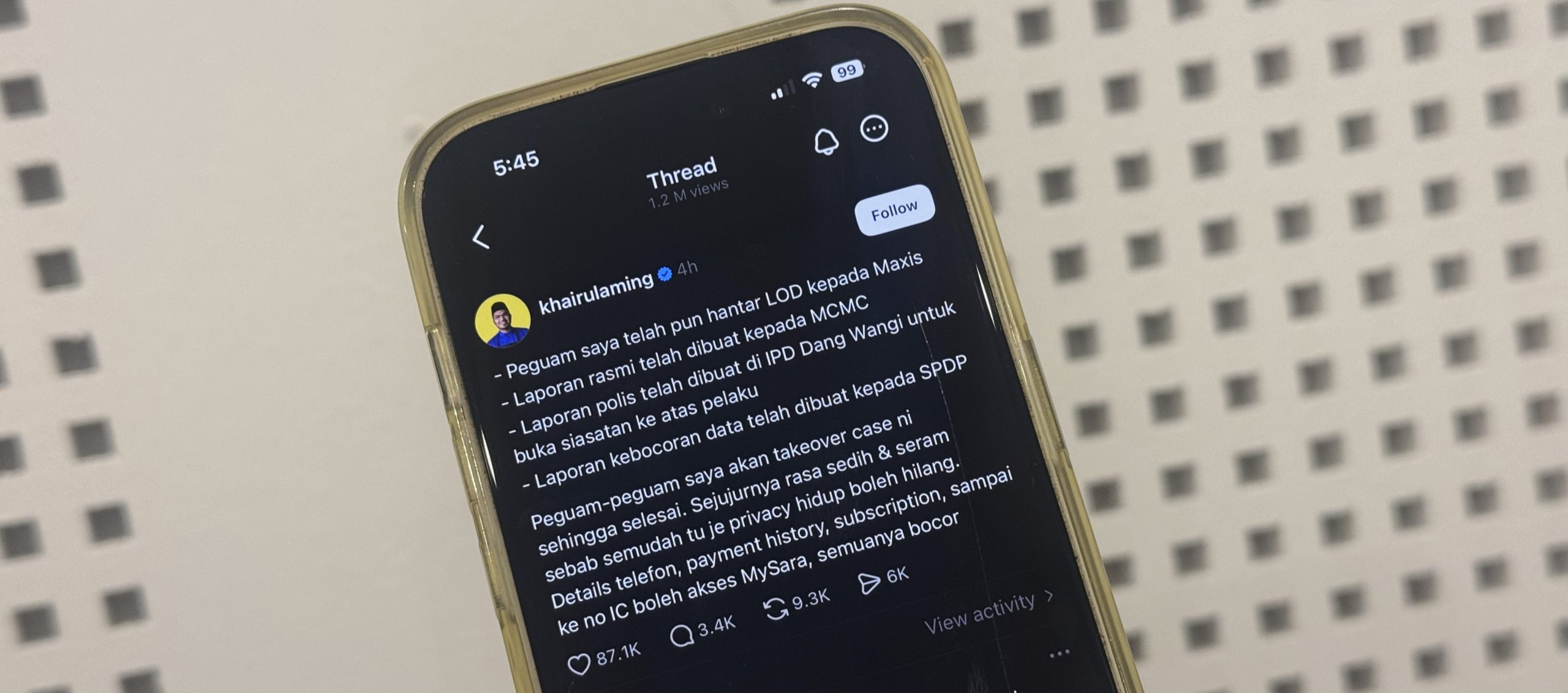
This isn’t a hypothetical anymore. On July 22, 2026, local entrepreneur Khairul Aming publicly announced he had served a Letter of Demand (LOD) on Maxis and filed a police report regarding a data breach involving his personal data (SoyaCincau). Here was a nationally recognized business owner, someone meticulous about his brand, taking the strongest possible legal stance because a service provider failed to protect his information.
This story isn’t about a celebrity feud. It is a stark, practical warning for every small and medium business owner in Malaysia. Your data, and more importantly your customer’s data, is only as safe as the weakest link in your business chain. And that weak link is likely not your own office, but a service provider you trust.
TL;DR: The Maxis data breach involving Khairul Aming proves that data liability doesn’t stop at your office door. As an SME owner, you are responsible for customer data even if the breach happens at your vendor. You need to vet your third-party providers, have a crisis communication plan, and review your service contracts for data security clauses. Failing to do so means you carry the brand damage—even if you didn’t directly leak the data.
What This Means: The “Data Supply Chain” is Your Problem
Most SME owners think of data protection as an IT problem. You install an antivirus, you add a password, you lock the server room. In 2026, this view is dangerous. The bulk of your business data lives outside your four walls—on cloud servers, telecommunication networks, payment gateways, and marketing automation platforms.
In Khairul Aming’s case, the data in question was his personal information held by Maxis as a service provider. While he is a public figure with resources to fight back, the underlying issue applies to you. Every single piece of data you collect from a customer—their NRIC, their address, their purchase history—travels through a chain of third parties. If any one of those links breaks, the negative consequence flows directly back to your business reputation.
“You can have the tightest security in your office, but if your outsourced stockist, your telco, or your cloud POS vendor suffers a breach, you are the one who faces the angry customers and the potential regulatory consequences.”
This defines the modern risk for an SME. You must reframe your thinking from “protecting my server” to “auditing my entire data ecosystem.”
How This Applies to Malaysian SMEs
The Malaysian Personal Data Protection Act (PDPA) places the responsibility of data protection squarely on the “data user”—which is you. The upcoming amendments to the PDPA (PDPA Malaysia Overview) will likely introduce stricter regulatory consequences specifically targeting data processors (your vendors) and cross-border data flows. The Khairul Aming case is a preview of the legal environment you are entering.
1. Your Vendors are an Extension of Your Brand. Did you sign up for a free loyalty card system? A cheap email blast provider? A popular e-commerce shipping partner? Did you read their terms of service regarding data breach liability? Most likely, you didn’t. If that vendor loses data, your customers will not sue the vendor. They will blame you for being careless with their information. A vendor assessment is no longer a luxury—it is a business survival skill. Just as Khairul Aming held Maxis accountable, your customers will hold you accountable for your choices of partners.
2. You Need a “Breach Plan” Before the Breach Happens. Notice what Khairul Aming did immediately: he engaged a lawyer and filed an official police report. He went public on his own terms. Most SMEs panic. They freeze their social media, they ignore the leak, or they issue a confusing statement. You must build a simple crisis plan today. This plan should dictate how you verify a breach, who you inform first (PDPA requires notification where harm is likely), how you communicate with affected customers, and how you preserve evidence for legal or regulatory action.
3. Documentation and Contracts are Your Shield. Khairul Aming did not just complain on social media. He served a Letter of Demand. This implies he understands his contractual rights. For your SME, this is a call to action. Review your contracts with every major vendor. Do they have a Service Level Agreement (SLA) regarding security? Will they indemnify you if their breach affects your customers? If the answer is “we just use their standard terms,” you are dangerously exposed.
Practical Data Security Checklist for Your SME
Here is a simple table to help you map out your immediate next steps. Use this as a worksheet for your next management meeting.
| Action | Priority | Checklist Item |
|---|---|---|
| Map Your Data Flow | High | List every app, telco, bank, and software that holds customer data (POS system, email marketing, HR payroll). |
| Audit Vendor Security | High | Ask your top 3 vendors: “Do you have ISO 27001? Where is my data stored? Do you encrypt it?” |
| Draft a Breach Response Plan | Medium | A one-page document: Pause operations, Identify scope, Contact legal counsel, Notify customers. |
| Review Vendor Contracts | Medium | Look for “Data Processor” clauses. Ensure contracts hold vendors liable for breaches caused by their negligence. |
| Train Your Team | Ongoing | Run a quick scenario: “Someone calls claiming to be from our cloud supplier asking for a password. What do we do?” |
The Bigger Picture: Trust as a Business Asset
Trust is the foundation of every customer relationship. A customer chooses your shop over a competitor because they rely on you. That reliance includes how you handle their private information.
The reaction to the Khairul Aming incident proves that customers are paying attention. If a big corporation like Maxis is being held publicly accountable, your small business is not flying under the radar. The authorities are tightening enforcement, and the public is becoming more sophisticated about their data rights.
This is where business automation comes into its own. Adopting the right tools—specifically, tools that prioritize security and compliance—is how you protect this trust. When you automate a manual process, you aren’t just saving time. You are creating a verifiable, auditable, and secure trail. A well-configured automated system is inherently safer than a spreadsheet passed around via WhatsApp or a physical receipt book left on a counter.
Your takeaway from the Khairul Aming case should not be “I need a lawyer.” It should be “I need to run my business like a serious enterprise.” That means creating systems. Vetting your partners. Securing your assets. And treating your customer data as the precious asset it is.
Data incidents are inevitable in the digital economy. The question is whether you will be ready to serve your own “Letter of Demand” to the guilty party, or whether you will be left holding the blame.
Ready to Streamline Your Operations?
Your business should run itself. AutoRunBiz deploys AI agents to automate your daily operations — WhatsApp orders, invoicing, customer follow-ups, and accounting. Book a free 15-min ops audit to see where automation fits your business →