
Your Automation Depends on Power. Where is it Coming From?
You schedule your automated email campaign for 8 AM. You rely on your cloud accounting software to invoice clients instantly. Your CRM is the engine of your sales team. Every single one of these modern business tools rests on a foundation you rarely think about: stable, uninterrupted electricity.
When the power flickers—and if you run a small manufacturing unit, a retail chain, or a serviced office in Malaysia, you know it happens—your automation grinds to a halt. Data gets corrupted. Customers get ghosted. You spend the morning resetting systems instead of growing your business.
Now, imagine a power source that is so reliable, so mobile, and so self-contained that it can be docked right next to a business park and run for years without refueling. This is not a fantasy. A startup called Bluecore Energy just raised USD $10 million to make this a reality [source].
TL;DR: A US startup is building small nuclear reactors on barges to provide hyper-reliable power directly to ports and data centers. For Malaysian SMEs, this development signals a future where energy stability (the silent backbone of your cloud automation) could become a localized, guaranteed service—drastically reducing the downtime that kills productivity.
What This Means: Portable Power Plants
Let’s strip away the complex jargon. Bluecore Energy is building Small Modular Reactors (SMRs) on barges. Think of them as mobile power plants. They sit on water, connect to the local grid via subsea cables, and provide clean electricity [source].
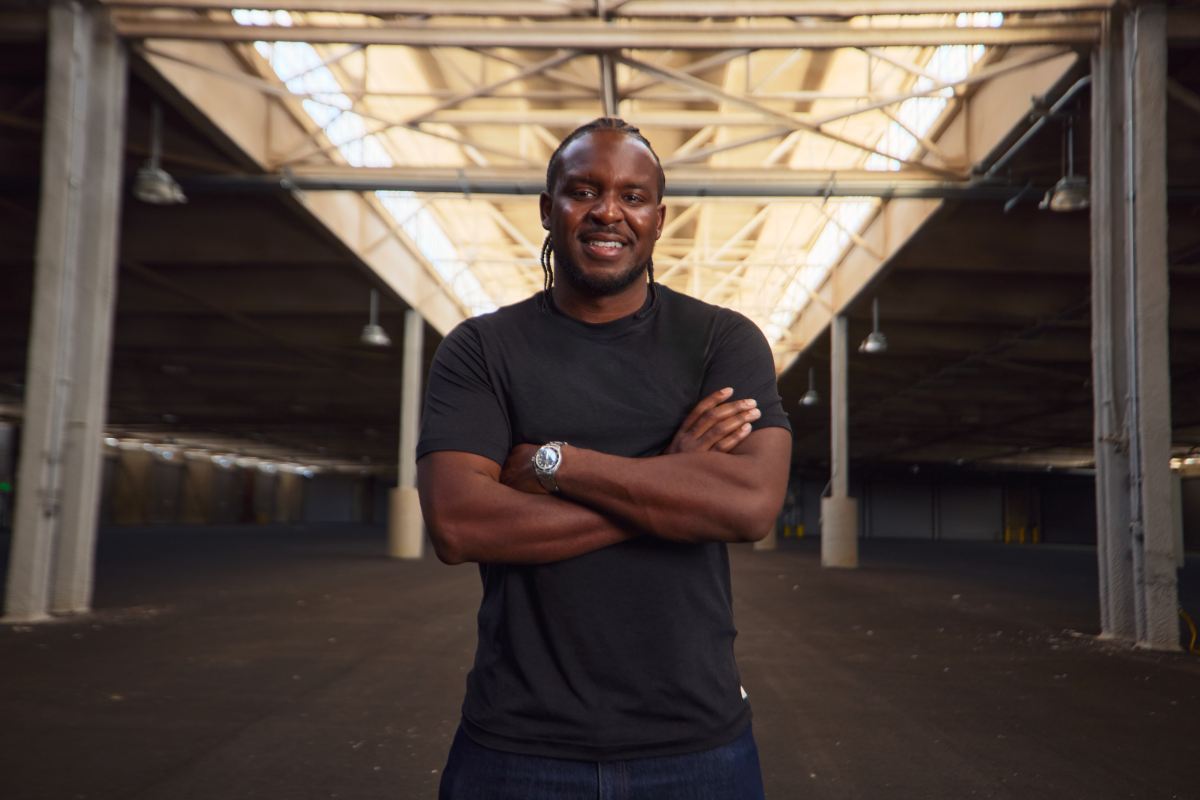
How does it work? The reactor heats water. The steam spins a turbine. The turbine generates electricity. It is water-cooled in a closed loop, meaning it doesn’t consume the water around it—it just uses it for heat exchange. According to founder Kofi Asante (formerly of Uber Freight), the entire system only needs to be refueled once every few years [source].
This is not a vague “pie in the sky” concept. They have already secured a port terminal, a barge, and a test reactor pressure vessel. They are actively working with regulatory agencies to embed safety into the design. The goal of a single barge? To provide the energy equivalent of roughly 15,000 homes, or to power a major port [source].
How This Applies to Malaysian SMEs
You might be thinking, “I run a hair salon in PJ / a digital agency in Penang / a wholesale distributor in Johor. Why should I care about nuclear barges?” Let’s connect the dots directly to your operations.
1. The Automated Business is an Always-On Business
Your automation is worthless if the servers aren’t running. Whether you host a physical server in your office or rely entirely on the cloud, a brownout in your area takes out your operations. Even a generator takes a split second to kick in—long enough to disconnect a critical database session.
Bluecore’s model targets this exact vulnerability. By offering dedicated, reliable power that can be docked near industrial zones, it removes the “grid lottery” from your business plan. If an SME park in Selangor or Johor can guarantee 99.999% uptime because of a floating dock of reactors, the businesses inside that park have an immediate operational advantage over those dependent on the main grid. Your automated workflows—from stock ordering to lead follow-ups—keep running without a hiccup.
2. The AI and Data Center Boom is Squeezing the Grid
Malaysia is currently a global hotspot for data center investment, particularly in Johor. These massive AI facilities are incredibly power-hungry [see context on AI data center needs]. While this is excellent for the economy, it puts significant strain on the Tenaga Nasional grid.
For you, the SME owner, this means your business is competing directly with tech giants for grid resources. Faster, cleaner, and more decentralized power generation (like floating SMRs) alleviates this bottleneck. It means the SaaS tools you buy from global providers can have better uptime Service Level Agreements (SLAs), because the underlying cloud infrastructure has a dedicated, grid-independent energy source.
3. The Rise of the “Energy as a Service” Model
Imagine a future where your internet service provider also offers “power resilience packages.” Or where your co-working space markets itself specifically on the energy stability of its infrastructure. This is where the world is heading.
Bluecore’s specific focus on ports and data centers is key because these are the hubs your business touches. The logistics port in Klang that ships your products? The data center in Johor that hosts your inventory management system? If they have dedicated nuclear power, your supply chain and data workflows become more resilient. This isn’t just about keeping the lights on—it’s about keeping your business processes running smoothly and automatically.
“The real innovation here isn’t the nuclear physics—it’s the delivery model. Turning a massive capital infrastructure project into a portable, dockable service changes the reliability expectations for every business connected to that grid.”
Practical Takeaways for Your Business Right Now
You don’t need to buy a nuclear reactor. You do need to ask better questions about where your power comes from and how it affects your automated operations.
- Audit Your Energy Dependency. Map out exactly what happens to your automated workflows if there is a power outage for 2, 4, or 8 hours. Which customer-facing operations break first?
- Ask Your Providers. Ask your cloud hosting provider or your co-working space manager how they source their energy. Are they investing in backup microgrids or alternative power sources?
- Watch for “Energy Resilience” SLAs. Look for local utilities or service providers offering guaranteed uptime SLAs backed by these new micro-reactors or advanced battery storage. This will fundamentally change your business continuity strategy.
- Factor Power into Location Decisions. If you are planning a new office, warehouse, or retail outlet, investigate the energy resilience of the local industrial park. Tech parks near ports with backup power capabilities are an increasingly smart bet.
You don’t need to become a nuclear physicist. You just need to become a more strategic buyer of operational infrastructure.
The Bigger Picture: Power as a Competitive Foundation
For decades, reliable power was something you either had or you didn’t. You paid your bill to the utility and hoped for the best. Portable nuclear reactors change this assumption fundamentally.
We are moving rapidly towards a world where the health of your automation depends entirely on the stability of your electrons. Every AI model you use, every automated email you send, every invoice your system generates requires a stable flow of power. The companies—and countries—that solve the “last mile” of clean, stable power delivery will secure a massive economic advantage.
For a Malaysian SME owner, the simple takeaway is this: Stop taking power stability for granted, and stop assuming your current generator is a sufficient plan for the future. A new model of energy delivery is being built right now. It is being funded by some of the smartest venture capitalists in the world. It is designed specifically for the high-density needs of data and industry.
| Capability | Detail |
|---|---|
| Power Generation | Enough for ~15,000 homes or a major port |
| Refueling Cycle | Every 2–5 years |
| Cooling System | Closed-loop water cooled |
| Deployment Model | Mobile barge, docked and connected via subsea cables |
| Target Application | Data centers, ports, coastal industrial zones |
| Funding Raised | USD $10 million (Pre-seed) |
Data sourced from TechCrunch coverage.
The next time you review your business automation strategy, look up from the software and look at the socket in the wall. The source of that power is evolving rapidly. Staying ahead of this curve isn’t just a technical consideration—it’s a core business strategy for ensuring your operations never have to stop.
Ready to Streamline Your Operations?
Your business should run itself. AutoRunBiz deploys AI agents to automate your daily operations — WhatsApp orders, invoicing, customer follow-ups, and accounting. Book a free 15-min ops audit to see where automation fits your business →