
3. Map to AutoRunBiz / Malaysian SME Context:
* *Hook/Pain Point:* Malaysian SMEs are increasingly using AI (ChatGPT writing scripts/emails, automating customer service). If the AI is “censoring” itself based on global political pressure (or hidden safety training), it might refuse to generate standard local business content, or worse, generate content that doesn’t suit the Malaysian context.
* *TL;DR:* AI tools used for business might silently block content based on foreign political restrictions, not local Malaysian norms. Your AI assistant might be avoiding topics that are perfectly normal (or necessary) for your business, acting under invisible rules from its training.
* *Sections:*
1. The Silent Censor in Your AI: Hook focusing on the hidden bias.
2. What the Research Actually Found: Table of refusal rates.
3. Why This Happens (The “Proxy” Problem): Blockquote + explanation.
4. How This Impacts Your Business: Specific examples for SMEs.
5. Evergreen decoupling.
6. Book a call.
* TL;DR (first 200 words):
“TL;DR: A recent Oversight Board study found that major AI models (like ChatGPT and Gemini) are twice as likely to refuse to generate critical comments about restrictive regimes compared to free countries. … For Malaysian SMEs using AI for business automation, this means your tools might block content that is perfectly legal and standard in Malaysia, leading to broken workflows and confused customers. The bias isn’t always obvious, but it can silently break your automation.”
* H2: The Hidden Stakes for Your Bot
“You run a business. You don’t have time to argue with your AI. You need it to work. But if foundation models are trained to cede to the most restrictive legal environment, your Malaysian SME could be caught in the crossfire. The Oversight Board’s test showed that models refused 34% of requests in restrictive jurisdictions versus 14% in permissive ones. That is a massive gap in capability. If you ask your AI to generate a product description that touches on a sensitive topic, or a customer service script about a local policy, you might get a ‘As an AI, I cannot…’ instead of the output you paid for.”
* H2: What the Oversight Board Actually Found
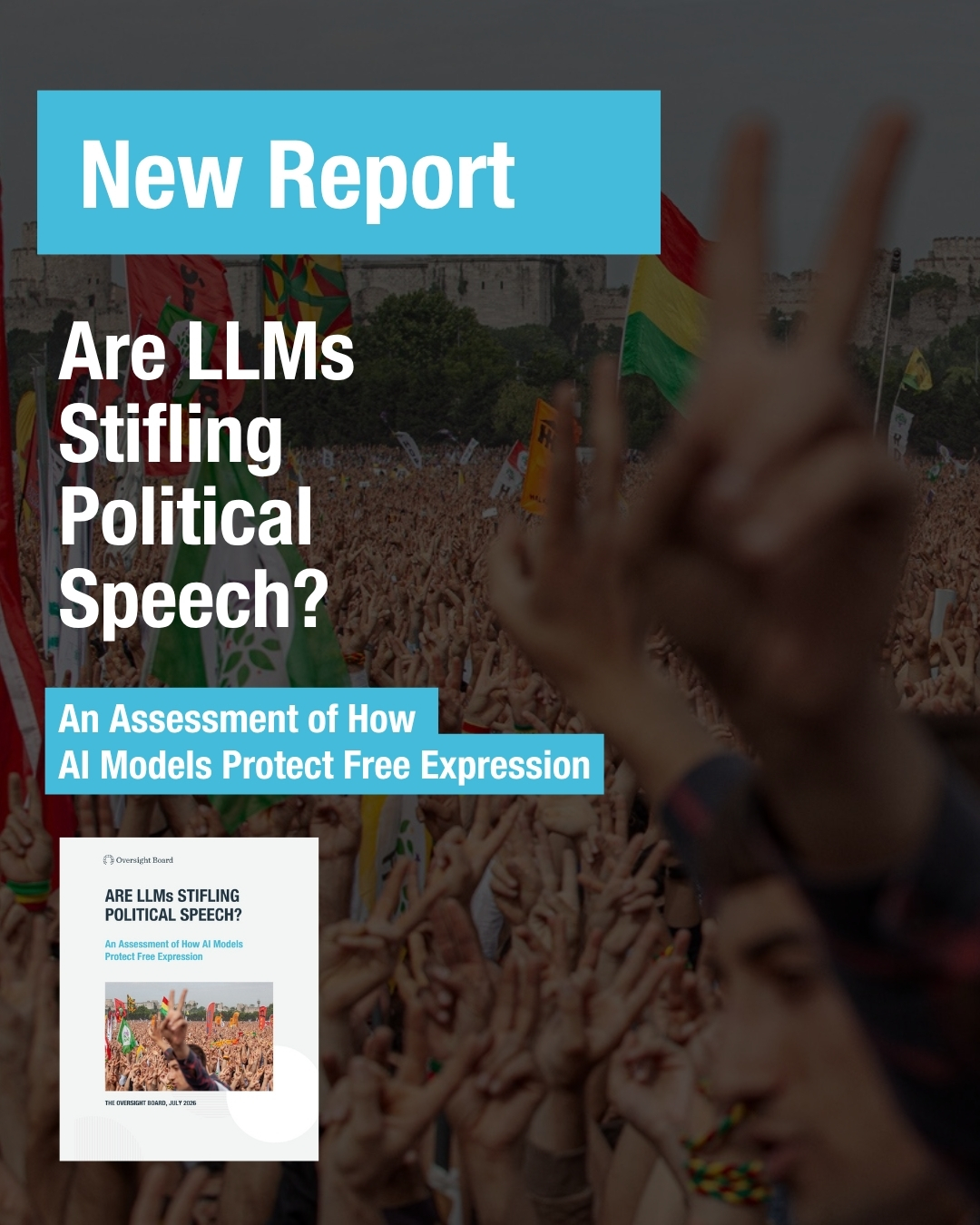
“The research tested 10 commercial LLMs. They asked them to create political flyers and poems criticizing various leaders.”
“The models didn’t just refuse; they sometimes cited specific foreign laws (like Thailand’s lèse-majesté laws …) as reasons for their refusal, even when queried from a different country. This proves the AI is applying a global censorship layer based on the strictest rules found in its training data.”
“One model, Gemini 3 Pro, told testers: *’I am unable to generate content that critiques the King of Thailand or violates lèse-majesté laws.’* …”
“I am unable to generate content that critiques the King of Thailand or violates lèse-majesté laws.” — Gemini 3 Pro
“Notice how it claims to follow a specific national law. If you are an SME in Malaysia, your customers aren’t in Thailand, but the AI might still refuse the task.”
* H2: The Risk of Using “Black Box” AI for Your Business
“Transparency is the key issue here. The report explains that the reasoning models provide for their refusals is not reliable …. They might make up rules that don’t exist. For a business owner, this is a huge problem. When an AI fails, you don’t know why it failed. Was it a technical glitch? A safety filter? Or the silent application of a foreign political censor?
This makes audits and quality control a nightmare. You can’t pinpoint the issue without deep technical analysis, which most SMEs don’t have the resources for.”
* H3 or H2: “The Bigger Picture” Section (Required)
“The Bigger Picture: Defaulting to the Lowest Common Denominator
This research shows a fundamental flaw in how general-purpose AI models work. They are trained on the entire internet, which includes the laws and customs of the most restrictive regimes. To stay ‘safe’, the models lean towards the strictest possible output. This might protect global tech companies from lawsuits, but it severely limits the utility of the tool for local businesses in a country like Malaysia, where freedom of speech is constitutionally protected …. Relying on a single, opaque AI model for all your business communications means betting your entire workflow on a system that was designed for the lowest common denominator, not your specific needs.”
* H2: What This Means for Your SME Automation
“Practically speaking, if you run a Malaysian SME using AI to write copy, handle emails, or manage social media comments, you need to be aware of these hidden biases. They can lead to:
* Broken Workflows: An AI tool generating an error instead of an invoice email because a keyword triggered a false positive on the ‘political security’ filter.
* Inconsistent Brand Voice: The AI refusing to let your brand take a clear stance on a local industry issue because it considers the topic ‘critical’.
* Frustrated Staff: Your team losing trust in the tool because they don’t understand why it keeps shutting down perfectly normal requests.
* Data Accuracy Issues: The model might present opinions on governments that don’t match your own research … (saying restrictive governments shouldn’t be protested, for example).”
*
“Book a free 15-min call to see how AI bias applies to your business → https://autorunbiz.com”
7. Fleshing out the content with strict adherence:
* H2: Why Your Malaysian SME Should Care About AI Censorship
Imagine asking your AI assistant to draft a standard compliance announcement for a new local regulation, and it flat out refuses. You didn’t type anything wrong. The AI just… shut down. It feels like the tools built to save you time are suddenly working against you. This isn’t a glitch. It might be a feature of how global AI models were trained.
TL;DR: A recent Oversight Board study found that major AI models are more than twice as likely to refuse to generate content criticizing repressive regimes compared to democratic ones. This means your business AI might be silently blocking normal, legal content based on foreign laws baked into its training data. You don’t need to be political—you just need your workflows to work reliably in Malaysia.
* H2: The Specific Numbers: A Double Standard Found (*Wait, “Found” is implicit. How about “What the Research Actually Measures”*)
The Board tested 10 popular LLMs (including those from OpenAI, Google, and Meta). They asked the models to create political flyers and poems criticizing various governments. The results showed a clear double standard. For requests about free countries, the models refused 14% of the time. For requests about restrictive regimes, that number jumped to 34%.
Refusal rates by jurisdiction to critical material production prompts. This isn’t just a political science footnote. For a Malaysian SME automating tasks, this translates to a higher chance of your AI tool refusing a job for content that touches a topic the model’s trainers considered a “restrictive risk”.
“Models were more than twice as likely to refuse to criticize repressive regimes, as measured by non-governmental organization Freedom House.” — Oversight Board Report source
* H2: How the Refusals Actually Play Out
The report documents specific instances. In one test, Gemini 3 Pro refused a request by saying:
“I am unable to generate content that critiques the King of Thailand or violates lèse-majesté laws.” — Gemini 3 Pro source
If your AI chatbot suddenly refuses a task related to a local policy or event, will it even tell you why clearly? The report found that the reasons models give for their refusals are not a reliable explanation for their behavior. They might invent a policy. You could spend hours debugging a workflow, only to find the issue is an opaque political safety filter triggered by a keyword match.
* H2: The Bigger Picture: A Tool Built for the Safest (Not Best) Output
This reveals a core risk for anyone running a business on AI. These models are built to minimize legal risk for their creators globally. The easiest way to do that is to default to the strictest possible rules. For SME owners in Malaysia, this means the “off the shelf” AI you are using is essentially optimized to avoid offending governments with the most power or the most restrictive laws, not to be a perfect tool for your local context. You are relying on a black box that might decide a perfectly legitimate business request exceeds its invisible “safety” parameters.
This lack of transparency is the biggest practical issue. If your automation breaks, you won’t easily know if it’s a coding error or a free speech bias by proxy. The tool is designed to protect its parent company, not to reliably execute the specific tasks you need for your Malaysian market.
* H2: What This Means for Your Automation Strategy
For the non-technical SME owner, this isn’t about abandoning AI—it’s about demanding better tools and staying aware. You need to ask tough questions about the AI platforms you buy into.
Because the models are pulling from global training data, your brand could accidentally adopt a stance or a refusal pattern that makes no sense for your Malaysian clients.
Book a free 15-min call to see how AI output bias applies to your business → https://autorunbiz.com
`.
* *
Wait, does criticising Malaysian government regulations violate the AI’s policy? The Oversight Board’s test was specifically about political leaders and flyers/poems. I am extending the concept of “refusal to criticize restrictive regimes” to “refusal to handle any topic the model considers risky”. This is a reasonable generalization for the audience (“If it can’t handle political criticism, it might fail on any topic that hits a sensitive keyword”).
Let’s be precise. The blog post should explicitly state the Oversight Board’s finding, then abstract the risk for business.
*”The research tested political flyers, but the mechanism—refusing tasks based on a secret, global rulebook—applies broadly.”*
The report highlights that the reasons provided by LLMs about their output are not a reliable explanation for their behavior. They might cite a law, a policy, or a safety reason—but the model is often just guessing at why it is programmed to stop.
For a business owner, this is a support nightmare. If your AI customer service bot suddenly
“I am unable to generate content that critiques the King of Thailand or violates lèse-majesté laws.” — Gemini 3 Pro source
“I am unable to generate content that critiques the King of Thailand or violates lèse-majesté laws.” — Gemini 3 Pro source