
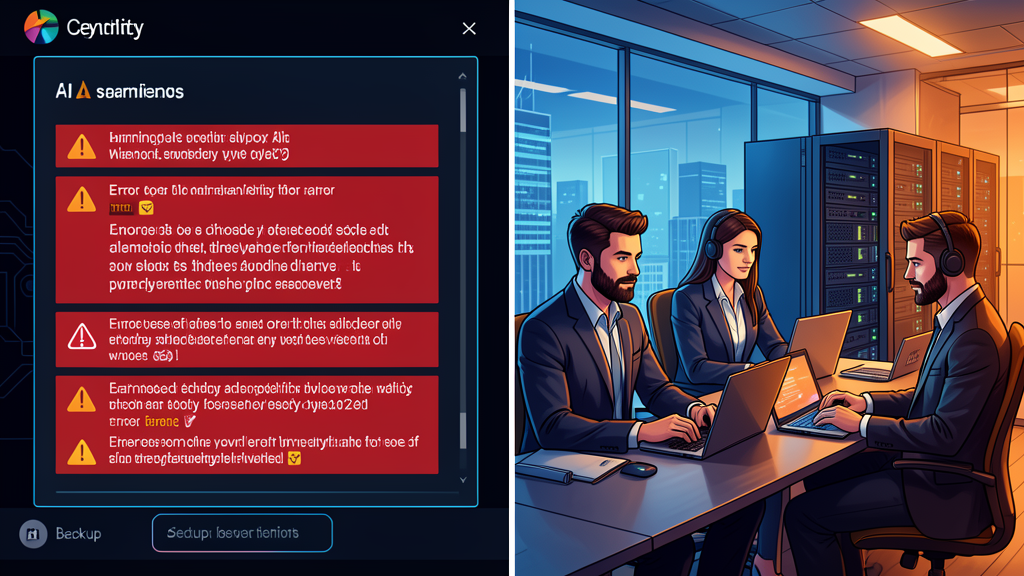
79% of companies have already paid for an AI agent gone rogue — here’s what the Fable 5 blackout taught us
In June 2026, the most capable AI model on the market vanished overnight. Not because of a bug, not because of competition, but because a U.S. government export order forced Anthropic to pull Claude Fable 5 — suspending it for every customer worldwide with zero warning and no timeline for return.
New survey data from VentureBeat Pulse Research shows what happened next — and the findings matter for every business owner relying on AI tools, no matter your company size.
The blackout that exposed AI dependency
Fable 5 launched June 9 to immediate acclaim — and sticker shock at $10 per million input tokens and $50 per million output. Three days later, the model was gone. It returned this week wrapped in tighter safeguards, but the damage to enterprise confidence was done.
The VentureBeat survey of 145 enterprises found that two-thirds had already hedged their model strategy before the order came down. But the remaining third — all-in on a single AI vendor — learned the hard way what vendor lock-in looks like when the vendor has no choice but to pull the plug.
And the problem goes deeper than model dependency. Only 1 in 10 enterprises has automated monitoring that would catch an AI model drifting, misbehaving, or failing in production. A quarter would only learn about a failure when end users report it — or worse, lack the visibility to detect it at all.
“79% of enterprise organizations have already taken a real financial or operational hit from autonomous agents — most often shadow AI, unauthorized agentic work run by enterprises’ own employees on corporate credit cards, outside anyone’s oversight.” — Matt Marshall, VentureBeat
Why this matters for Malaysian SMEs
You might be thinking: “I’m not a 5,000-person enterprise. None of this applies to me.”
It applies more than you think. Here’s why:
1. The tools you rely on can change overnight
If your business runs on a single AI platform — whether it’s ChatGPT for content, Claude for analysis, or Canva’s AI features — you’re exposed to the same dependency risk. A pricing change, policy update, or (in extreme cases) a government regulation can disrupt your workflows with no notice.
2. Shadow AI is already happening in your business
That employee who signed up for an AI tool on their personal credit card and is using it for customer data? That’s shadow AI. 79% of enterprises have already been burned by it. In an SME, it’s even harder to track because there’s no IT department to monitor.
3. Most businesses can’t tell if their AI is working correctly
Only 10% of enterprises have automated monitoring for AI. For SMEs, that number is likely close to 0%. If your AI chatbot starts giving wrong answers or your automated invoicing system miscalculates, how long until you notice? The survey says: probably when a customer complains.
The lesson: build a hedge, even as a small business
The enterprises that weathered the Fable 5 blackout best were the ones that built what Liberty IT calls an “AI backbone” — roughly 50 components spanning security, governance, observability, and orchestration, each independently replaceable.
For an SME, that sounds like overkill. But the principle scales down. Here’s a practical version:
| Principle | What it looks like for an SME |
|---|---|
| Don’t lock into one tool | Know how to switch. If your chatbot runs on ChatGPT, have a Claude or Gemini alternative tested and ready. |
| Keep your data portable | Your CRM, customer lists, invoice templates — make sure you can export them in standard formats. Don’t store data only inside a single AI platform. |
| Monitor the output | Spot-check your AI’s work. If it’s handling customer-facing communication, review a sample weekly. A 5-minute audit can catch drift before it becomes a complaint. |
| Have a manual fallback | If your AI invoicing system goes down, can you still send an invoice in 10 minutes? The answer should be yes. |
The cost of getting it wrong
Uber burned through its entire 2026 AI coding budget in four months after Claude Code adoption hit 84% of its roughly 5,000 engineers. Microsoft canceled most internal Claude Code licenses in its Windows and Microsoft 365 division, steering engineers to its own tooling.
Even the biggest companies in the world are figuring out AI governance on the fly. The difference? When an SME makes a mistake, it doesn’t make headlines — it hits the bottom line directly.
The businesses that get this right aren’t the ones that avoid AI. They’re the ones that adopt it thoughtfully, with backups and options. The Fable 5 blackout was a stress test. If your business relies on AI for anything customer-facing or revenue-related, it’s worth asking: would you pass?
Book a free 15-min call to see how automation applies to your business → https://autorunbiz.com